







American flag etiquette rules are defined by federal law under Title 4 of the United States Code, sections 1 through 10 — and every household that displays the Stars and Stripes is expected to follow them. Whether you fly a full-sized pole flag in your front yard or keep a desk flag in your home office, understanding the Flag Code is the single most respectful thing you can do as a flag owner. Browse the complete USA Flag Collection to find flags built to meet every display scenario described in this guide.
The Legal Foundation: What the US Flag Code Actually Says
The US Flag Code (4 USC §§ 1–10) is the authoritative federal law governing how the American flag must be displayed, handled, and retired — though violations carry no criminal penalty for private citizens. Enacted in 1942 and rooted in resolutions stretching back to 1923, the Code codifies decades of military and civic custom into a single, readable document. Its intent is not to restrict patriotism but to give it a consistent, dignified form that every American can recognize. Understanding the Flag Code's meaning starts with knowing that it covers everything from the flag's proportions (ratio 1:1.9) to the order of saluting and the proper hours of display. The Code also empowers the President and state governors to issue half-staff proclamations, a power that has real consequences for institutional display. Private homeowners are not legally compelled to follow every provision, but the Code is widely treated as a civic standard of care — and most Americans expect their neighbors to honor it.
Correct Display and Order of Precedence
When displayed correctly, the US flag must always occupy the position of highest honor: to its own right when grouped with other flags, and above all other flags on the same halyard. The Flag Code is precise about several common residential scenarios:
- Against a wall or in a window: The union (blue field of stars) goes to the flag's own right — which means the observer's left when looking at it.
- On a staff indoors: The flag stands to the right of the speaker or display point. Other flags go to its left.
- On a building or fixed staff outdoors: The flag is raised briskly and lowered ceremonially. It should never touch the ground.
- Displayed flat horizontally or vertically: The union is uppermost and to the flag's own right (observer's left). For a full breakdown, see our article on rules for displaying a flag vertically.
- With state or local flags: The US flag takes precedence; on separate staffs of equal height, it goes to the marching right of all other flags.
- In a procession: The national flag is always carried to the marching right, or front and center when multiple flags are carried.
 Vertical display is one of the most commonly mishandled orientations among homeowners, largely because the flag looks symmetrical at a glance and errors are easy to miss. The critical rule is that the union must appear in the upper-left position as the viewer faces the flag — meaning the blue canton is always at the top, toward the flag's own right. The Outdoor Vertical USA Flag is purpose-built for this orientation, with reinforced heading and UV-resistant dye-sublimated fabric that retains color for 6 to 12 months of continuous outdoor exposure. Hanging a standard horizontal flag vertically without repositioning the union is one of the most frequent Flag Code violations homeowners commit without realizing it. Taking a moment to verify orientation before mounting saves both the dignity of the flag and the awkward conversation with a neighbor who knows the Code.
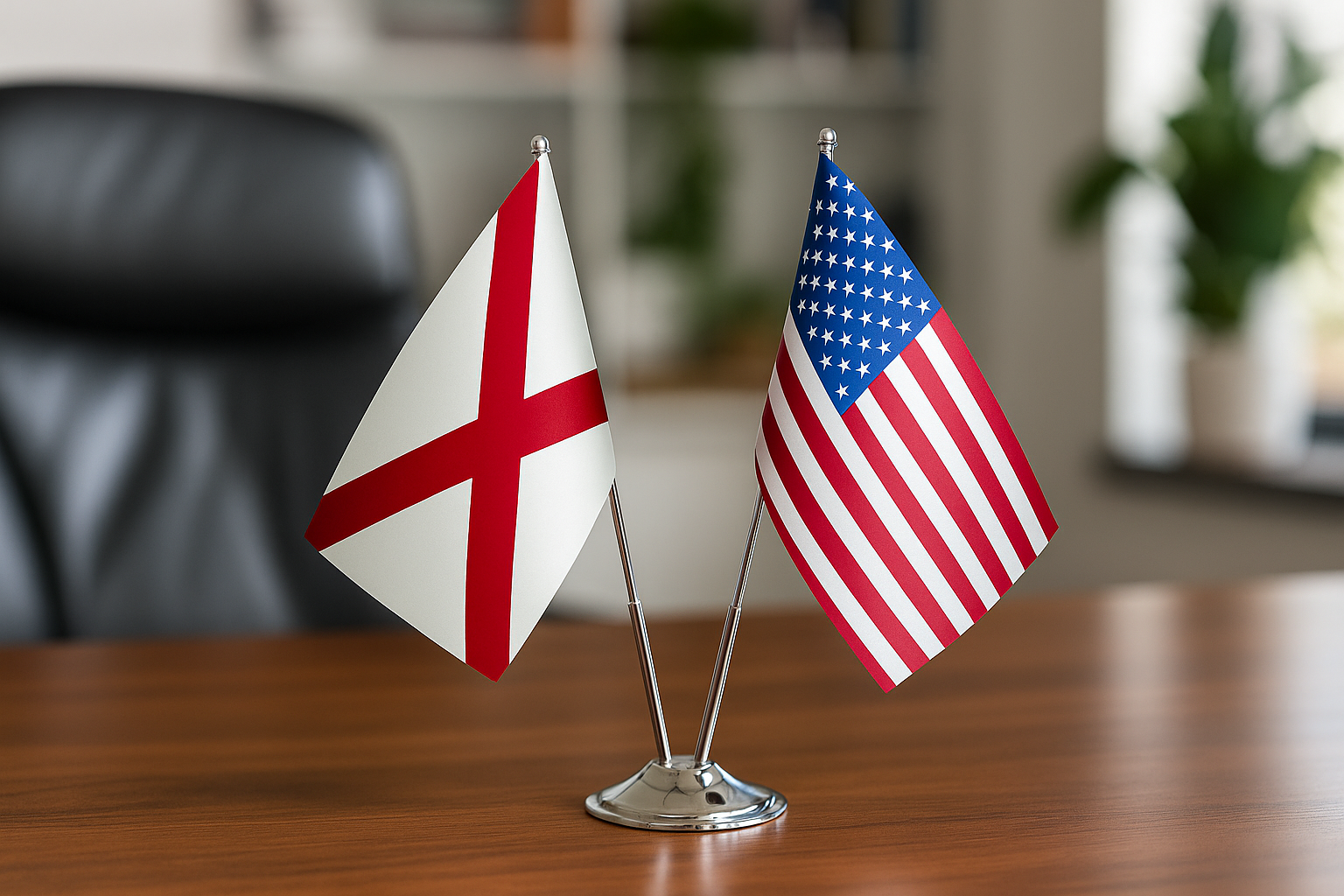
Order of precedence also applies at the international level: when the US flag is flown alongside flags of other nations, each flag should be displayed on a separate staff of equal height, per FIAV standards and Flag Code guidance. No foreign national flag may fly higher than the US flag on American soil during peacetime. This rule matters especially for households near international communities or those hosting foreign guests.
What the Flag Code Prohibits
The Flag Code contains a clear list of prohibited uses that remain relevant to everyday home display, even though private-citizen violations are not criminally enforceable. The most important prohibitions for residential contexts include:
- Using the flag as apparel, bedding, or drapery (§8(d))
- Drawing or printing anything on the flag, or using it as an advertising surface (§8(i))
- Allowing the flag to touch the ground, floor, water, or merchandise (§8(b))
- Flying a soiled, torn, or tattered flag — it must be retired or replaced promptly
- Using the flag as a costume or athletic uniform (§8(j)) — though small flag patches on military or civic uniforms are explicitly permitted
- Displaying the flag with the union down, except as a signal of dire distress (§8(a))
- Attaching the flag to vehicles in a way that allows it to be dragged or damaged
 Vehicle display is worth a dedicated note because it sits in a gray area many homeowners encounter during patriotic holidays. The Flag Code (§7(i)) says the flag should be fixed firmly to the chassis or clamped to the right fender — it must not be allowed to stream freely and risk dragging or tearing. Window-mounted flags designed specifically for cars, such as the 2-Pack USA Car Window Flags, are built with clips and lightweight polyester that stays secure and upright without contacting the vehicle body in a way that causes damage. These are a popular choice for Independence Day parades and Memorial Day motorcades precisely because they mount correctly and hold their shape at highway speeds. If you display a flag on your vehicle, inspect it after every drive — road debris and wind stress can deteriorate flag material quickly, and flying a torn flag is itself a Flag Code violation.
It is worth noting that §8(d) specifically permits flag-pattern designs on items like scarves and accessories when the intent is purely patriotic expression rather than commercial exploitation of the flag's image. Items that evoke the flag's colors and spirit without reproducing the actual flag — such as woven fan scarves used at sporting events — occupy a different legal and cultural space than using an actual flag as clothing.
Half-Staff and Ceremonial Observance Rules
Half-staff display is one of the most solemn provisions of the Flag Code, and homeowners who fly flags on residential poles are fully entitled — and expected — to observe it when proclamations are issued. Half-staff means the flag is flown at the midpoint of the staff; to display it correctly, the flag must first be raised to full staff (the top of the pole) and then deliberately lowered to the halfway position. This "peak and lower" sequence is not optional — it is the prescribed ceremonial act. At the end of the day, or when the half-staff period ends, the flag is raised to full staff again before being lowered completely for the evening. The President has the authority to order half-staff displays nationwide; state governors may order them within their states. For a thorough breakdown of who can issue these orders and when, our article on half-staff rules: who decides and when covers every scenario in detail.
Standard observance days for half-staff that every homeowner should keep on their calendar include: Memorial Day (half-staff until noon, then raised to full staff), Patriots' Day (September 11), Pearl Harbor Remembrance Day (December 7), and upon the death of principal government figures. For a specific look at September 11 observance, see our guide on flying the flag at half-staff on Patriot Day.
Ceremonial rules also govern the flag's hours. Section 6(a) of the Flag Code specifies that the flag should be displayed only from sunrise to sunset on buildings and fixed staffs outdoors. If illuminated by a light source sufficient to make it visible, it may be displayed 24 hours a day — a provision many residential flag owners take advantage of with a small spotlight. The flag should never be displayed in inclement weather unless it is an all-weather flag (typically nylon or similar synthetic material rated for rain and wind).
A Practical Home Display Checklist
Following the Flag Code at home comes down to a handful of repeatable habits that take almost no time once they become routine. Use this checklist to audit your display setup and stay consistently compliant.
- Orientation: Is the union always in the upper-left as viewed from the front? (Critical for vertical and window displays.)
- Hours: Is the flag taken down at sunset, or is it properly illuminated for 24-hour display?
- Condition: Is the flag clean, unfrayed, and free of tears? Replace flags showing significant wear — a tattered flag is not a respectful flag.
- Weather: Do you bring the flag in during storms unless it is rated all-weather?
- Precedence: If you fly multiple flags, does the US flag occupy the position of highest honor?
- Half-staff: Do you monitor presidential and gubernatorial proclamations and adjust your display accordingly?
- Retirement: Do you have a plan for dignified retirement (burning in a proper ceremony, or donation to a VFW post) when the flag reaches end of life?

USA Flag Collection
Every format covered by the Flag Code — outdoor pole flags, vertical banners, desk flags, and more — manufactured to the proportions and material standards the Code expects.
Browse Collection →For institutions — schools, municipal buildings, and HOAs — the checklist above should be formalized into a written policy reviewed annually. Flag Code compliance is part of flagpole etiquette and display rules that apply equally to private residences and public buildings. The physical quality of your flag hardware matters as much as procedural knowledge: a flag that fades to washed-out pink or frays at the hem within two months sends its own message regardless of how correctly it is positioned.
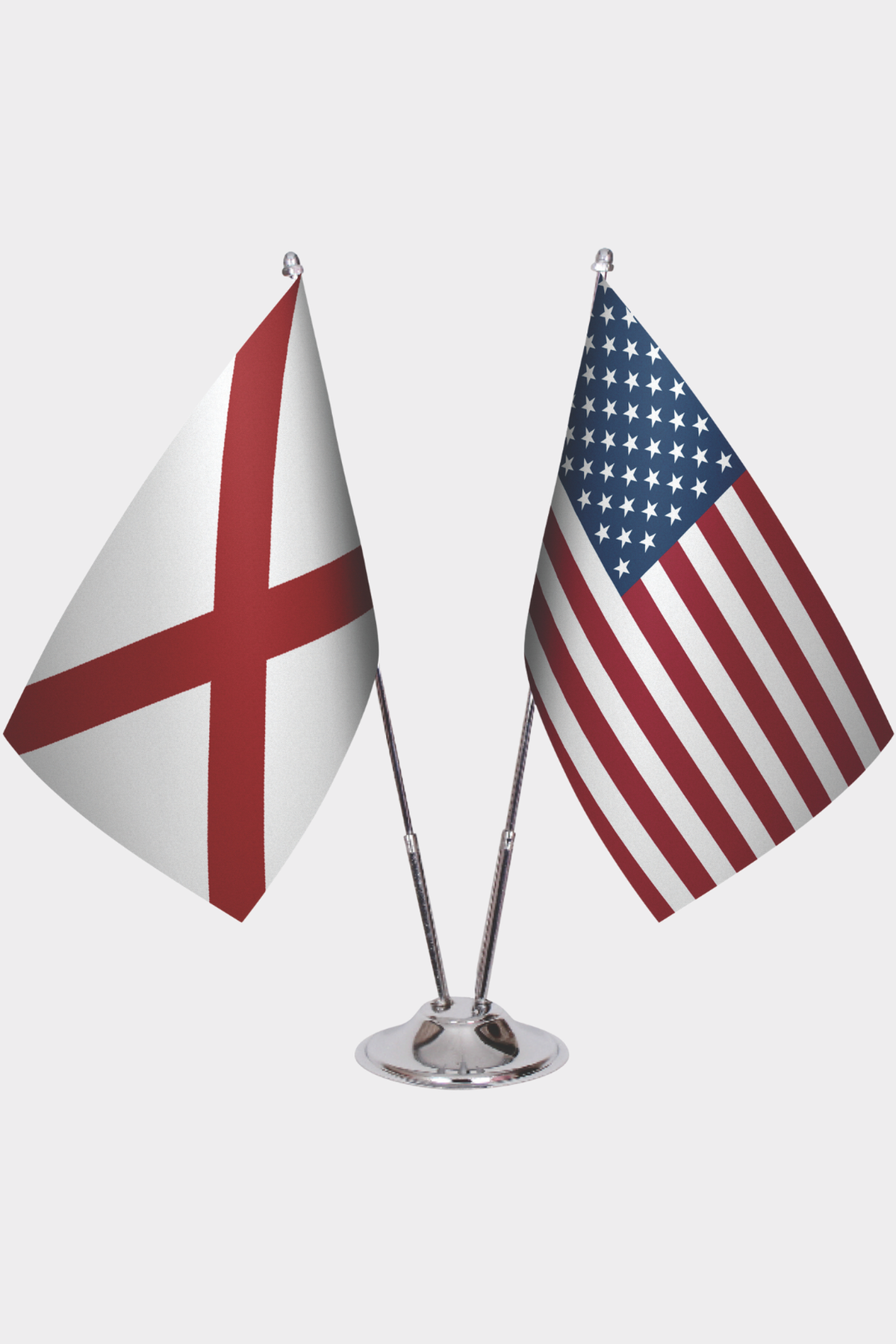
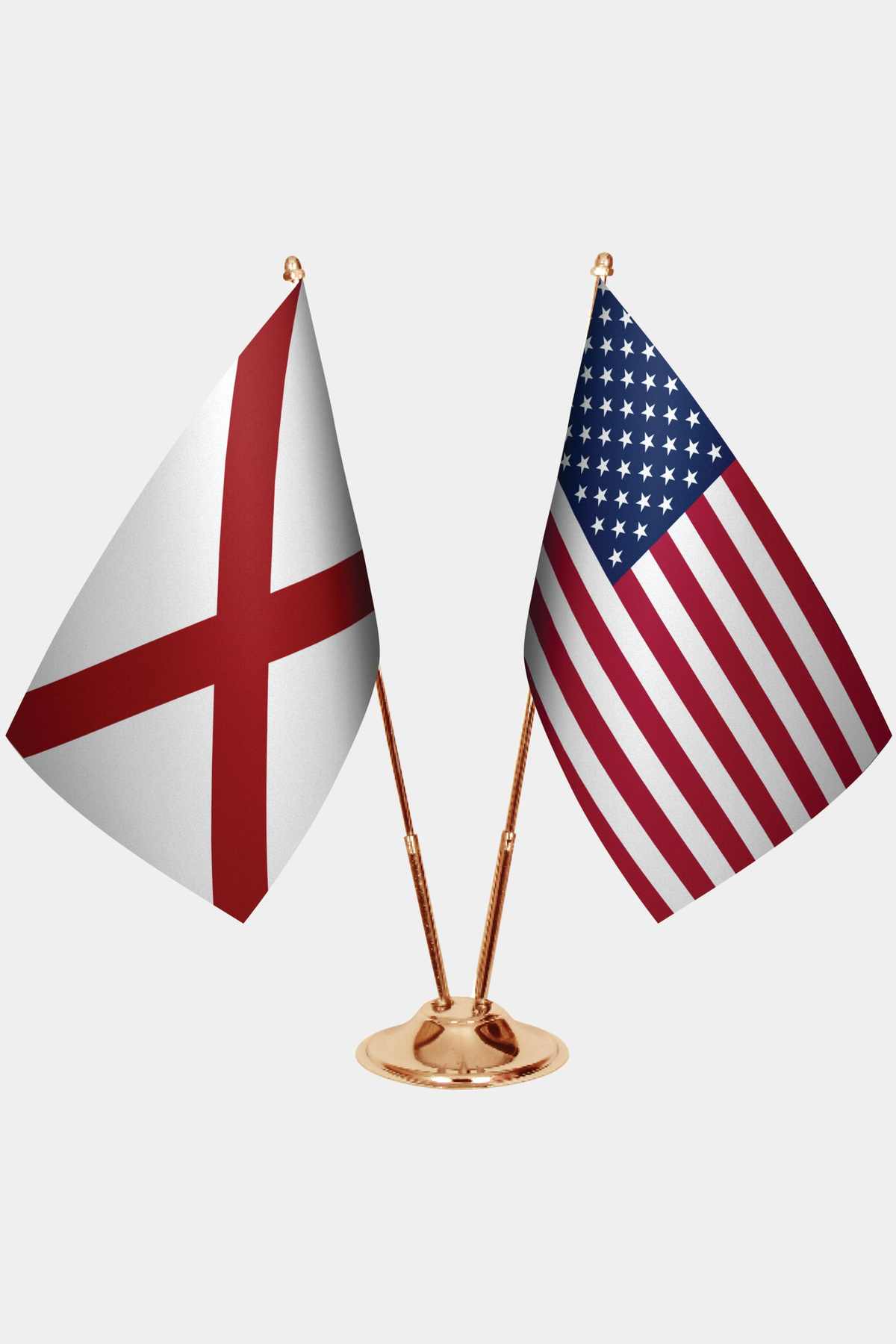
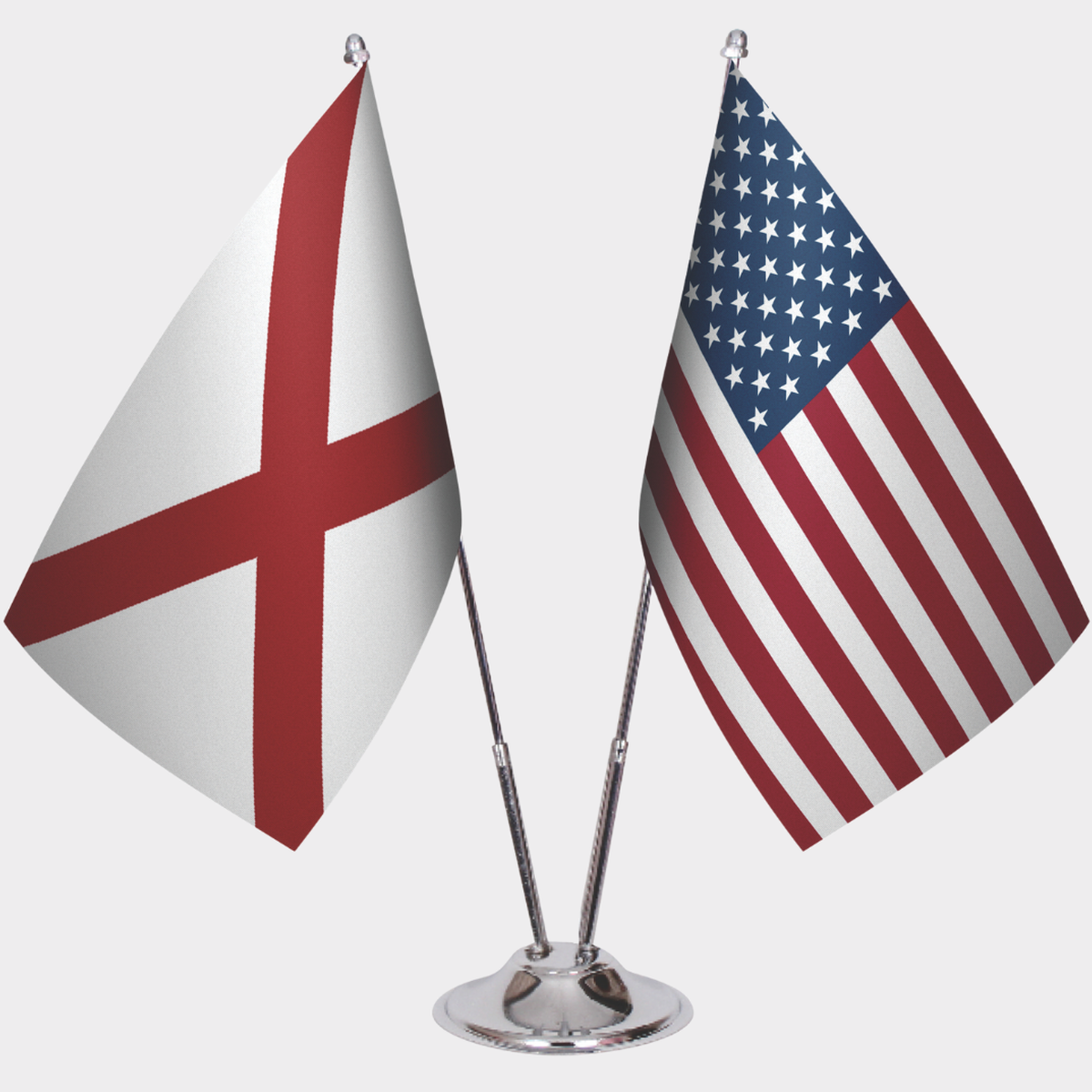
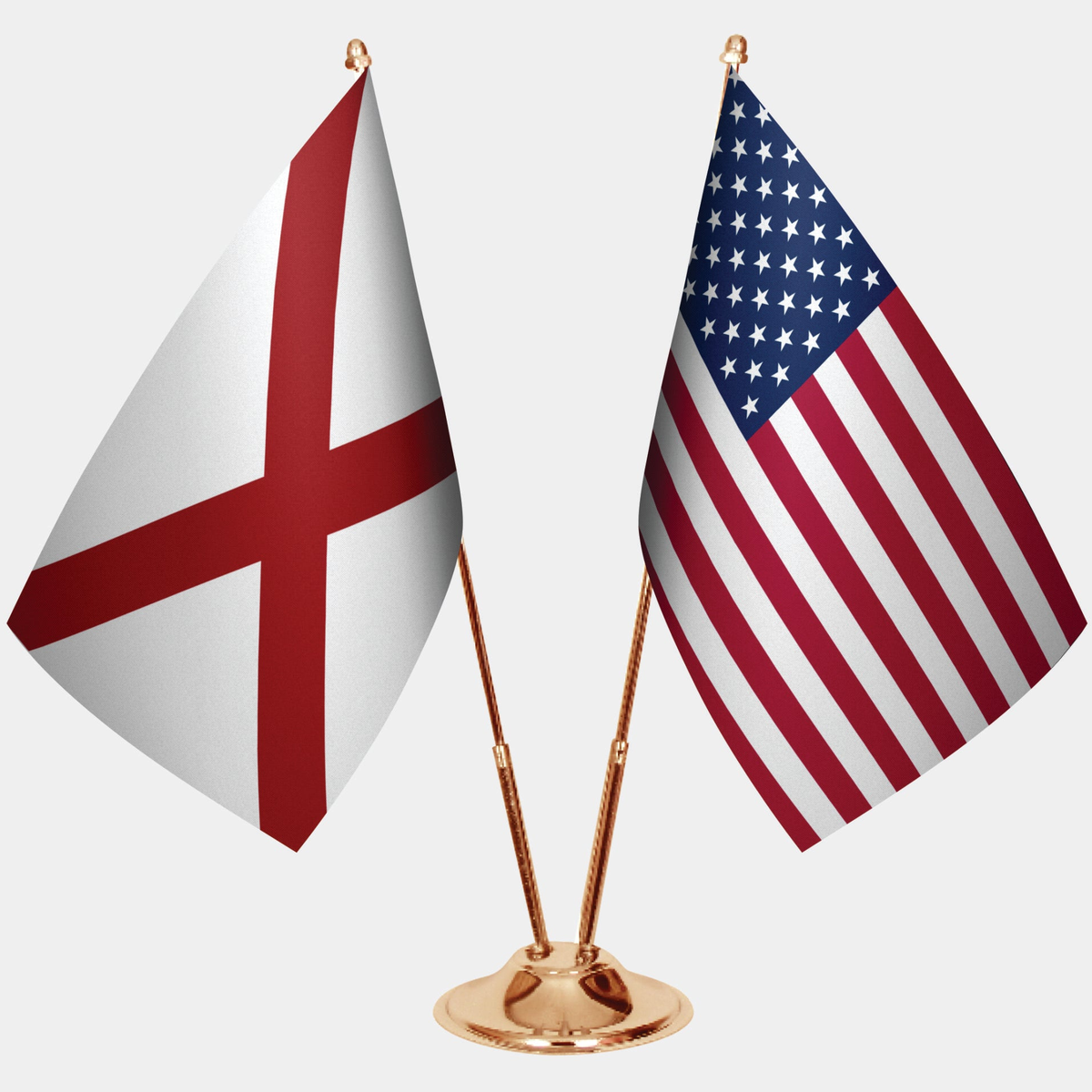
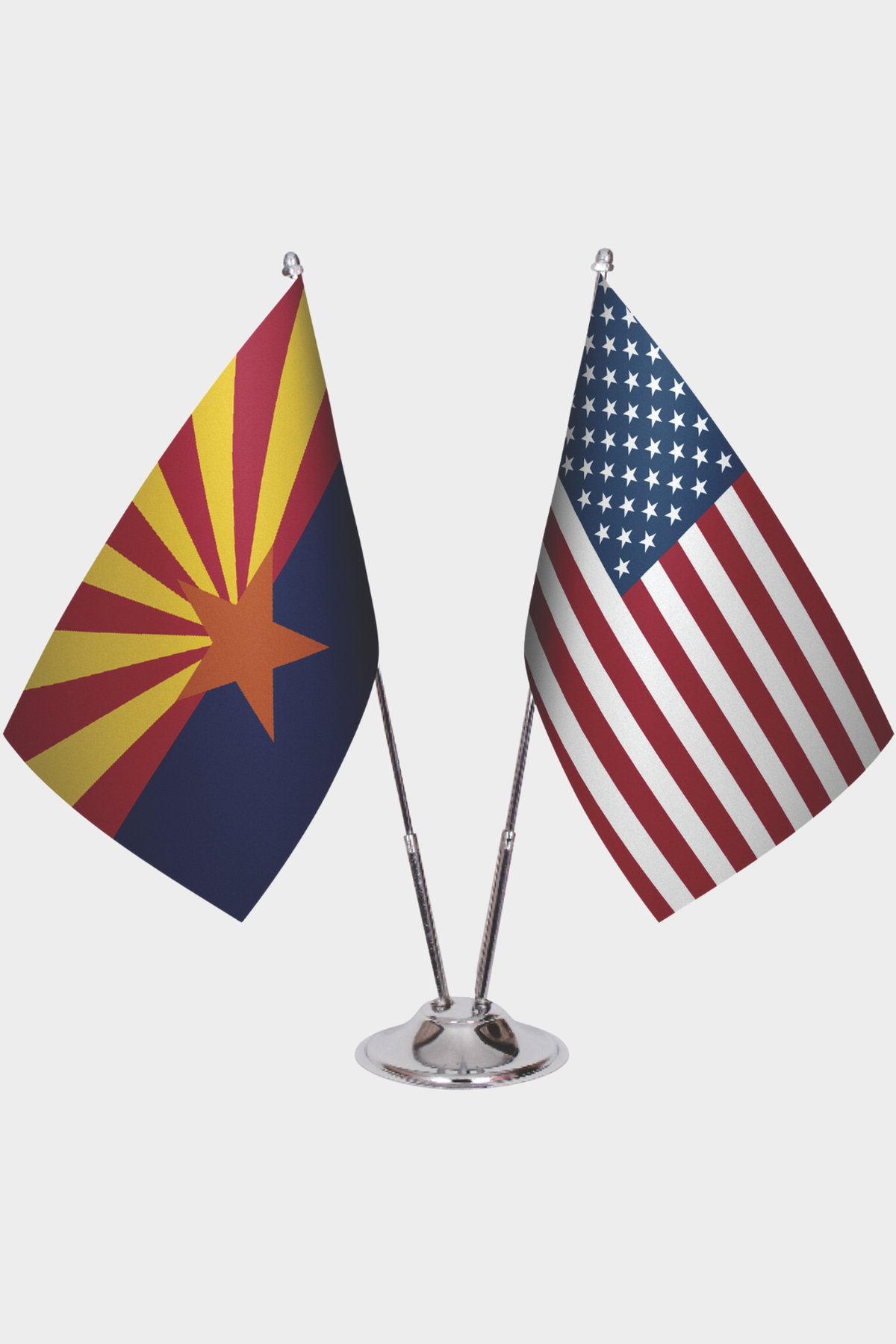
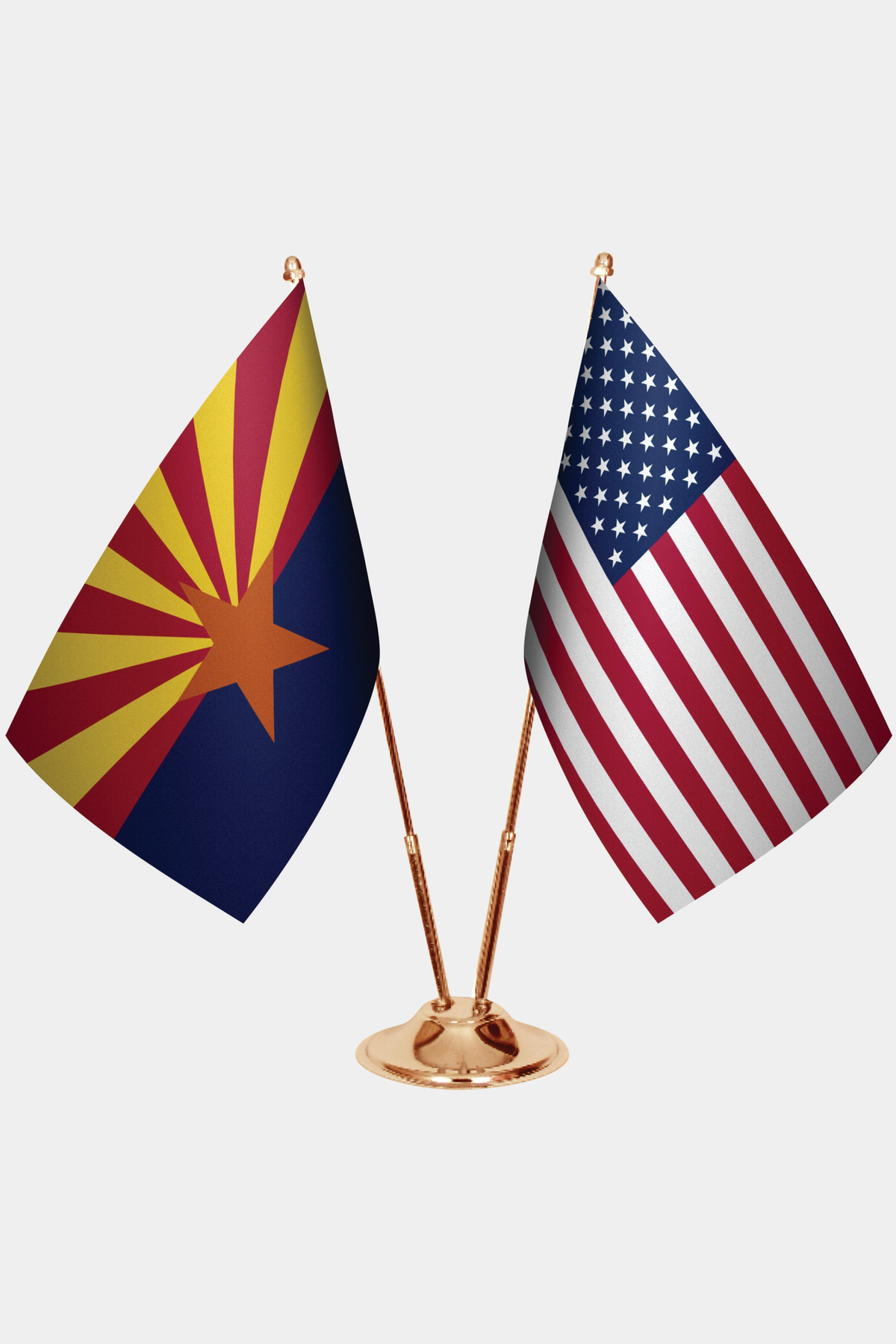
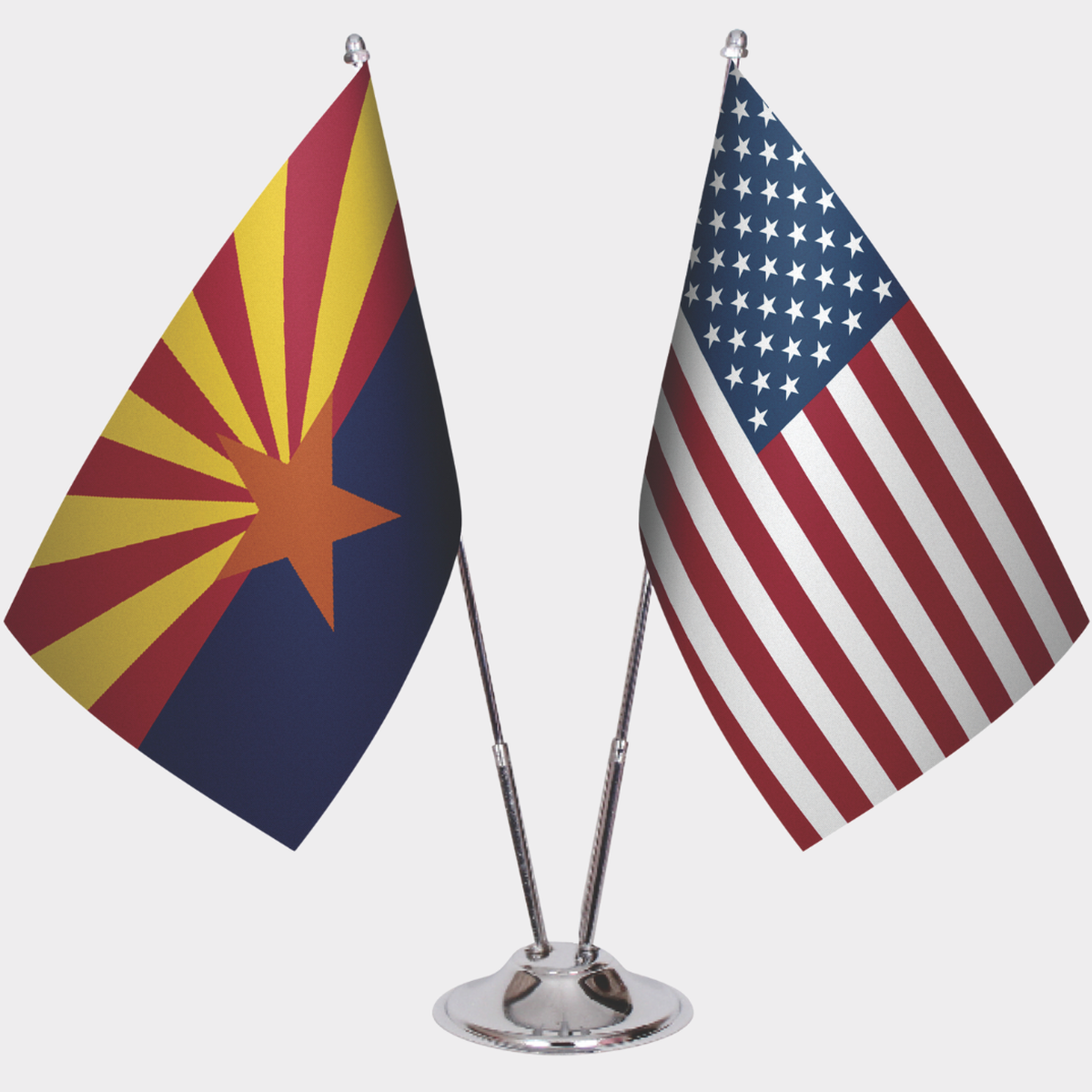
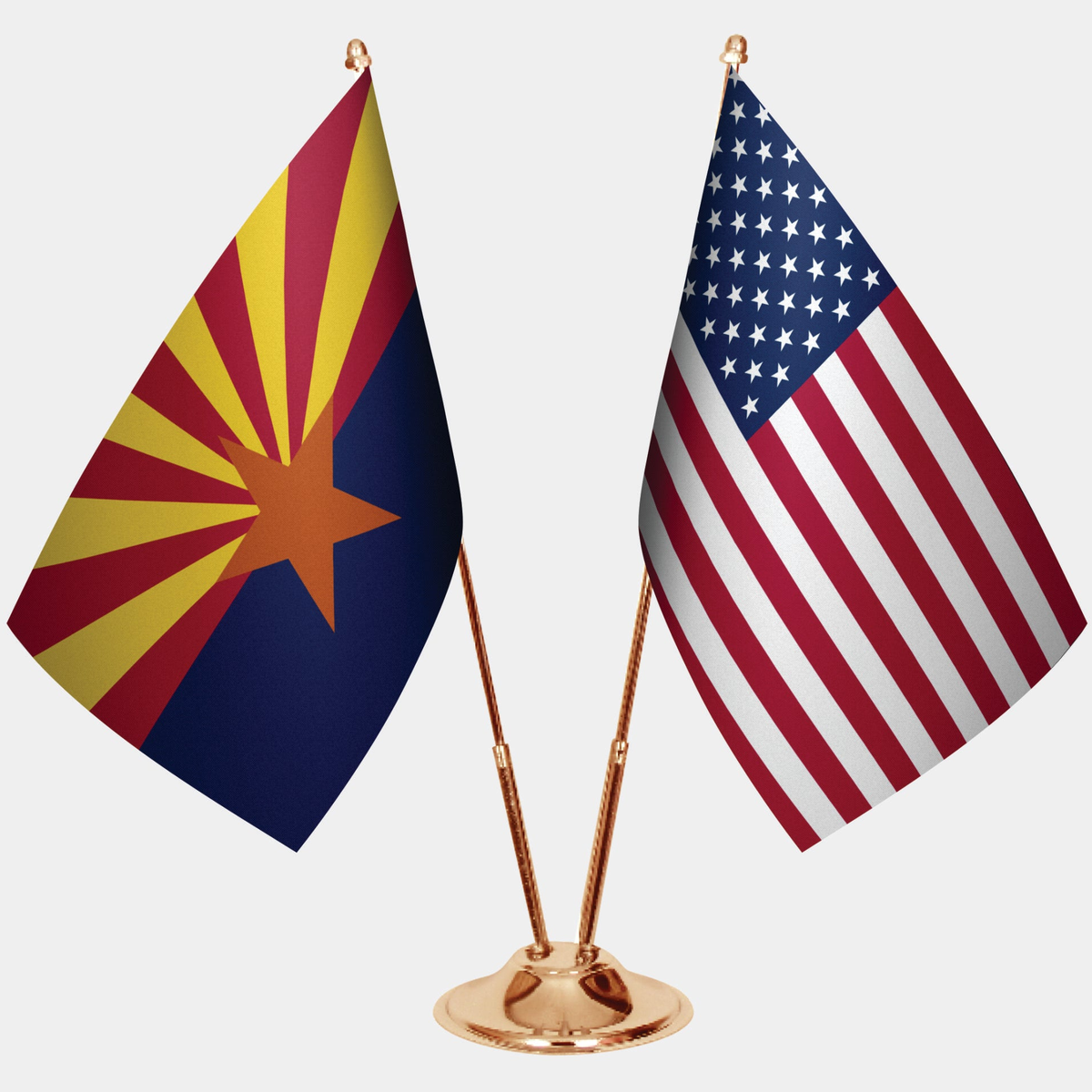
For desk and indoor settings — home offices, dens, or classroom displays — the Premium Double USA Table Flag offers a dignified way to keep the national flag present in an interior space. Its weighted base keeps the flag upright without leaning, and the double-ply construction ensures the flag presents cleanly from both sides, which matters when it can be viewed from multiple angles in a room.
 Indoor table flags occupy a specific category under the Flag Code: they are subject to the same orientation and courtesy rules as any other display, but the lighting and 24-hour provisions are naturally met in an interior setting. The Premium Double USA Table Flag is sized at 4 in × 6 in (10 cm × 15 cm), maintaining the correct 1:1.5 proportion standard used across desk-flag formats. Positioning it to the right of a speaker or presentation surface — as the Flag Code directs for indoor staff displays — is straightforward with this format since the base can be placed precisely without wall hardware. For a broader range of indoor options including different staff heights and base styles, the USA Desk Flags collection covers the full spectrum of tabletop display needs for both home and office environments. Inspect even indoor flags periodically for dust accumulation and fabric stress at the pole sleeve — indoor display does not mean the flag is exempt from condition standards.
Frequently Asked Questions
What does the Flag Code actually mean for a private homeowner? +
What are the basic rules for displaying the American flag at home? +
What are flag courtesy rules when the national anthem or Pledge is recited? +
What flag display rules apply specifically to windows and walls? +
Can I leave my American flag out overnight? +
How should I properly retire a worn American flag? +
Are flag-patterned items like scarves or fan gear considered disrespectful under the Flag Code? +
Knowing and applying American flag etiquette rules is a mark of civic literacy that costs nothing and communicates volumes. Start with a flag that is built to last — our USA Flag Collection covers every format from residential outdoor pole flags to USA Desk Flags for home offices. For car and parade displays, the 2-Pack USA Car Window Flags provide a Code-friendly vehicle mounting option that holds up through parades and daily drives. Bulk pricing is available for corporate, municipal, and institutional orders — contact us directly to discuss volume requirements and custom sizing.