
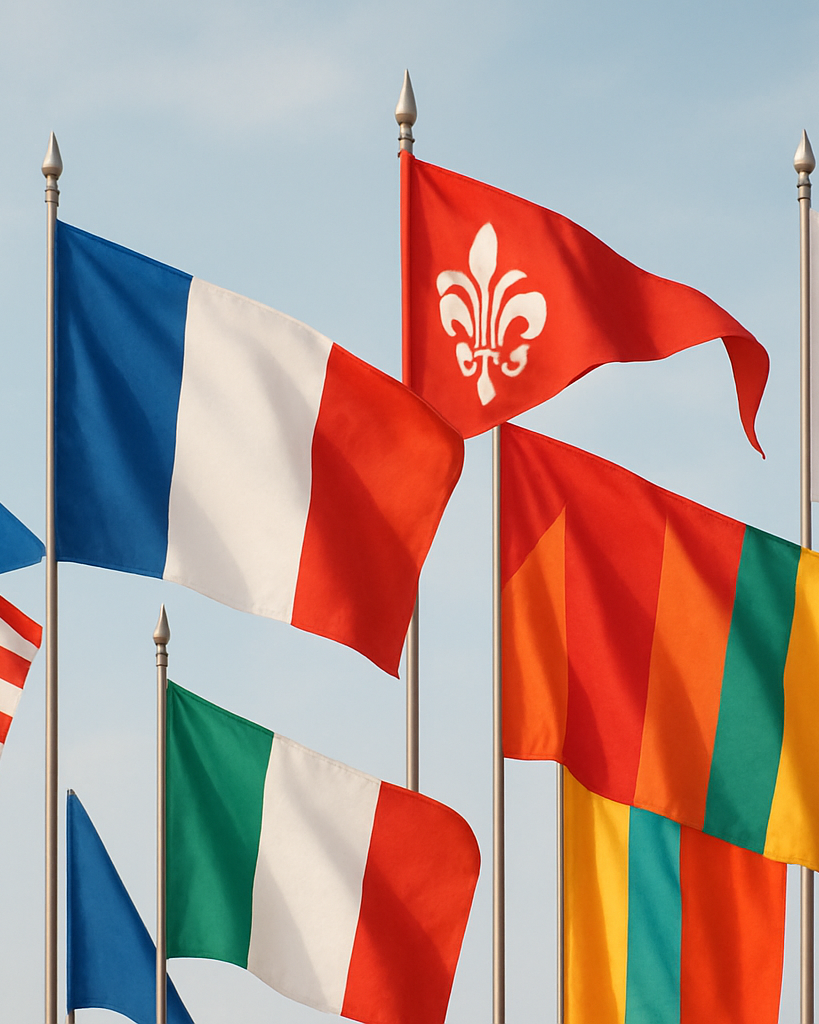
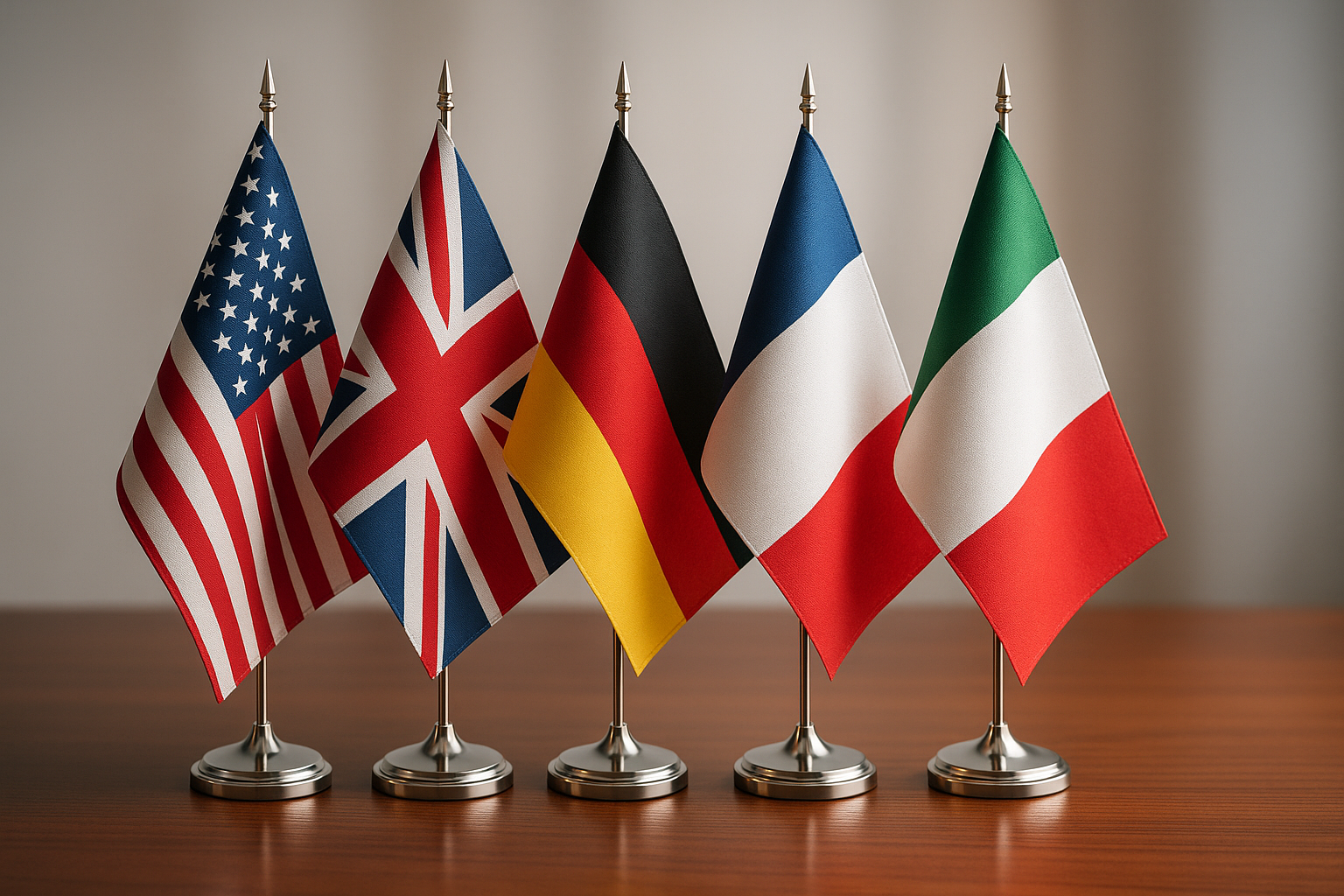

Choosing the right parade flags and carriers for your unit comes down to three factors: flag size relative to your formation width, carrier hardware that keeps bearers comfortable for the full route length, and quantity aligned to your unit's rank structure. Browse the full range of options in the Handheld Country Flags collection to match every role in your parade lineup — from color guard leads to crowd-facing rank-and-file bearers.
What type of flag actually works for a marching parade unit?
Handheld flags on sticks are the standard choice for parade units because they are lightweight, instantly recognizable from a distance, and require no mounting hardware. A flag that is too large becomes unwieldy at marching pace, while one that is too small disappears visually in a crowd — the sweet spot for most units is a flag panel between 4 in × 6 in (10 cm × 15 cm) for crowd distribution and 12 in × 18 in (30 cm × 46 cm) for visible formation marching.
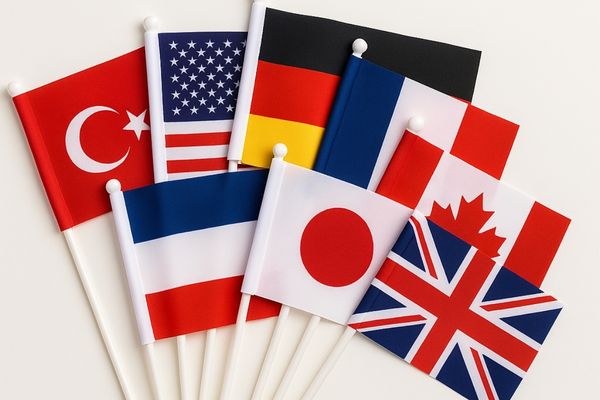
For rank-and-file marchers who will wave flags at the roadside crowd, smaller handheld flags on plastic sticks are ideal: they are low weight, easy to hold for 30–90 minutes, and inexpensive enough to hand off to spectators at the end of the route — which builds community goodwill and reduces your post-parade cleanup burden. For color guard or lead positions, a stiffer, larger panel on a wooden or fiberglass pole reads clearly in photographs and broadcast footage, which matters for civic and military-adjacent units. The fabric weight also plays a role: Asya Bayrak's handheld flags are made from 90 g/m² Raschel knitted polyester, a fabric weight that holds its color vibrantly under direct sunlight while remaining light enough that bearers' arms do not fatigue over a long route. Raschel's open knit structure allows wind to pass through slightly, which reduces pole torque — a meaningful comfort advantage compared with heavier woven fabrics common in the market.
 The USA Handheld Flag is a strong example of what a well-spec'd parade flag should deliver: it is crafted from 90 g/m² Raschel polyester with high-definition direct printing that keeps the red, white, and blue saturated even in midday sun, and it comes pre-mounted on a stick so your unit can grab-and-go on parade morning. The panel size is designed to wave naturally at marching pace without wrapping around the pole, which is one of the most common frustrations parade organizers report. If your unit includes international participants — common in multicultural city parades, diaspora celebrations, and international sports events — the same format is available for dozens of national flags, letting you maintain visual consistency across your entire formation. For units that need multiple copies of the same flag without custom ordering, this pre-mounted format is the fastest path from purchase to parade-ready.
How many flags does your unit actually need?
Calculate flag quantity by adding one flag per marching position, a 10–15% breakage/loss reserve, and a separate allocation for crowd handouts if your unit plans them. A 50-person unit typically needs 55–60 flags for marchers plus however many extras you plan to distribute to spectators along the route.
Many parade coordinators underestimate how quickly crowd handout flags disappear — especially at patriotic events like Fourth of July, Memorial Day, and Veterans Day parades where spectators actively reach for them. A practical rule: if your route passes through a dense spectator corridor, budget 1 handout flag for every 3–5 ft (roughly 1–1.5 m) of densely packed crowd. For large civic parades, that can mean hundreds of additional flags. Ordering in multi-packs is the most cost-effective approach at this scale.
 The 10-Pack American Flags on Stick is purpose-built for exactly this scenario: a ready-to-wave bundle of ten small American flags pre-mounted on plastic sticks, designed for fast deployment at July 4th celebrations, school events, and parades where crowd-facing distribution is part of the plan. You can assign one pack per volunteer stationed along your unit's designated crowd corridor, making distribution organized rather than chaotic. Because each pack comes pre-assembled, there is no on-site stick-insertion work — a meaningful time saver when you are coordinating dozens of volunteers on a parade morning. Units that have used multi-packs for crowd handouts consistently report that spectators engage more actively with marching formations when they are holding a matching flag, turning passive onlookers into participants. Order multiple packs to cover your entire route length and keep a reserve sealed in your transport vehicle for last-minute replacements.
How should you arrange flags within your formation?
The standard formation places the national flag (US flag for domestic parades) at the right of the color guard line when facing the marching direction, with any state, organizational, or unit flags to its left — consistent with US Flag Code (4 USC § 7) guidance on flag precedence during processions. No other flag should be carried at a height superior to the US flag in a domestic parade.
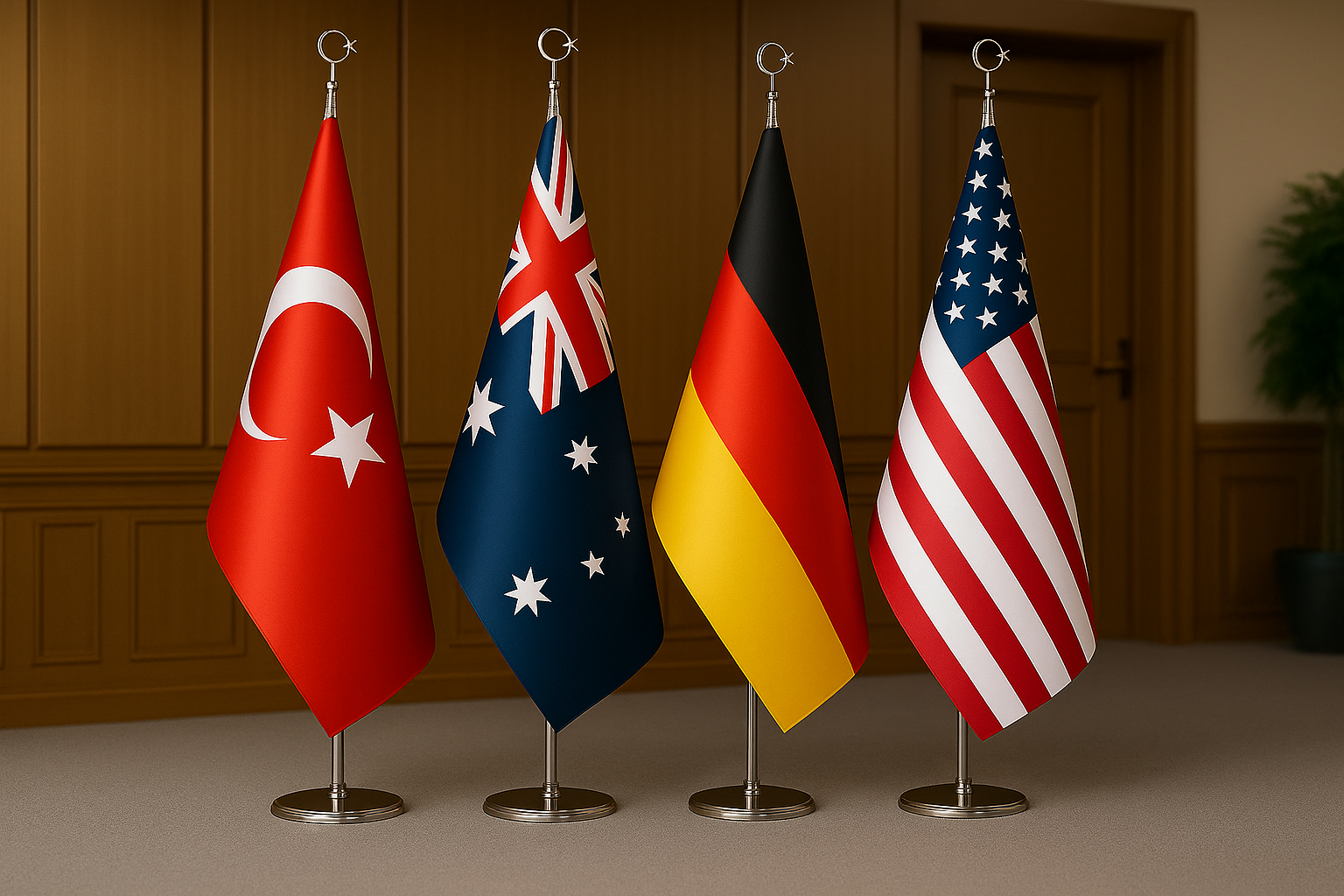
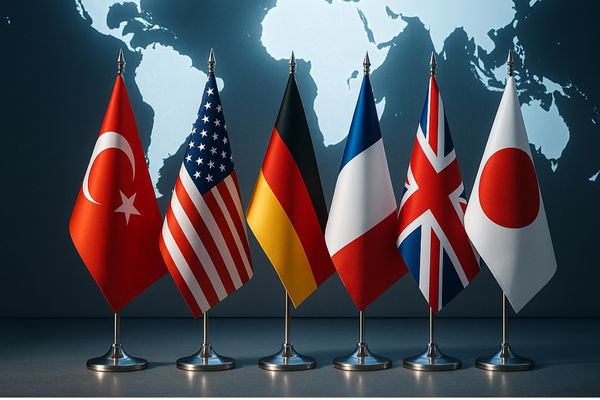
Beyond precedence, visual spacing matters enormously for how your unit photographs. Flags held at identical heights and intervals of roughly 3 ft (about 90 cm) apart create the clean, disciplined look that distinguishes organized units from informal groups. Assign a flag captain to walk behind the formation during rehearsal and correct spacing — it is nearly impossible for bearers to self-correct while marching. For units that use parade banners or signs alongside flags, position the banner at the front of the formation so it identifies the unit to judges and media before the flags come into view, then transition to flag-dominant visual weight as your unit passes the grandstand. If your parade includes a ceremony at the end — a wreath laying, an invocation, or an awards presentation — consider whether you need a formal indoor-presentation-style flag for that portion; the Indoor Flags collection covers ceremony-grade options with proper pole hardware for stationary display.

Handheld Country Flags
The full collection of pre-mounted handheld flags for parade units, crowd handouts, and multicultural events — available in dozens of national flags with consistent sizing and pole quality throughout.
Browse Collection →How should you budget for a parade unit's flags and carriers?
Budget in three tiers: formation flags for your marchers, crowd-handout flags, and any ceremony-grade flags needed at the endpoint. Formation flags are a one-time cost that can be reused across multiple parade seasons if stored properly, while handout flags are a per-event consumable cost you should build into your annual events budget.
Formation flags made from quality Raschel polyester (90 g/m²) have an outdoor lifespan of 6 months to 2 years depending on exposure frequency, storage conditions, and whether the route includes open-highway wind versus sheltered urban streets. Buying once and reusing them across Memorial Day, Flag Day, Independence Day, and Veterans Day parades in the same year amortizes your cost significantly. Handout flags, by contrast, should be budgeted at cost-per-unit and multiplied by expected crowd density — there is little return on overbuying since unused stock loses its event relevance after the holiday passes. Carrier hardware — the sticks, poles, and pole cases — are almost always reusable and represent a sound one-time investment. For units that only participate in one or two parades annually, plastic stick flags are the most cost-efficient all-in-one solution. For units that march frequently and want a more polished appearance, investing in proper wooden or fiberglass poles with dedicated holsters and harnesses pays off in bearer comfort and unit professionalism. Bulk pricing is available for corporate or organizational orders — contact Asya Bayrak directly with your unit size and event calendar for a volume quote.
When do you need to place your parade flag order?
Order at least 3–4 weeks before your parade date for standard quantities; order 6–8 weeks out if you need custom printing, large quantities (200+ flags), or flags for a fixed holiday date that cannot move. Many suppliers, including flag manufacturers, experience a surge in orders 2–3 weeks before major patriotic holidays, which extends lead times significantly.
The dates that most consistently cause late-order problems in the United States are July 4th, Memorial Day (last Monday in May), and Veterans Day (November 11). Flag orders placed less than two weeks before these dates frequently miss event delivery windows. Flag Day (June 14) is a secondary surge date that catches many small unit organizers off guard. For recurring annual parades, the most reliable approach is to place your standing order immediately after your previous parade, while quantities and any quality notes are fresh. Store your formation flags properly — rolled loosely, not folded, in a dry environment away from UV exposure — and they will be fully reusable the following season. If your unit is planning a ceremony or church processional alongside the parade, the guidance in our article on flags in church sanctuaries and fellowship halls covers the specific display rules for those transitional indoor settings.
Units that coordinate with schools, scout groups, or civic organizations may also benefit from reading about fringed vs plain flags for indoor ceremonies if any part of the event moves indoors — the distinction matters for formal presentations and award ceremonies that often bookend parade events.
What size parade banner works best for a marching unit? +
What materials are most commonly used for parade banners? +
What pole type should I use for a parade banner with a pole? +
Can I reuse parade flags the following year? +
Does the US Flag Code say anything about how to carry the flag in a parade? +
How far in advance should I order flags for a Fourth of July parade? +
Is it appropriate to hand out flags to parade spectators? +
Putting together a parade unit that looks cohesive and moves efficiently starts with matching the right flag format to each role in your formation. For rank-and-file marchers and crowd engagement, the USA Handheld Flag and the 10-Pack American Flags on Stick cover the two most common needs — individual bearer flags and bulk crowd-handout sets — without requiring any on-site assembly. For units whose parade ends in a formal ceremony requiring stationary display, the Indoor Flags collection offers ceremony-grade options with proper pole hardware. The full range of handheld formats — covering dozens of national flags for multicultural and international parade units — is available in the Handheld Country Flags collection. Bulk pricing is available for corporate, civic organization, and school district orders — reach out with your unit size and event schedule for a volume quote.


