






The Costa Rica flag comes in standard sizes ranging from 4 x 6 in (10 x 15 cm) desk flags up to 5 x 8 ft (152 x 244 cm) outdoor flags, and the key sizing decision is whether you need the civil version — plain horizontal stripes — or the state/official version that includes the coat of arms. Both versions follow the same 2:3 width-to-length proportion established under Costa Rican national standards and referenced in FIAV flag design records, but the coat of arms version carries specific placement requirements that affect how the design is reproduced at different scales. Whether you are outfitting a government office, flying a flag from a residential pole, or handing flags out at a cultural event, the Country Flags collection covers all formats with accurate color reproduction across the blue, white, and red stripe sequence.
Standard Costa Rica Flag Sizes and Where Each One Is Used
Costa Rica flags are produced in four main size categories — desk, handheld, indoor/ceremonial, and outdoor — and each category serves a distinct display context with its own mounting system and material requirements. The 4 x 6 in (10 x 15 cm) format is the universal desk size, used for conference tables, reception counters, and diplomatic offices. The 12 x 18 in (30 x 45 cm) and 18 x 24 in (45 x 60 cm) sizes are the most common handheld event sizes, light enough for parades and sports venues. For indoor ceremonial use, the 3 x 5 ft (91 x 152 cm) format is the global standard for floor-standing pole sets in embassies, government chambers, and institutional lobbies. Outdoor residential flags most commonly measure 3 x 5 ft (91 x 152 cm) or 4 x 6 ft (122 x 183 cm), while commercial and government building flags step up to 5 x 8 ft (152 x 244 cm) or larger.
The coat of arms version of the Costa Rica flag is mandated for all official state purposes — government buildings, diplomatic missions, formal ceremonies — while the civil version (stripes only) is appropriate for general public and commercial display. This distinction matters for sizing because the coat of arms requires sufficient surface area to remain legible: flag manufacturers recommend a minimum of 2 x 3 ft (61 x 91 cm) for the emblem to read clearly at normal viewing distances. At desk flag scale (4 x 6 in), the coat of arms is typically rendered through high-definition sublimation printing to preserve detail at small sizes, rather than being omitted or simplified.
How to Choose a Costa Rica Flag Size Based on Pole Height and Viewing Distance
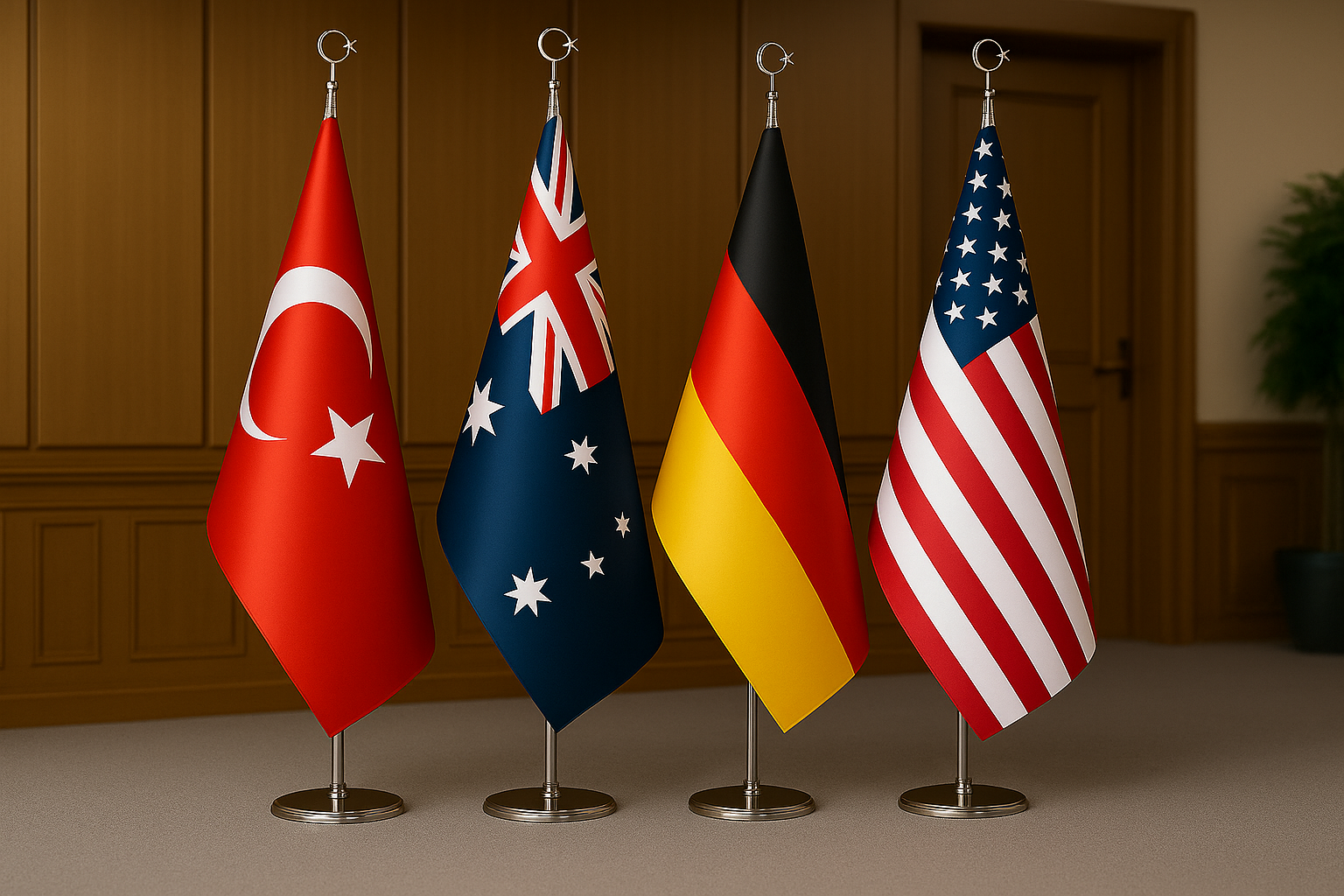
The right flag size is determined primarily by pole height and the distance from which the flag will be viewed — a flag that looks impressive up close may disappear at 50 ft (15 m) if undersized for its pole. The internationally accepted guideline is that flag length should equal approximately one-quarter to one-third of the pole height. A 20 ft (6 m) residential pole, for example, calls for a 4 x 6 ft (122 x 183 cm) flag; a 25 ft (7.6 m) commercial pole suits a 5 x 8 ft (152 x 244 cm) flag. For indoor stands, the standard 8 ft (2.4 m) ceremonial pole pairs with a 3 x 5 ft (91 x 152 cm) flag — the size that the Costa Rica Official Indoor Flag is designed to fit, mounted on a durable chrome metal pole and constructed from double-layer satin fabric for formal settings.
 Viewing distance is equally important when the coat of arms is part of the design. The Central American shield on the Costa Rican state flag contains detailed imagery — mountain silhouettes, ships, and a rising sun — that requires at least 2 x 3 ft (61 x 91 cm) to remain identifiable from 10 ft (3 m) away. At 3 x 5 ft (91 x 152 cm), the emblem is fully legible from 20 to 30 ft (6 to 9 m), which covers most indoor ceremonial rooms. For outdoor settings where the flag will be viewed from across a street or courtyard — typically 50 to 100 ft (15 to 30 m) — a 4 x 6 ft (122 x 183 cm) or 5 x 8 ft (152 x 244 cm) flag ensures the coat of arms remains recognizable. Always factor both the pole height and the expected audience distance when selecting a size, especially for official or diplomatic display where emblem legibility carries protocol significance.
The 2:3 Proportion Rule and How It Governs Every Costa Rica Flag Format
Every standard Costa Rica flag — regardless of size or whether it carries the coat of arms — follows a 2:3 width-to-height ratio, meaning the flag is one and a half times as wide as it is tall. This proportion is consistent across all formats: a 2 x 3 ft (61 x 91 cm) flag, a 3 x 5 ft (91 x 152 cm) flag, and a 4 x 6 ft (122 x 183 cm) flag all maintain the same visual proportions. The five horizontal stripes (blue, white, red, white, blue) are divided so that the central red stripe is twice the width of each of the four flanking stripes, a specification established in Costa Rican law and documented in FIAV records for internationally standardized flag production.
This ratio affects how the coat of arms is positioned. The emblem is centered on the red stripe, slightly offset toward the hoist side at smaller scales to maintain visual balance when the flag is flying. Manufacturers that deviate from the 2:3 ratio — producing flags that are 1:2 or non-standard proportions — will distort both the stripe widths and the emblem placement. When ordering in bulk for official use, verifying that the manufacturer adheres to the 2:3 proportion and accurate stripe-width ratios is as important as material quality. This is especially relevant for procurement officers and embassy staff sourcing flags for formal settings where protocol accuracy matters.
Indoor, Outdoor, and Desk Sizes Side by Side
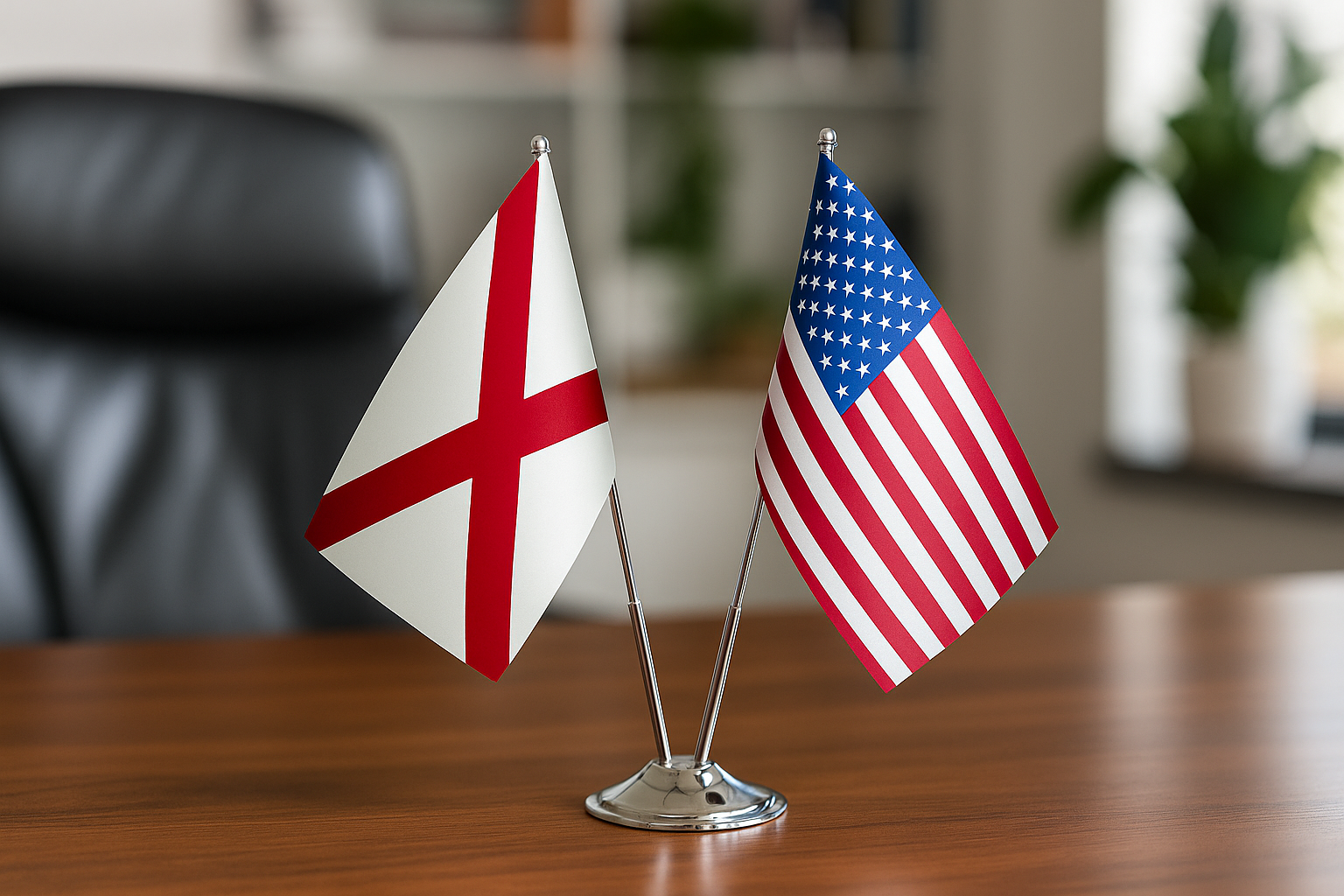
 The three main display environments — indoor ceremonial, outdoor, and desktop — each have their own size norms and material requirements, and mixing them up is a common and avoidable mistake. For outdoor display, the Costa Rica Outdoor Flag is crafted from 110g Raschel knitted polyester, a material chosen for its UV resistance and ability to maintain vibrant color through wind and weather exposure; typical outdoor sizes range from 3 x 5 ft (91 x 152 cm) to 5 x 8 ft (152 x 244 cm). For indoor ceremonial use, the satin double-layer construction of the Official Indoor Flag delivers a richer drape and more controlled color rendition under artificial lighting, fitting the standard 3 x 5 ft (91 x 152 cm) ceremonial pole format. Desk flags sit at the opposite end of the scale: the Costa Rica Desk Flag is mounted on a chrome metal pole with a weighted base and available in Silver Chrome or Gold finish, providing a professional desktop presentation that works equally well for executive offices, diplomatic reception desks, and classroom displays. Handheld flags — typically 12 x 18 in (30 x 45 cm) on a stick — occupy an entirely separate category suited for events, parades, and spectator use, where the flag needs to be light and easy to wave without fatigue.
When comparing these formats for institutional procurement, it is useful to think in terms of three variables: display distance, mounting system, and whether the coat of arms is required. Embassies and government offices almost always require the coat of arms version in both indoor and outdoor formats. Schools and cultural organizations often use the civil stripe-only version for general display, reserving the emblem version for formal occasions. Event organizers sourcing the Costa Rica Handheld Flag for parades or sporting events will find that the 12 x 18 in (30 x 45 cm) format strikes the best balance between visibility and ease of use for crowds, and the 90g Raschel polyester fabric ensures bright color even in direct sunlight.
America Countries Flags Collection
Explore flags from across North, Central, and South America — each produced to accurate proportions and available in indoor, outdoor, desk, and handheld formats.
Browse Collection →Sizing Mistakes That Are Easy to Make With the Costa Rica Flag
The most common sizing mistake with the Costa Rica flag is selecting a size that is correct for the pole height but too small for the coat of arms to remain legible — particularly problematic for official and diplomatic settings where the state version is required. A 2 x 3 ft (61 x 91 cm) flag on a 20 ft (6 m) outdoor pole, for instance, will look undersized and will render the emblem nearly invisible from the street. The flag should generally fill 25–33% of the pole height in length, which for a 20 ft (6 m) pole means a minimum of 4 x 6 ft (122 x 183 cm).
A second frequent error is ordering the civil (stripe-only) version when the coat of arms is diplomatically or legally required. In Costa Rica's flag protocol, the emblem version is the state flag and is mandatory for government and embassy use; supplying a plain-stripe flag to an embassy would be a protocol violation. Conversely, ordering the emblem version for a large-quantity event giveaway inflates cost unnecessarily, since the civil version is perfectly appropriate for public celebrations, sporting events, and general commercial display. A third mistake is purchasing outdoor-grade Raschel polyester flags for indoor ceremonial stands, where the heavier knit fabric will not drape as elegantly as the satin double-layer construction used in the Official Indoor Flag — the material difference is visible immediately under the lighting conditions of a formal chamber or embassy lobby. If you are also sourcing flags for neighboring Central American countries, the article on what the stars and quarters on the Panama flag mean covers similar protocol and sizing considerations for that neighboring nation's flag.
Finally, buyers sometimes overlook the difference between flag size and total display height when specifying indoor floor-standing sets. The 3 x 5 ft (91 x 152 cm) flag is the flag panel size; the full display including a gold finial and the chrome metal pole typically reaches 8 to 9 ft (2.4 to 2.7 m) floor to tip. Always confirm ceiling clearance before ordering ceremonial indoor sets for lower-ceiling spaces such as conference rooms or reception areas.
Does the coat of arms on the Costa Rica flag change how the flag is sized or printed? +
Is the Costa Rica civil flag (no coat of arms) legal to fly in the United States? +
What flag size works best for a 20 ft outdoor pole at a business entrance? +
Can I use the same Costa Rica flag indoors and outdoors, or do I need separate flags? +
How many Costa Rica handheld flags should I order for a parade or sports event? +
What ceiling height do I need for a Costa Rica indoor flag on a full ceremonial pole set? +
How long does an outdoor Costa Rica flag typically last before needing replacement? +
Whether you are outfitting a Costa Rican embassy with an official state flag, furnishing a government conference room with a ceremonial indoor set, or distributing hundreds of handheld flags for a Pura Vida cultural festival, getting the size right from the start saves both cost and the embarrassment of a flag that looks out of place on its pole or too small for its setting. Start with the Costa Rica Outdoor Flag for exterior pole display, the Costa Rica Official Indoor Flag for diplomatic and institutional interiors, or the Costa Rica Desk Flag for professional desktop presentation — each sized and constructed for its specific environment. For guidance on keeping flag colors vivid over time in outdoor conditions, the article on keeping a flag's color through sun and rain offers practical maintenance advice applicable to any outdoor national flag. Bulk pricing is available for corporate, institutional, and government orders across all formats.


