




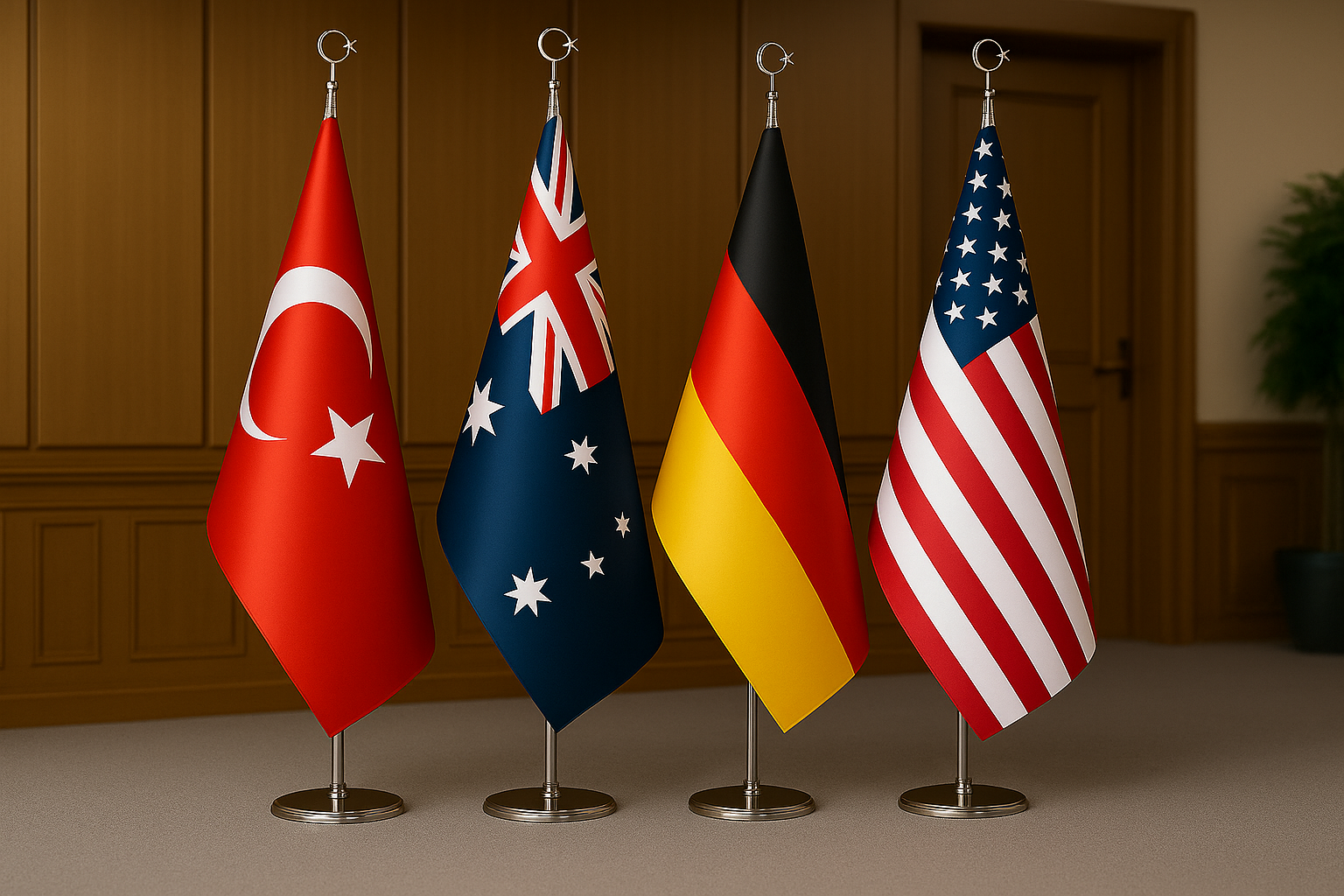




Military units, veterans organizations, and American Legion posts require specific flag sets, sizing standards, and display protocols that differ significantly from general civilian use — and getting these details right is both a legal obligation and a matter of deep respect. Whether you are outfitting a single VFW hall or placing a bulk order for dozens of posts across a state, understanding indoor flag protocol, proper ordering quantities, and material specifications will save your organization time, money, and embarrassment. This guide covers everything from the VFW indoor flag set configuration to bulk flags for military units, giving quartermaster officers, post commanders, and procurement managers a single authoritative reference for every purchasing decision. Browse the full indoor flags collection to see the complete range of options available for your post or unit.
Understanding Indoor Flag Protocol for Military and Veterans Organizations
Indoor flag protocol for military and veterans organizations is governed by the US Flag Code (4 USC §§ 1–10), Department of Defense Instruction 1005.6, and the individual bylaws of organizations such as the American Legion, VFW, DAV, and AMVETS. The Flag Code requires the national flag to always occupy the position of honor — to the speaker's right when displayed with other flags — and military branch flags follow a specific order of precedence established by DoD policy.
For American Legion flag display, the standard indoor set at most posts consists of at minimum three flags: the US national flag, the American Legion organizational flag, and the state flag. Many posts also display the POW/MIA flag, which Congress has required to be flown at certain federal facilities under Public Law 101-189, though the tradition has been broadly adopted by veterans posts nationwide. The POW/MIA flag holds a position of honor immediately below or adjacent to the national flag depending on the display configuration. Understanding this order of precedence before purchasing prevents costly reorders and ensures your post is never in the awkward position of displaying flags incorrectly during official ceremonies.
The VFW similarly prescribes a defined indoor flag protocol for military settings: the US flag stands at the right of the podium or stage, flanked by the VFW organizational flag on the left, and additional flags such as state, unit, or branch flags arranged outward. Ceremonial color guards require flags with gold fringe on three sides — a tradition with no legal requirement but deep military heritage — and parade staffs with chrome or gold spear-tip finials. Ensuring your flags conform to these ceremonial expectations is as important as the flags themselves.
Standard Sizing for Indoor Military and Veterans Organization Flags
The most common indoor flag size for veterans organizations is 3 ft × 5 ft (91 cm × 152 cm), though 4 ft × 6 ft (122 cm × 183 cm) sets are standard in larger posts, meeting halls, and state headquarters. The correct size is determined by the ceiling height and the size of the room: for ceilings under 10 ft (3 m), a 3 × 5 ft flag on a 7 ft (213 cm) pole is appropriate; for ceilings between 10–14 ft (3–4.3 m), a 4 × 6 ft flag on an 8–9 ft (244–274 cm) pole is preferred.
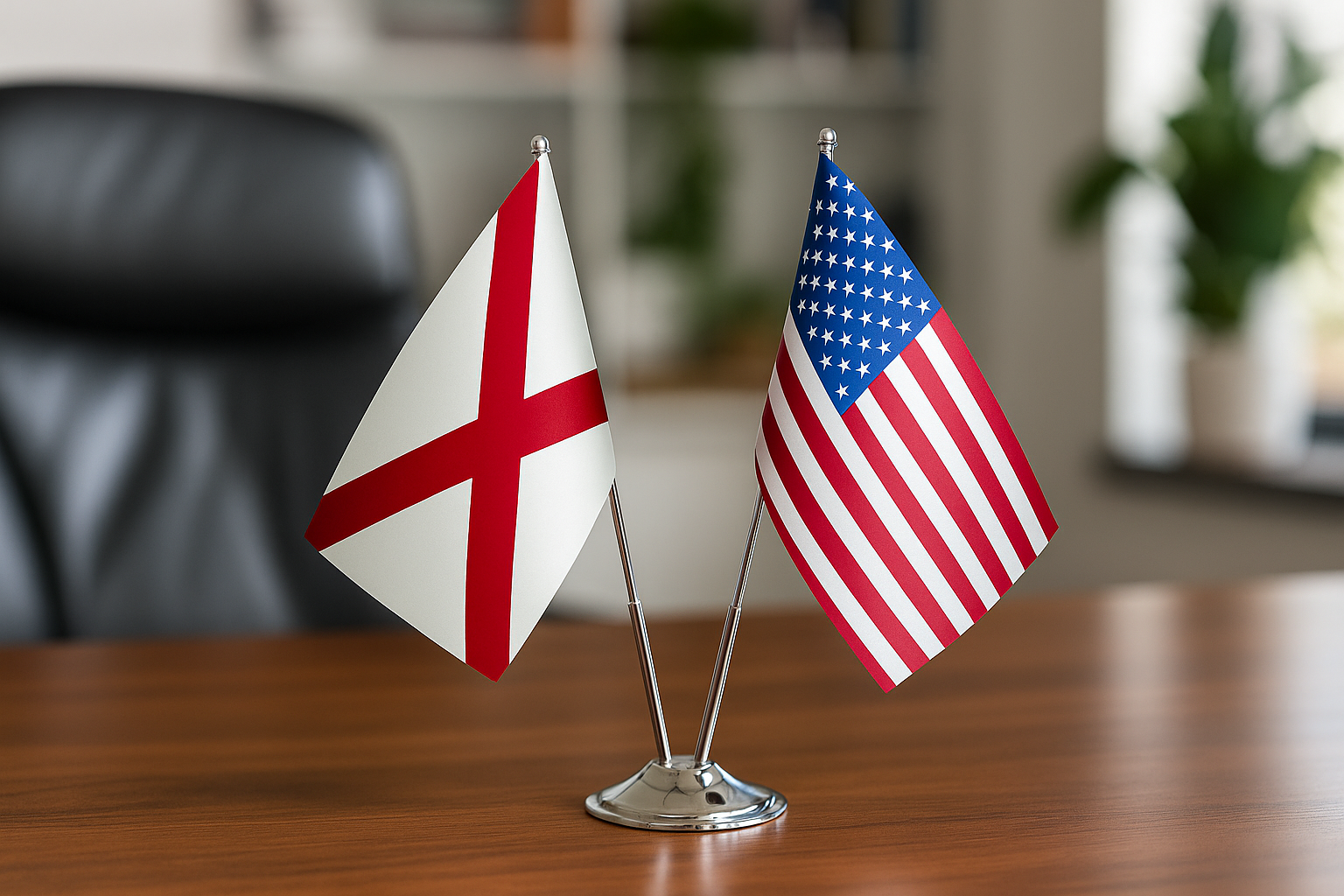
Desk and table flag sets — typically 4 in × 6 in (10 cm × 15 cm) on a 10 in (25 cm) staff — are used on conference tables during board meetings, in chaplain's stations, and on commanding officers' desks. These smaller flags must still conform to the order of precedence if displayed as a group; the national flag is always centered or placed to the right in a multi-flag desk arrangement. For auditorium stages at larger state or national conventions, flags as large as 5 ft × 8 ft (152 cm × 244 cm) may be used to maintain visual proportionality, and these require heavy-duty floor stands capable of supporting the additional weight.
Fringe-trimmed ceremonial flags for color guard use typically measure 3 ft × 5 ft (91 cm × 152 cm) and are mounted on 8 ft (244 cm) polished hardwood or chrome parade staffs. The fringe itself adds approximately 2.5 in (6.4 cm) to each fringed edge and is typically gold mylar or rayon fringe, which holds its appearance for 12–24 months under regular use. When ordering fringe flags, always specify "ceremonial" or "parade" grade rather than standard display grade, as the construction — including heavier canvas headers and reinforced grommets or pole sleeves — differs substantially.
Choosing the Right Materials for Long-Term Indoor Display
 For indoor military and veterans organization flags, material selection has a direct impact on both appearance and longevity. Two-ply polyester is the gold standard for ceremonial indoor flags: it is heavier than nylon, hangs with excellent drape, produces minimal noise, and retains vibrant color for 2–4 years under consistent indoor display — significantly outperforming lightweight nylon in static, non-wind environments. Nylon, by contrast, is preferred for outdoor use due to its lighter weight and faster drying properties, but indoors it tends to cling to the pole or hang limply rather than draping elegantly. When purchasing military flags for veterans organizations, always specify two-ply polyester or heavy woven polyester for any flag that will be permanently displayed in a meeting hall, chapel, or administrative office. The color fastness of quality indoor polyester flags — typically rated at 80–90% UV resistance — ensures that even flags displayed near windows maintain their appearance without fading for up to 3 years under normal conditions. Browse the indoor flags collection to find ceremonial-grade options built for long-term post display.
For embroidered versus printed flags, the choice depends on budget and intended use. Embroidered stars and stripes on the US national flag are considered the highest quality and are appropriate for chapels, boardrooms, and ceremonial use; they last 4–6 years of indoor display. Digitally printed flags — where the design is dye-sublimated into the fabric — are cost-effective, consistent in color, and entirely appropriate for general meeting room display, typically lasting 2–3 years before replacement is needed. Most veterans organizations maintain both: embroidered sets for formal ceremonies and printed sets for everyday post use.
Indoor Flag Stand and Hardware Requirements
 The hardware supporting your flags is as ceremonially significant as the flags themselves, and inadequate stands are one of the most common — and most embarrassing — failures at veterans events. Floor stands for indoor use must be weighted sufficiently to support the flag and pole without tipping: for a 4 × 6 ft (122 × 183 cm) flag on a 9 ft (274 cm) pole, a minimum base weight of 8–10 lbs (3.6–4.5 kg) is recommended, with wider tri-leg or cross-base configurations providing superior stability in high-traffic environments like meeting halls and auditoriums. Chrome or polished gold bases are the ceremonial standard across all major veterans organizations. For conference tables and officers' desks, the luxury chrome gold desk flag stand with weighted metal base is available in single through five-flag configurations, making it ideal for post commanders' offices, chaplain's stations, and state executive suites where multiple organizational flags must be displayed simultaneously. The weighted metal base prevents tipping even on smooth conference table surfaces, and the chrome finish meets the aesthetic standard expected in formal military and government settings. For additional options across all stand types, the bases and stands collection provides a comprehensive selection suited to every indoor ceremonial environment.
Pole selection is equally important. Hardwood poles with a lacquered finish and bright gold or chrome finials (spear, eagle, or acorn tops) are the traditional choice for American Legion and VFW posts, while sectional aluminum poles with threaded connections are preferred for posts that frequently transport flags to external events or parades. Pole diameters of 1 in (2.54 cm) are standard for 3 × 5 ft flags, and 1.25 in (3.18 cm) diameters are appropriate for 4 × 6 ft sets. Explore the complete range of indoor poles and holders to find the configuration that matches your post's ceremonial and logistical needs.
Indoor Flags Collection
The complete indoor flags collection includes ceremonial sets, organizational flags, state flags, and branch flags — everything a veterans post or military unit needs for compliant, dignified indoor display.
Browse Collection →Bulk Ordering Guide for Military Units and Multi-Post Organizations
Bulk flag procurement for military units and veterans organizations follows a different logic than single-post purchasing — quantity tiers, standardization requirements, and lead times must all be factored into the buying plan. For organizations coordinating orders across multiple posts, the most cost-effective approach is a consolidated state-level order where all posts submit their requirements simultaneously, allowing the purchasing officer to qualify for wholesale pricing tiers that typically begin at 12–24 units and offer 15–30% savings over single-post retail pricing.
When preparing a veterans organization flag buying guide for bulk purchasing, the following specifications should be standardized across all units in the order: flag size (most commonly 3 × 5 ft or 4 × 6 ft), material grade (two-ply polyester recommended), finish type (printed or embroidered), fringe specification (yes/no, and fringe color), pole material and length, base type and finish, and finial style. Standardizing these specifications not only reduces per-unit cost but also ensures visual consistency when posts from the same organization display flags at shared events, regional conferences, or national conventions. Lead times for bulk orders typically run 2–4 weeks for standard printed sets and 4–8 weeks for embroidered or custom-fringe sets; plan accordingly for annual meeting dates, Memorial Day events, and Veterans Day ceremonies.
For military units placing bulk flags for military units through official procurement channels, all flags used at official government facilities must meet Buy American Act requirements (41 USC §§ 8301–8305) and, if intended for federal government display, must be manufactured in the United States. Confirm country of origin documentation with your supplier before finalizing any government procurement contract to avoid compliance issues during audit. State and city-specific flags for multi-post orders can be found in the state and city indoor flags collection, which is particularly useful when posts in multiple states need to source their respective state flags through a single vendor relationship.
Maintenance, Replacement Schedules, and Record-Keeping for Post Quartermaster Officers
A well-managed veterans post or military unit replaces its indoor flags on a defined schedule rather than waiting for visible deterioration, which is the hallmark of a well-run quartermaster program. Standard replacement intervals for indoor ceremonial flags are 18–24 months for everyday display in actively used meeting rooms, and 3–4 years for flags displayed in low-traffic administrative spaces or chapels where handling is minimal.
Quartermaster officers should maintain a flag inventory log that records purchase date, flag type and size, material and manufacturer, current condition rating (Excellent / Good / Fair / Retire), and projected replacement date for every flag in the post's inventory. This record-keeping practice not only ensures no flag reaches a condition that would be considered disrespectful under the Flag Code, but also creates a predictable annual budget line for flag procurement — typically $200–$800 per post per year depending on the size of the flag inventory and the frequency of ceremonial events. Flags that reach "Retire" status should be disposed of in accordance with US Flag Code 4 USC § 8(k), which specifies dignified destruction, most commonly by burning in a formal flag retirement ceremony — itself a common fundraising and community engagement event for American Legion and VFW posts.
When retiring flags, document the retirement in the quartermaster log, noting the date, method, and the presiding officer. This level of documentation is particularly important for posts that receive flags through government transfer programs or as donations from military installations, where the history and provenance of the flag may have ceremonial significance. A retired flag from a significant military unit or installation should be preserved or transferred to a museum or archive rather than destroyed, and this decision should be made by the post commander in consultation with the unit's historical officer.
Frequently Asked Questions
What is the correct order of flags in a VFW or American Legion indoor display? +
What size indoor flag is standard for most American Legion and VFW posts? +
Is fringe required on indoor military ceremonial flags? +
How do bulk pricing and wholesale ordering work for veterans organizations? +
What material is best for indoor veterans organization flags? +
How often should a veterans post replace its indoor display flags? +
Do government procurement rules apply to military unit flag purchases? +
What type of base or stand is appropriate for a veterans post meeting room? +
Outfitting your military unit or veterans organization with the right flags, hardware, and display protocol is one of the most visible expressions of the honor and discipline your organization represents. Whether you are a post commander placing your first full flag set order, a state quartermaster coordinating bulk flags for military units across dozens of posts, or a procurement officer sourcing compliant flags for a federal facility, Asya Bayrak LLC provides the quality, variety, and volume pricing your organization needs. Start with the indoor flags collection for your ceremonial flag sets, pair them with the right hardware from the bases and stands collection, and complete your setup with the luxury chrome gold desk flag stand for offices and conference rooms. Bulk pricing is available for corporate and organizational orders — contact us directly to receive a custom quote for your post, unit, or state organization's complete flag program.


