

Fabric happy birthday banners typically cost more than paper ones upfront, but they last for dozens of uses, making the per-event cost far lower. Whether you are planning a backyard party, an office celebration, or a large venue event, understanding what drives banner pricing helps you spend your budget wisely — and that starts with browsing the full Banners & Posters collection to compare options side by side.
What actually determines the price of a happy birthday banner?
Four core factors set the final price of any birthday banner: the material it is printed on, the size you order, the printing method used, and the quantity you buy. No single factor works in isolation — a large fabric banner printed with full-color sublimation at a single-unit quantity will naturally cost more than a small paper banner printed in bulk, and that difference is entirely predictable once you understand the variables. Breaking them down individually is the fastest way to avoid overpaying for features you do not need or underspending on a banner that will not hold up through the event.
Material is usually the biggest driver. Fabric requires a heavier substrate, more ink saturation, and a heat-fixation or sublimation process that paper simply does not. Size matters because larger banners use more material and printing time per unit. Printing method — whether direct printing on knitted polyester or dye-sublimation on satin — affects both equipment cost and color fidelity. Quantity unlocks per-unit savings through shared setup and reduced handling, so a corporate order of fifty matching banners will carry a meaningfully lower unit price than a single custom piece. Keep these four levers in mind as you read the sections below.
How the material changes what you pay — and what you get
 Fabric banners cost more per unit than paper equivalents, but that premium buys reusability, weather resistance, and a noticeably more polished look. Asya Bayrak produces birthday banners on premium crystal satin or Raschel polyester, each suited to different environments. Raschel knitted polyester — available in weights from 80 to 220 g/m² — is printed by direct printing and heat-fixed, making it resilient enough for outdoor use even in variable weather conditions. Satin, available in 100, 150, and 165 g/m² weights, is recommended for indoor events and benefits from dye-sublimation printing, which produces vivid, photo-quality color reproduction that makes birthday graphics and photographs pop under venue lighting. Paper banners, by contrast, are a single-use product: moisture warps them, sunlight fades them within hours, and they cannot be folded and stored without creasing. For a one-off casual party where the banner will be up for three hours, a paper banner may be perfectly appropriate. For a corporate birthday event, a recurring annual celebration, or any gathering where the banner will be photographed, the fabric Happy Birthday Banner justifies every dollar of its higher unit price.
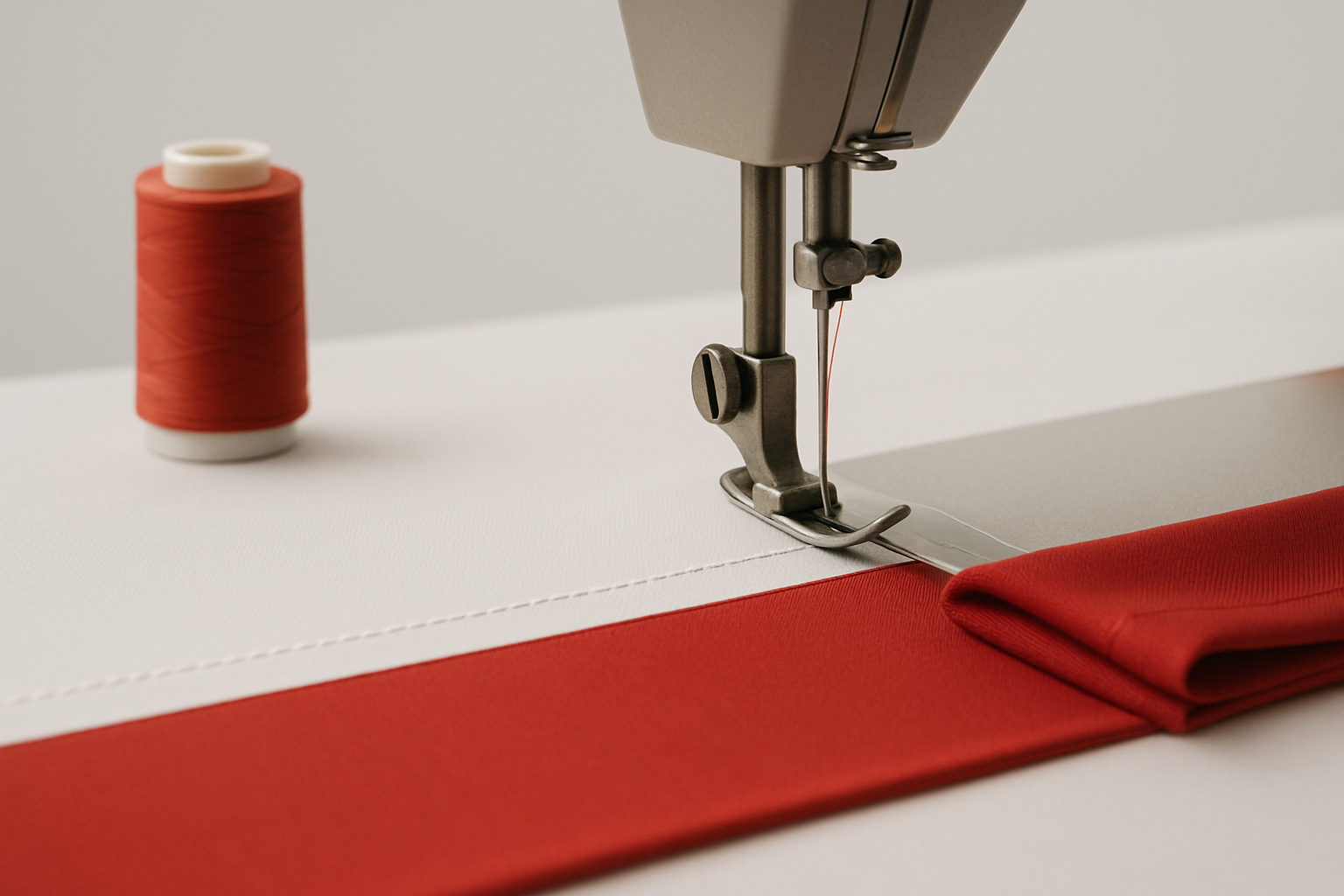
The printing method tied to each fabric also affects cost. Dye-sublimation on satin involves transferring dye under heat so it bonds permanently with the fibers — the result is a banner where the color is literally part of the fabric, not sitting on top of it. This process requires more equipment and controlled conditions, which is reflected in price. Direct printing on Raschel polyester is efficient for large runs and bright colors, keeping per-unit costs accessible for bulk orders. When you are comparing two fabric banners at different price points, the fabric weight and printing method are almost always the explanation.
How banner size moves the price up or down
Size is the most straightforward price driver: more square footage means more fabric, more ink, and more production time. A small banner sized for a home dining room will always cost less than a banner scaled for a stage backdrop or a hotel ballroom. For a detailed breakdown of which dimensions work for which settings — from compact wall strips to full-stage formats — the article on Happy Birthday Banner Sizes for Home and Office Parties covers size selection thoroughly, so this article focuses on how those size choices translate into price.
As a general principle, doubling the width of a banner roughly doubles the material cost, while doubling both dimensions quadruples it — because area grows with the square. This is why it pays to measure your space before ordering. Ordering a banner 20% larger than your wall can accommodate wastes money and may actually look worse in photographs because excess fabric can sag or fold. Conversely, ordering too small to save money produces a banner that is visually lost in the space, particularly in large venues with high ceilings. The relationship between size and price is linear, but the relationship between size and visual impact is not, so choosing the right size from the start is a genuine cost optimization.
Current pricing for fabric happy birthday banners
 Exact pricing depends on the size, fabric, and quantity you select, and the most accurate current prices are always shown on the product pages. The table below reflects the live pricing available at Asya Bayrak, updated in real time — so rather than publishing numbers that go stale, the system inserts them directly. You will find both the classic Happy Birthday Banner and the vibrant Colorful Happy Birthday Banner listed with their size options and unit prices. The colorful variant features a bolder multi-tone graphic treatment suited to festive party environments, while the standard version offers a cleaner layout that fits corporate events, award dinners, and milestone birthday celebrations where a more refined aesthetic is preferred. Both are made on premium crystal satin or Raschel polyester with full-color sublimation, ensuring that whatever you choose, the color fidelity is consistent across the entire banner face.
Current Price List
| Product | Size | Price | |
|---|---|---|---|
| Happy Birthday Banner | Standard | $8.99 | Check the live price → |
| Colorful Happy Birthday Banner | Standard | $12.95 | Check the live price → |
Prices as of November 26, 2026. All sizes and materials
How bulk and corporate orders bring the price per banner down
Ordering multiple banners in a single purchase — whether for a chain of venues, a party rental company, or a corporate events team — almost always unlocks lower per-unit pricing. The fixed costs of setup, file processing, and color calibration are shared across a larger print run, so each individual banner absorbs less overhead. For organizations that run recurring birthday celebrations — a hotel that hosts monthly VIP dinners, a school that marks student birthdays, or a corporate wellness program that recognizes employee milestones — buying a small stock of fabric banners is almost always more economical than reordering paper banners for each event.
Bulk pricing is available for corporate orders placed through Asya Bayrak, and the savings become significant at higher quantities. If you are sourcing for multiple locations or need a standing inventory, contacting the team directly with your volume requirements will give you the most accurate quote. The same logic applies to string pennant decorations — if you are building out a full party display, coordinating banner and pennant orders together can simplify logistics and potentially qualify for broader volume savings. The String Pennants collection offers a range of options that complement birthday banners well for layered event decoration.

Banners & Posters Collection
Browse the full range of fabric banners for birthdays, events, and institutional use — all printed on premium satin or Raschel polyester with full-color sublimation.
Browse Collection →Why buying the cheapest banner usually costs more in the end
A cheap paper birthday banner may seem like the economical choice, but the math rarely holds up once you factor in repeat purchases and the hidden costs of a banner that disappoints at the event. Paper banners fade, tear, and absorb humidity — a banner left up for a four-hour outdoor birthday party in summer conditions may be visibly degraded before the cake is cut. If you host or organize birthday events more than once or twice a year, you will buy paper banners repeatedly, and those costs accumulate quickly. A single quality fabric banner, properly stored, can be reused across dozens of events without any meaningful loss of color or structure.
There is also a reputational cost to consider for professional event organizers and corporate teams. A sagging, faded, or torn banner in event photography reflects on the host — and unlike the buffet table or the floral arrangement, the banner is typically framed intentionally in photos and social media content. Fabric sublimation printing holds color at over 80% UV resistance compared to paper equivalents, and the structural integrity of woven or knitted polyester means the banner holds its shape under air conditioning, outdoor breezes, and the general chaos of a busy event. For an understanding of where fabric banners perform best in outdoor settings specifically, the article on Where Printed Banners Work Best Outdoors provides practical placement guidance that is worth reading before your next event setup.
The expected lifespan of a quality fabric birthday banner ranges from 6 months to 2 years or more depending on how frequently it is used and how it is stored. Even at the lower end of that range, a fabric banner used monthly will have a per-event cost that is a fraction of what repeated paper purchases would total. The initial price difference between fabric and paper is real, but it is also the wrong number to focus on if you are making a decision based on actual cost over time.
What is the difference between a fabric birthday banner and a paper one? +
How long does a fabric birthday banner last? +
Can I use a fabric birthday banner outdoors? +
Does ordering a larger birthday banner always mean a higher total price? +
Is bulk pricing available for birthday banners for events businesses? +
What printing method is used on fabric birthday banners? +
Which birthday banner fabric is best for an indoor party versus an outdoor one? +
Choosing the right happy birthday banner comes down to matching material, size, and quantity to the type of event you are running and how often you will reuse the banner. For one-off casual parties, a compact option from the Banners & Posters collection gives you a quality fabric result at an accessible entry price. For recurring celebrations or professional event setups, the Happy Birthday Banner and the Colorful Happy Birthday Banner both offer full-color sublimation on premium satin or Raschel polyester that holds up beautifully across dozens of uses. Bulk pricing is available for corporate orders, and in-stock items are typically handed to the carrier within 1–3 business days — though ordering ahead is always advisable for time-sensitive events, and current lead times can be confirmed directly with the Asya Bayrak team at checkout.


