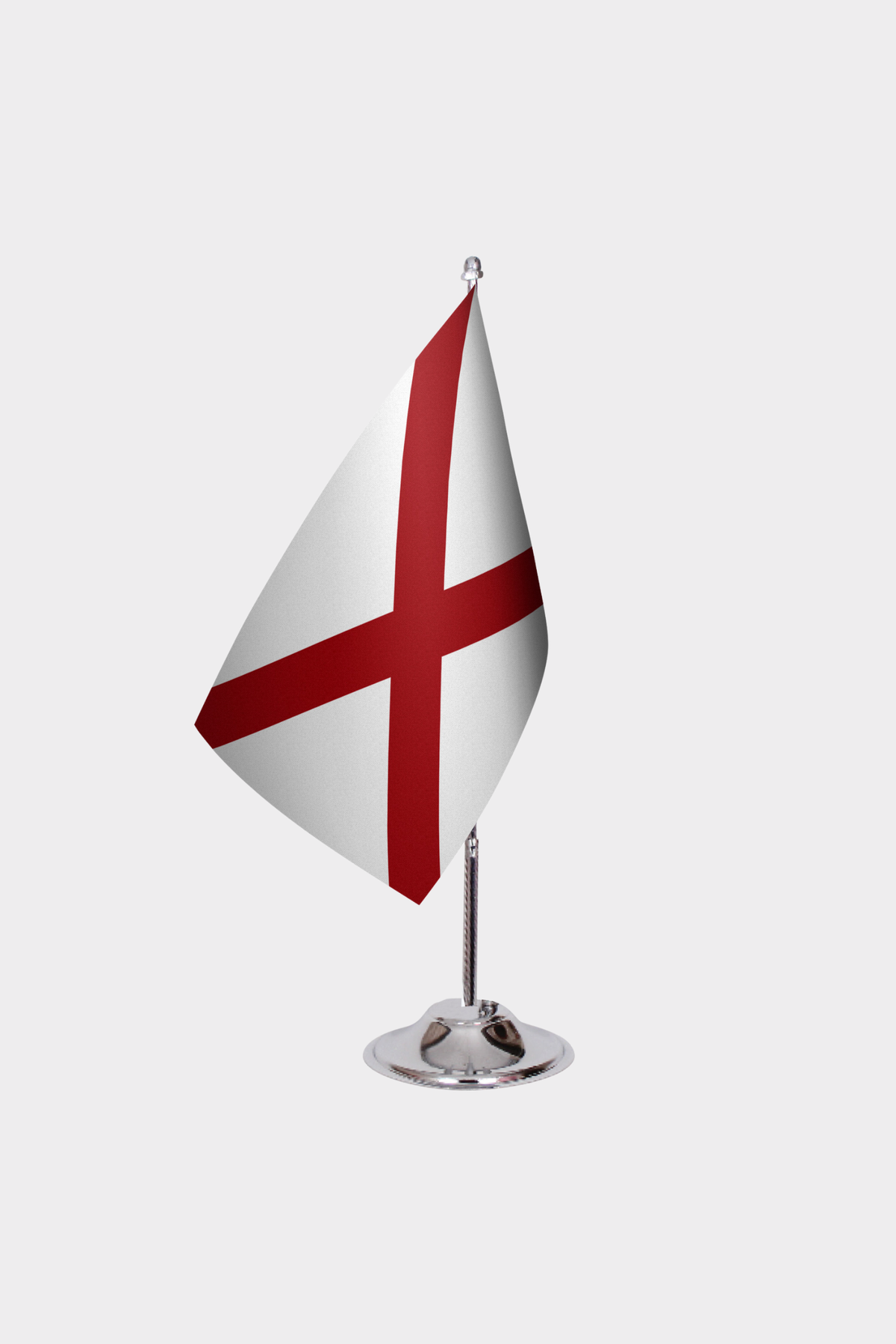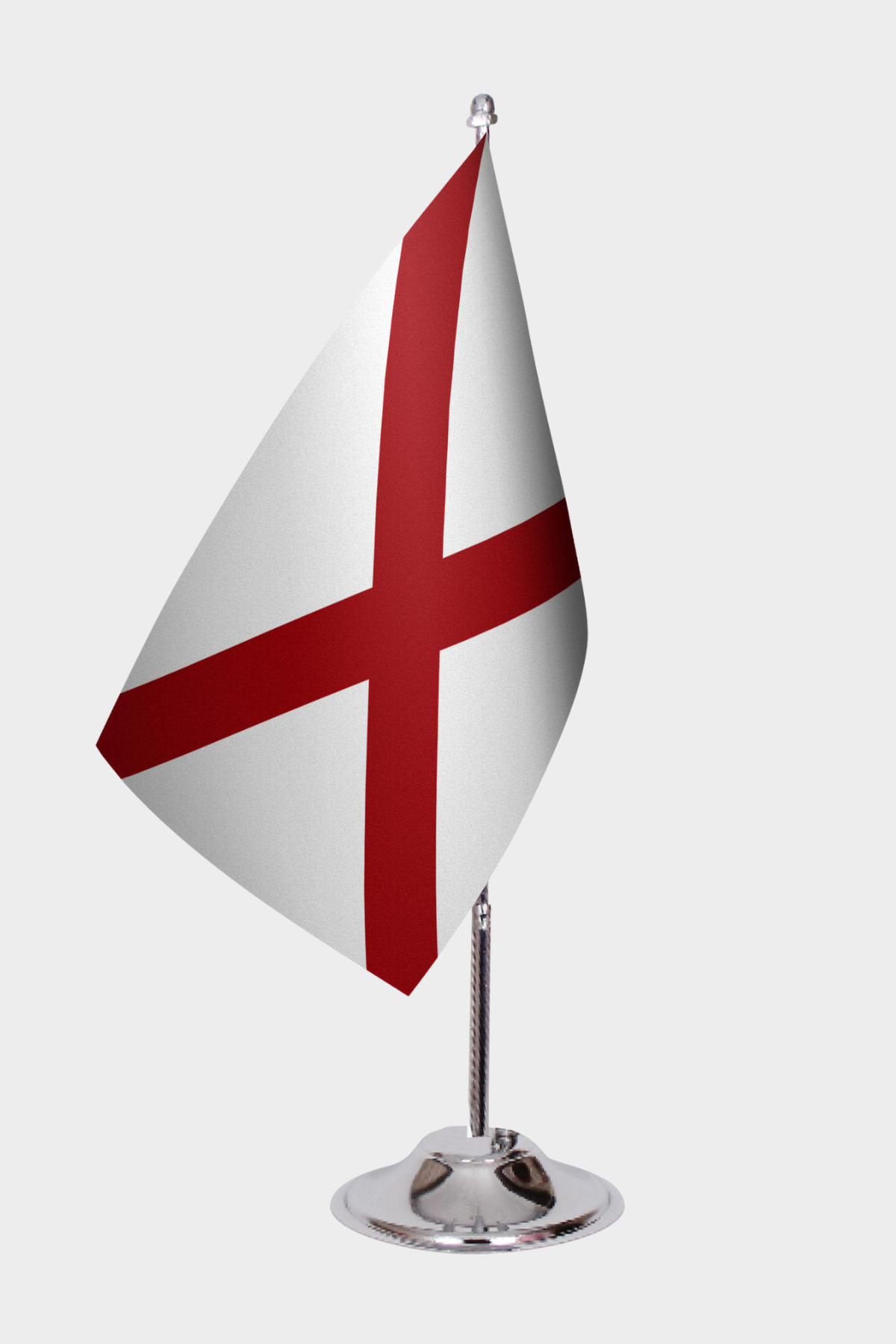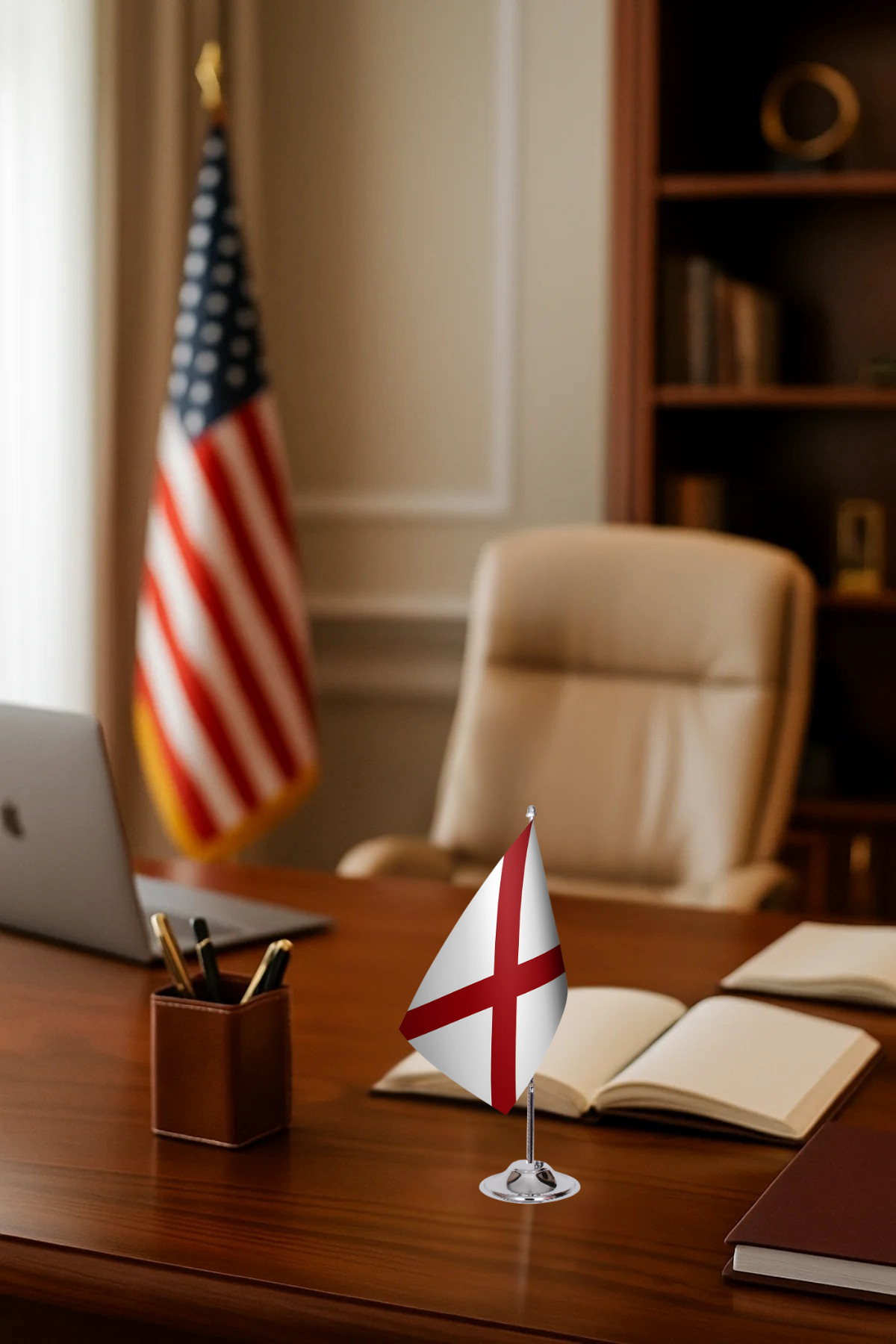

India flag prices depend on four key variables — material, size, printing method, and order quantity — and a standard outdoor flag typically ranges from a small desk model up to a large 5 ft × 8 ft (152 cm × 243 cm) pole flag. Whether you need an India flag from our full Country Flags collection for a cultural event, a government office, or everyday outdoor display, understanding what drives the cost helps you choose the right flag without overpaying or under-specifying.
What Actually Sets the Price of an India Flag?
Four factors determine what you pay: material, size, printing method, and how many flags you order. Everything else — grommets, headers, finishing — are secondary variables that feed into these four categories.
Material is the single largest cost driver. Nylon, polyester, and knitted fabrics each carry different raw-material costs, different UV-resistance ratings, and different lifespans. A heavier-weave outdoor polyester costs more to produce than a lightweight indoor fabric, and that difference shows up directly in the retail price.
Size scales the price almost linearly with surface area. Doubling the flag dimensions roughly triples the fabric needed (area scales with the square of linear dimensions), so jumping from a 2 ft × 3 ft (61 cm × 91 cm) desk-style flag to a 4 ft × 6 ft (122 cm × 183 cm) outdoor flag can more than double the base fabric cost before printing is even considered.
Printing method adds another layer. Dye-sublimation printing — the standard for premium flags — requires heat-transfer equipment and dye inks that bond permanently into the fabric fibers, delivering color that won't crack or peel. Screen printing is cost-effective for very large runs of simple designs but less common for national flags with fine details like the 24-spoke Ashoka Chakra. Direct embroidery sits at the top of the price range and is typically reserved for ceremonial or official indoor flags.
Quantity is the lever buyers control most easily. Per-unit manufacturing costs — setup, cutting, sewing, finishing — are spread across the order size, so bulk purchases unlock significantly lower per-unit pricing. This is discussed in more detail in the bulk-orders section below.
How Material Choices Change What You Pay
 The material choice is the most consequential decision you make when buying an India flag, because it determines both the upfront price and the total cost of ownership over the flag's service life. Lightweight nylon is the most popular outdoor choice: it flies in low-to-moderate winds, dries quickly after rain, and resists UV fading for roughly 6 to 18 months in continuous outdoor exposure. Woven polyester is heavier and more durable — rated for 12 to 24 months of outdoor use — making it preferable for high-wind coastal or rooftop locations, though it costs more per unit. Indoor display fabrics, used on our India Official Indoor Flag, are typically a finer-weave polyester or satin-finish material optimized for appearance under interior lighting rather than weather resistance, and they are priced accordingly. Embroidered or appliquéd ceremonial flags occupy the highest price tier, as each detail of the Ashoka Chakra must be reproduced with precise stitching — a labor-intensive process that commands a premium. If you are curious about the official color specifications and construction proportions the Ashoka Chakra must follow, our companion article on India flag colors and the Ashoka Chakra covers those standards in detail.
Standard India Flag Sizes and What Each One Is Used For
Standard India flag sizes follow international norms and align with common pole and display hardware, so choosing the wrong size creates a mismatch that looks awkward and wastes money. The most common sizes in the United States market are:
- 4 in × 6 in (10 cm × 15 cm) — Handheld stick flags for parades, cultural festivals, and table decorations. These are the smallest printed flags and have the lowest per-unit cost in absolute terms.
- 4 in × 6 in on a base — India Desk Flags for office desks, reception counters, and diplomatic settings. They combine a small flag with a weighted base or a short chrome or gold-tone staff.
- 2 ft × 3 ft (61 cm × 91 cm) — Common for indoor framing, wall mounting, and small pole displays.
- 3 ft × 5 ft (91 cm × 152 cm) — The most popular residential outdoor size, compatible with standard 5–6 ft (152–183 cm) aluminum or fiberglass wall-mount poles.
- 4 ft × 6 ft (122 cm × 183 cm) — Preferred for commercial buildings, embassies, and municipal flagpoles up to 20 ft (6 m).
- 5 ft × 8 ft (152 cm × 243 cm) — Large-format outdoor flags for taller commercial poles (25–40 ft / 7.6–12 m range).
- 6 ft × 10 ft (183 cm × 305 cm) and larger — Monumental flags for airports, stadiums, and large government installations; these are typically custom-order items with longer lead times.
India's national flag is governed by the Flag Code of India and the Prevention of Insults to National Honour Act, 1971, which specify an official 3:2 length-to-width ratio. Every size in the list above respects this ratio. For international display standards, the FIAV (Fédération internationale des associations vexillologiques) recognizes the same 3:2 proportion for the Indian Tricolor. When ordering for an official or diplomatic context, always confirm the ratio rather than accepting a non-standard cut.
India Flag Price List by Size and Material
The table below reflects our current pricing across the most common India flag configurations. Prices vary by material grade and finishing options; all figures are for single-unit retail unless otherwise noted.
Current Price List
| Product | Size | Price | |
|---|---|---|---|
| India Outdoor Flag | 50x75 cm | $11.95 | Check the live price → |
| 60x90 cm | $12.95 | Check the live price → | |
| 70x105 cm | $13.95 | Check the live price → | |
| 80x120 cm | $15.95 | Check the live price → | |
| 100x150 cm | $16.95 | Check the live price → | |
| India Official Indoor Flag | 7 ft (220cm) | $96.45 | Check the live price → |
| 8 ft (240cm) | $99.45 | Check the live price → | |
| India Desk Flags | Silver | $12.25 | Check the live price → |
| Gold | $15.95 | Check the live price → |
Prices as of September 25, 2026. All sizes and materials
For a direct comparison with how another South Asian or international flag is priced at equivalent sizes, our Nigeria flag prices and outdoor sizes guide uses the same size brackets and material tiers, making it a useful cross-reference if you are sourcing multiple national flags for a single event or display.
How Bulk and Corporate Orders Bring the Per-Unit Price Down
 Bulk pricing works because flag manufacturing has significant fixed costs per production run — setup, die cutting, color calibration — that are amortized across every unit in that run. When you order 10 flags instead of 1, those fixed costs represent a much smaller fraction of each unit's cost, and we pass that saving directly to the buyer. For organizations planning Republic Day (January 26), Independence Day (August 15), or Diwali events, ordering in advance and in quantity is consistently the most cost-effective approach. Corporate buyers — Indian-American chambers of commerce, IT companies with Indian partnerships, cultural associations, universities with South Asian studies programs — frequently place orders for mixed size assortments: desk flags for conference tables, 3 ft × 5 ft (91 cm × 152 cm) outdoor flags for building facades, and large-format flags for auditorium backdrops. Consolidating those different sizes into a single bulk purchase still qualifies for volume pricing because the production efficiencies apply across the entire order, not just within a single size. Government agencies and diplomatic missions should also note that our India Official Indoor Flag is produced to ceremonial specifications, with reinforced headers and optional gold fringe, and is available at contracted rates for multi-unit institutional orders. Bulk pricing is available for corporate orders — contact us with your quantity and size requirements for a formal quote.
Why Buying the Cheapest India Flag Usually Costs More Over Time
A low-priced flag that fades, tears, or loses structural integrity within 2–3 months costs more per day of display than a properly specified flag that lasts 18–24 months. This is not a theoretical argument — it is a straightforward division problem.
The main failure modes of under-specified flags are UV color degradation, header separation, and fabric tearing at the fly end. India's Tricolor uses three specific hues — India saffron (Pantone 165 C equivalent), white, and India green (Pantone 2258 C equivalent) — that must remain accurate for the flag to be used in an official or respectful context. A flag printed with cheaper inks on a non-UV-stabilized fabric can shift noticeably within 60–90 days of outdoor exposure in a sunny US climate, effectively making it unusable for diplomatic or institutional display long before it physically deteriorates. Our outdoor flags use dye-sublimation printing on UV-resistant fabric rated for at least 80% UV-blocking performance, which translates directly to longer color stability and a longer replacement interval.
Header quality is similarly underinvested in low-cost flags. The canvas header — the reinforced strip through which the grommets are set — takes the full mechanical load of the flag snapping in wind. A double-stitched, heavy-canvas header on a quality flag distributes that stress over a large area; a single-stitch thin header concentrates it at the grommet holes and fails quickly. A flag that needs replacement every season instead of every one to two years doubles or triples your annual cost while also increasing waste.

Asian Countries Flags Collection
Browse India alongside flags of all Asian nations — all produced to the same UV-resistant, dye-sublimation standard in every common size.
Browse Collection →When evaluating any flag purchase, it is worth reading the full symbolism and official specifications context first. Our article on India flag colors and the Ashoka Chakra explains the precise color standards and construction rules that a quality flag must meet — knowledge that makes it much easier to identify when a product is cutting corners on color accuracy or proportion.
To find the right India flag for your specific use case, start with the India Outdoor Flag for pole and exterior display, the India Official Indoor Flag for offices and ceremonies, or the India Desk Flags for tabletop settings. You can also browse the full Country Flags collection if you need multiple national flags for an event or installation. Bulk pricing is available for corporate and institutional orders — reach out with your quantity and timeline for a custom quote.