






Indoor flag stand weights run from about 3–5 kg (6.6–11 lb) for lightweight iron bases up to 15 kg (33 lb) for heavy-duty rubber bases, and pole diameter sockets typically accept shafts between 19 mm (¾ in) and 32 mm (1¼ in) depending on flag size and setting. Choosing the right combination of base weight and pole fit is the single most important decision for keeping a ceremonial or display flag upright and safe indoors — and our full Bases & Stands collection covers options from compact iron plates to professional 15 kg rubber anchors.
What Standard Indoor Flag Stand Sizes and Weights Actually Look Like
Indoor flag stands fall into three practical weight categories: lightweight (under 5 kg / 11 lb), mid-range (5–10 kg / 11–22 lb), and heavy-duty (10–20 kg / 22–44 lb). Each category is engineered for a different pole height and flag area, and mixing the wrong weight class with a tall pole is the root cause of most tip-over incidents in offices and public spaces.
 At the lightweight end, a flat iron base like the Iron Base measures 40×40 cm (16×16 in) and relies on its own iron mass to hold a standard-height indoor pole upright — no additional ballast, wall anchor, or floor fitting required. This footprint is deliberately compact so it sits flush against a reception desk or beside a podium without protruding into foot-traffic corridors. The square geometry distributes load evenly in all directions, which matters when a visitor brushes past the pole. Iron bases in this category are a go-to for fairs, showrooms, storefronts, and event areas where the stand must be repositioned frequently throughout the day. Because the base is iron rather than cast concrete or water-filled plastic, it stays low-profile while still delivering meaningful resistance to the lever force generated by a full-size 3×5 ft (90×150 cm) flag and its pole assembly.
 At the heavy-duty end, a 15 kg Rubber Base measures 50×50 cm (20×20 in) and adds substantial weight at floor level — exactly where the physics of a tall pole demands it most. The rubber construction means the base grips polished tile, marble, and hardwood floors without scratching or sliding, which is why embassies, government offices, and ceremonial halls favor this type over iron or plastic alternatives. Fifteen kilograms of ballast is the industry standard threshold for poles taller than 2.4 m (8 ft) carrying flags up to 5×3 ft (150×90 cm). The larger 50×50 cm footprint also lowers the center of gravity mathematically: for every additional centimeter the footprint extends outward, tip-over resistance increases disproportionately. If you are planning a formal installation — a courtroom, a boardroom, an embassy lobby — starting with a 15 kg rubber anchor is the right baseline rather than an upgrade to consider later.
How to Match Base Weight to Pole Height and Flag Area
The general rule is that base weight (in kg) should equal or exceed 10% of the total system height (in cm) for poles up to 2.4 m (8 ft), and 15% for poles between 2.4 m and 3 m (10 ft). That formula is a simplified version of the torque-resistance calculation engineers use, and it holds reliably for standard-density fabrics like nylon and polyester in calm indoor air.
For a 1.8 m (6 ft) indoor pole carrying a 3×5 ft (90×150 cm) flag, a base weight of 3–5 kg (6.6–11 lb) is typically sufficient — which is exactly the range an iron base covers. Step up to a 2.4 m (8 ft) pole with a 4×6 ft (120×180 cm) flag and you move into the 8–12 kg (17.6–26.5 lb) zone. A 2.7 m (9 ft) pole — common for ceremonial USA flags in federal buildings — demands at minimum 12–15 kg (26.5–33 lb) of base mass. This is why the 15 kg rubber base is specified for government and diplomatic installations rather than lighter alternatives. The flag's fabric weight also matters: heavier embroidered or double-layer satin flags generate slightly more swing momentum when air currents from HVAC systems catch them, so always round up rather than down when in doubt.
What Pole Diameter Socket Sizes Are Standard for Indoor Stands
Most indoor flag stands accept pole diameters of 19 mm (¾ in), 25 mm (1 in), or 32 mm (1¼ in) — these three sizes cover the overwhelming majority of ceremonial pole systems sold globally. The socket in the base must match the pole's outer diameter precisely; a loose fit allows the pole to rock and eventually tip, while a socket that is too tight can crack under assembly pressure.
The 25 mm (1 in) diameter is the most common for U.S. ceremonial indoor poles in the 1.8–2.4 m (6–8 ft) range. Chrome and gold-colored aluminum poles for government office displays almost universally use this diameter. The 32 mm (1¼ in) size appears on heavier hardwood poles and on professional presentation poles used in Senate or courtroom settings. The 19 mm (¾ in) diameter is reserved for smaller display poles, desk-height stands, and lightweight banner applications. When sourcing a flag and a stand separately, always verify the pole's outer diameter specification before ordering — not its inner bore, which varies by wall thickness. Our Indoor Flags collection includes flag sets that list compatible pole diameters, which simplifies this matching step considerably.
How Indoor, Outdoor, and Desk Flag Stand Weights Compare
Indoor stands, outdoor bases, and desk flag holders serve fundamentally different structural needs and are not interchangeable, even when their socket diameters happen to match. Outdoor bases must resist wind loads many times greater than anything an indoor HVAC system produces, so they run 20–50 kg (44–110 lb) or rely on ground-spike anchoring rather than mass alone. Desk flag holders, at the other extreme, weigh 200–800 g (0.4–1.8 lb) and are designed for miniature 4×6 in (10×15 cm) flags on short 10–12 in (25–30 cm) sticks.
Indoor ceremonial stands occupy the middle range — 3–15 kg (6.6–33 lb) of base weight for poles in the 1.8–3 m (6–10 ft) band. This is exactly where the iron base and rubber base products are positioned. One practical distinction worth noting: outdoor rubber or water-fill bases can be used indoors in high-traffic settings like trade shows where accidental kicks are likely, because the extra mass provides a wider safety margin. The reverse — using a lightweight indoor iron base outdoors — is not recommended, because even a 15 mph (24 km/h) breeze can exceed the tip-over threshold. If you are deciding between desk and floor stand formats, the blog post on L-shaped or straight desk flag stands for a state office covers that specific comparison in detail.

Bases & Stands
From compact iron plates to heavy-duty 15 kg rubber anchors, this collection covers every indoor and event stand weight class with verified pole-socket dimensions.
Browse Collection →Sizing Mistakes That Cause Indoor Flags to Tip or Look Wrong
The most common indoor flag stand mistake is under-weighting the base relative to pole height — specifically, using a lightweight desk-style base with a full 2.4 m (8 ft) ceremonial pole. The result is a system that stands upright under still conditions but tips at the first vibration from a closing door or a passing HVAC pulse. A secondary mistake is over-sizing the socket: a pole that wobbles even 2–3 mm (⅛ in) in its socket will visibly lean within weeks as the socket bore wears.
A third frequent error is selecting a base footprint that is too small for the flag's width. As a rough guide, the base's longest dimension should be at least 30% of the flag's fly (width) dimension. For a standard 5×3 ft (150×90 cm) flag, that means a base footprint of at least 45 cm (18 in) on its longest axis — which is why both the 40×40 cm iron base and the 50×50 cm rubber base sit at or above this threshold for their respective flag-size ranges. Finally, many buyers overlook the flag's finished heading — the canvas sleeve that slips over the pole top. If the heading diameter is narrower than the pole's finial or spear ornament, the flag will bunch at the top rather than draping correctly, creating a visual problem entirely separate from the stand's structural performance. For pole sizing guidance beyond the base, the article on vertical flag sizes and pole options is a useful next read.
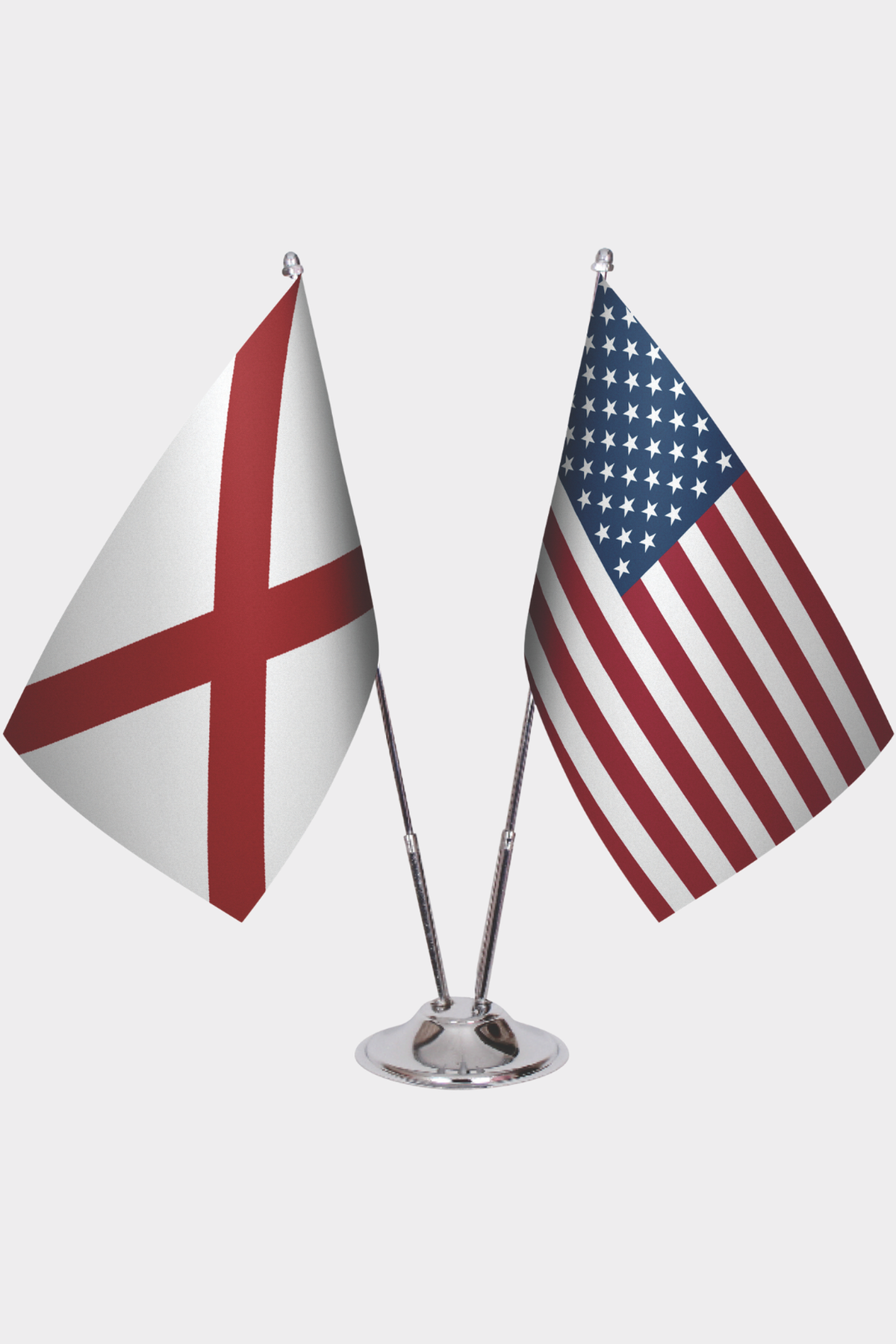
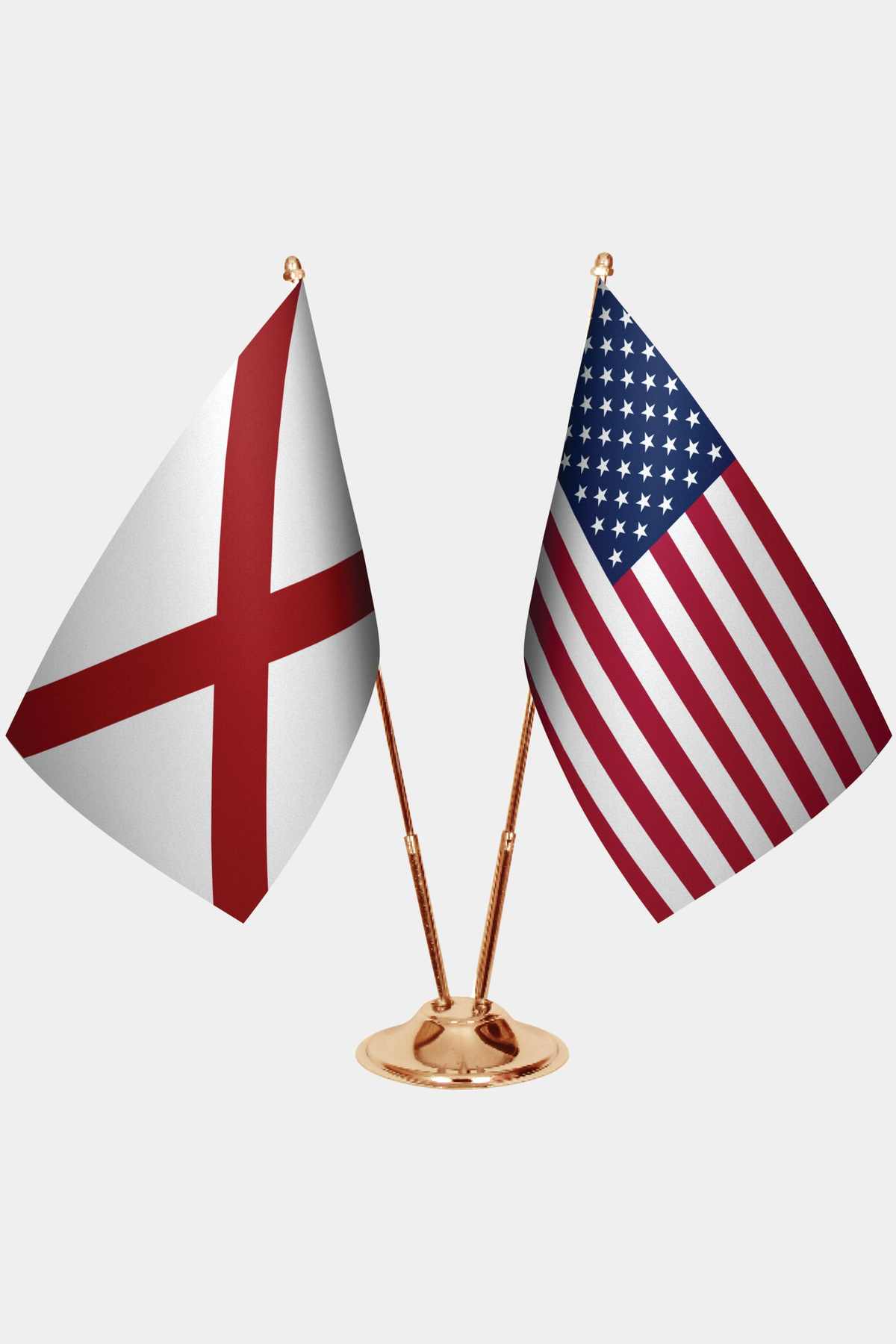
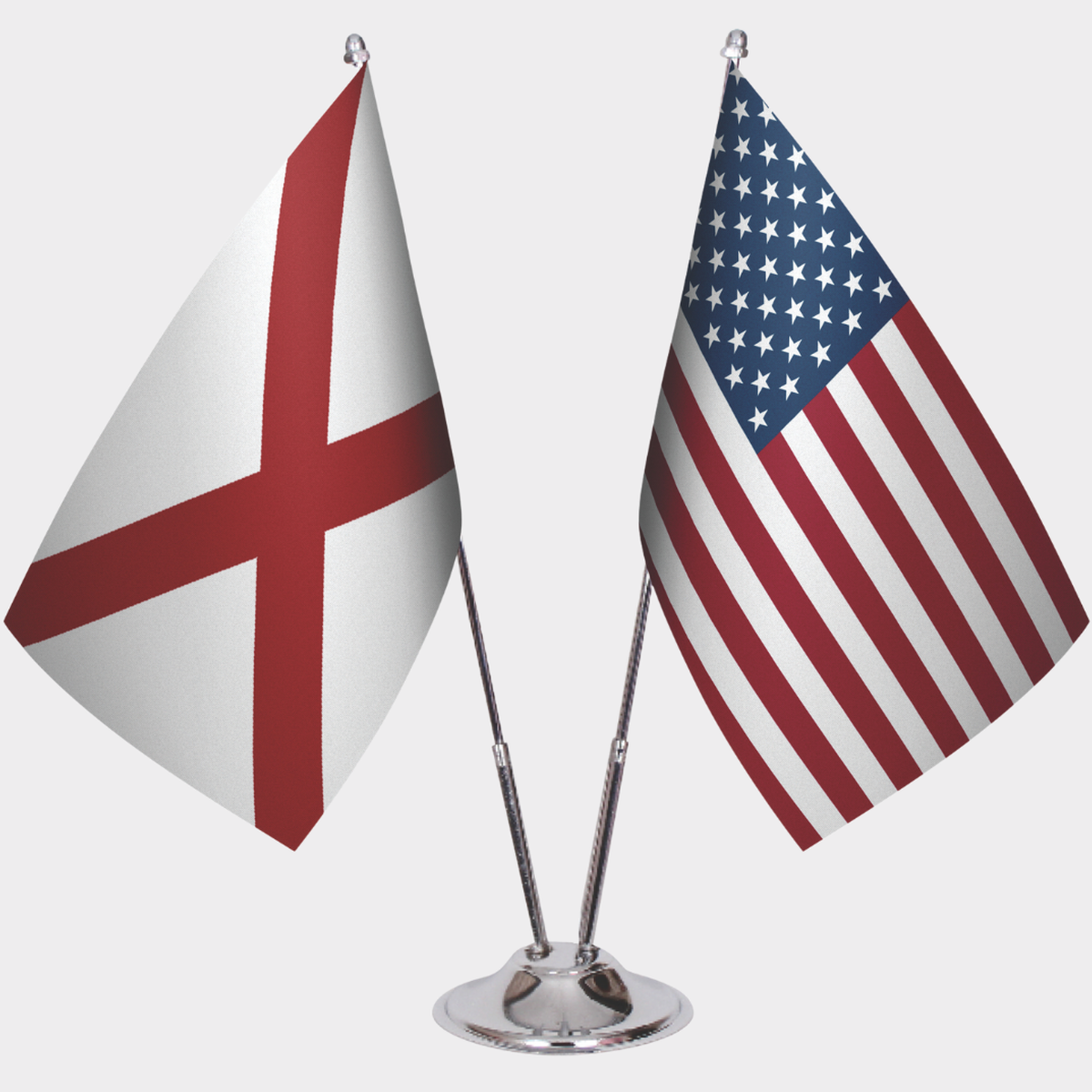
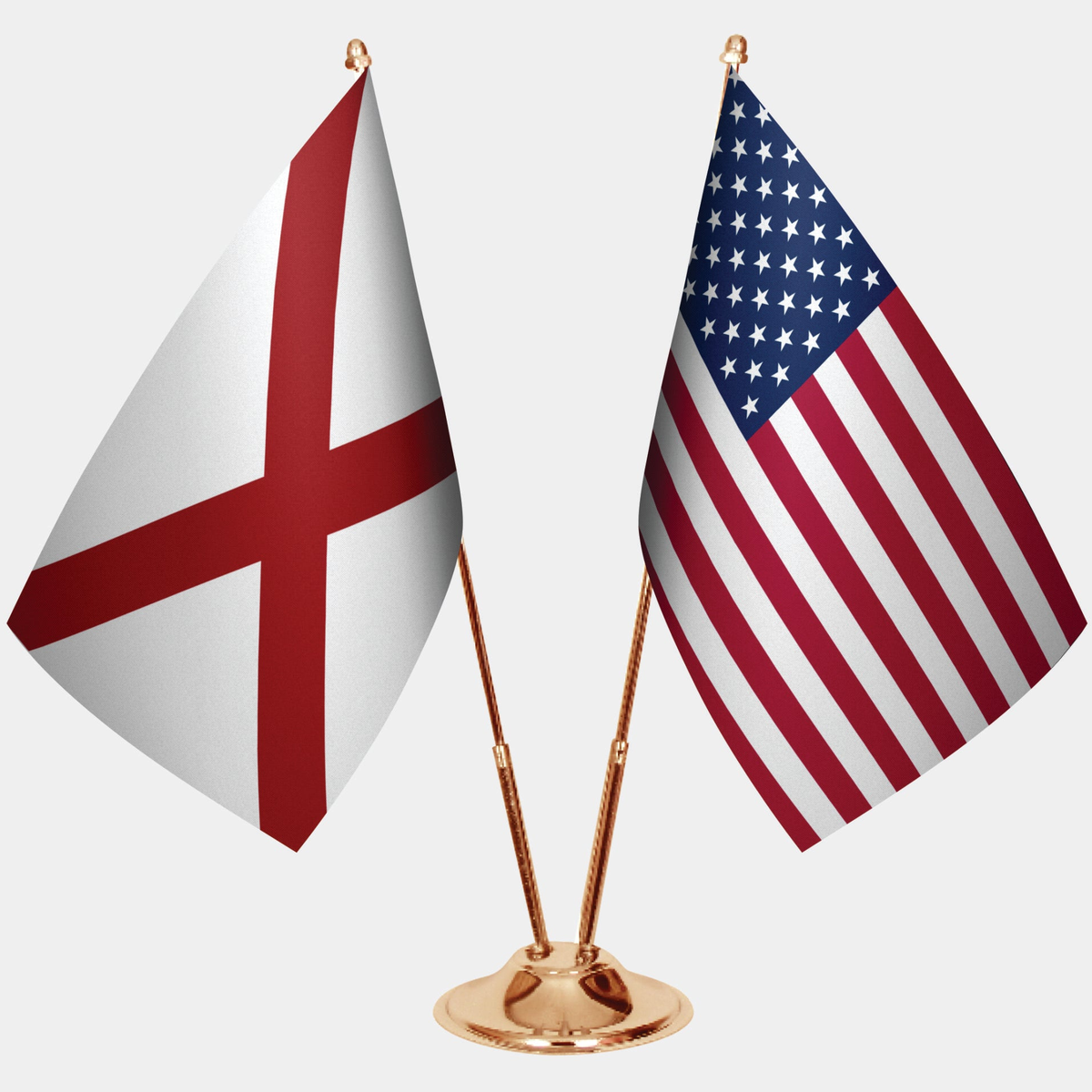
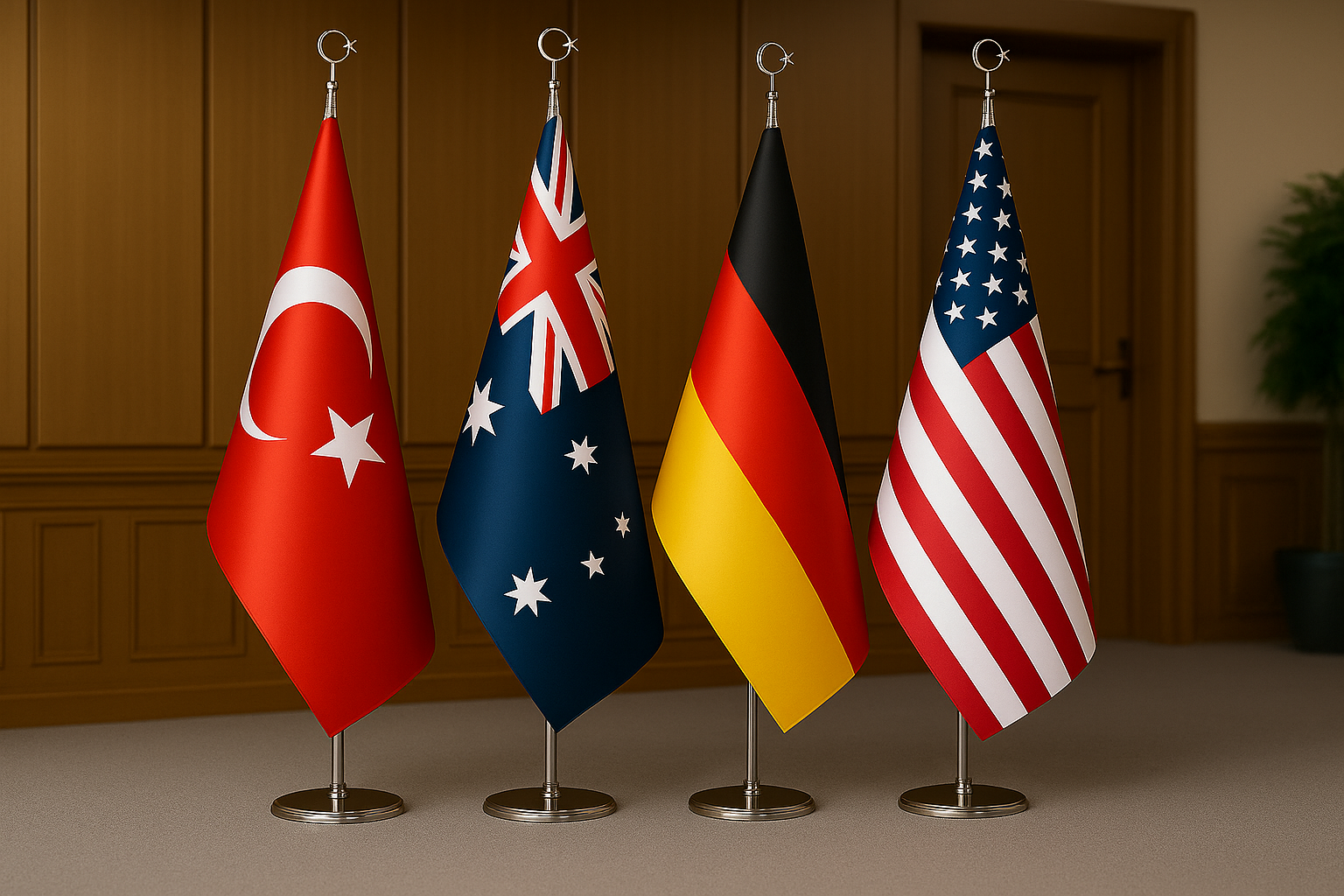
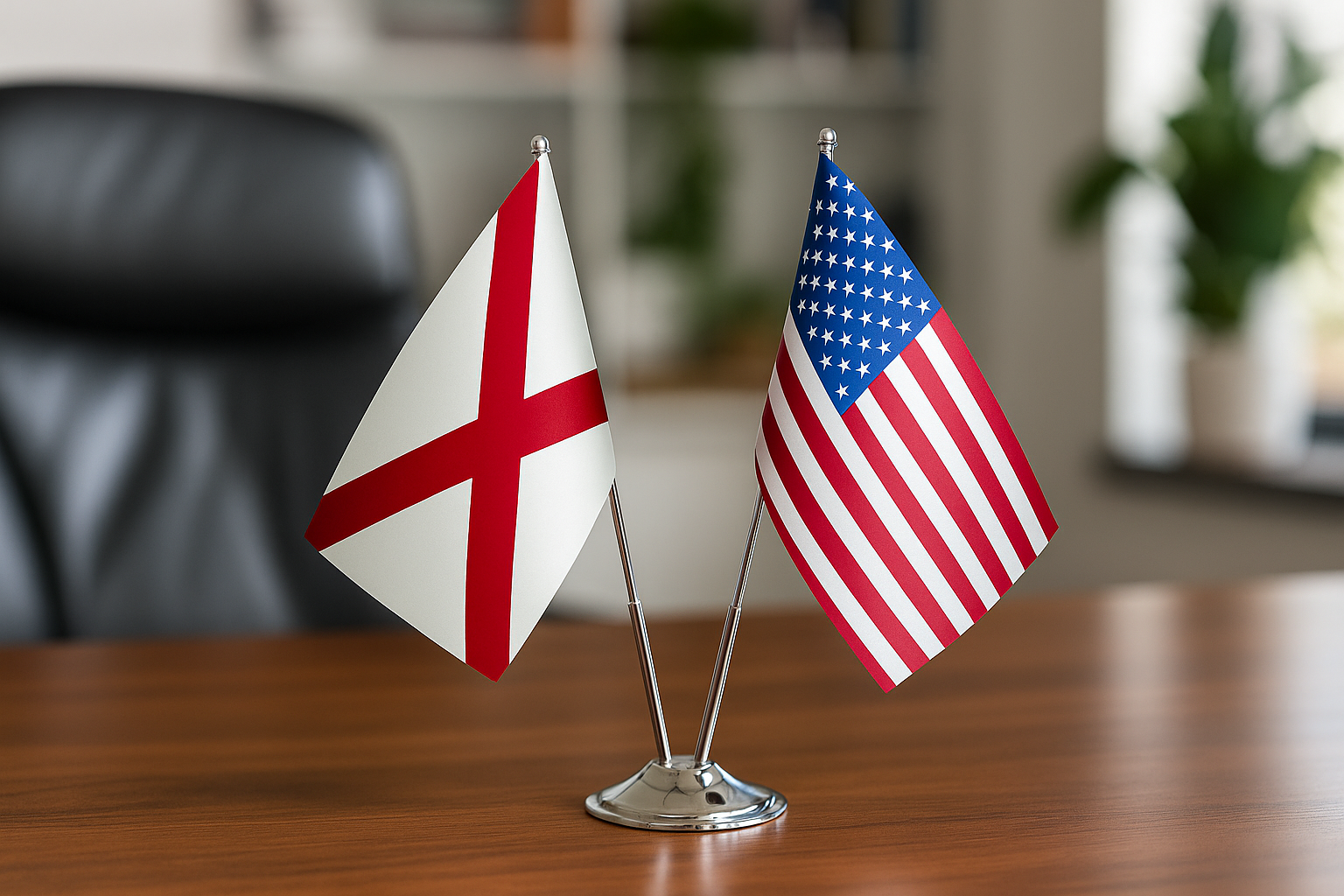
The USA Official Indoor Flag is a strong example of a product designed with these pairing principles built in: the double-layer satin fabric on a chrome metal pole is matched to dimensions appropriate for embassy, government office, and institutional display, where base selection and pole diameter are taken seriously from the outset. When flag, pole, and base are specified together rather than sourced piecemeal, virtually all of the common installation errors disappear before installation even begins.
 The USA Official Indoor Flag is built specifically for the most demanding institutional settings — embassies, diplomatic missions, federal offices, and ceremonial halls where both the flag's presentation and its structural stability are non-negotiable. It uses high-definition sublimation printing on double-layer satin fabric, faithfully reproducing all 50 stars and the correct proportional stripe widths specified under U.S. Flag Code (4 USC §§ 1–10). The chrome metal pole that accompanies this flag is finished to a standard compatible with the 25 mm (1 in) socket diameter found on most professional indoor bases, meaning it pairs cleanly with both the iron base and the rubber base described throughout this article. For government procurement officers or facility managers sourcing a complete installation, specifying this flag alongside the appropriate base weight from the Bases & Stands collection eliminates the guesswork that leads to tip-over incidents or protocol violations.
FAQ
How heavy should an indoor flag stand be for a standard 6 ft pole? +
What pole diameter do most indoor ceremonial flag stands accept? +
Can I use an indoor flag stand outdoors? +
What kind of flag stand works best for a garden or yard? +
How do I stop my indoor flag stand from sliding on a polished floor? +
What is the minimum base footprint for a standard indoor flag stand? +
Do indoor flag stands work for sail or feather flags? +
Choosing the right indoor flag stand comes down to three numbers: base weight, socket diameter, and footprint size — and all three must be matched to the pole height and flag area you are working with. For most ceremonial and office installations up to 2.4 m (8 ft), the Iron Base at 40×40 cm delivers reliable, low-profile stability. For embassy, government, and high-traffic institutional settings with poles from 2.4 m to 3 m (8–10 ft), the 15 kg Rubber Base at 50×50 cm is the professional-grade choice. Browse the complete Bases & Stands collection to compare all available options with their socket sizes and footprint dimensions side by side. Bulk pricing is available for corporate, government, and institutional orders — contact us directly for volume pricing on multi-unit installations.