

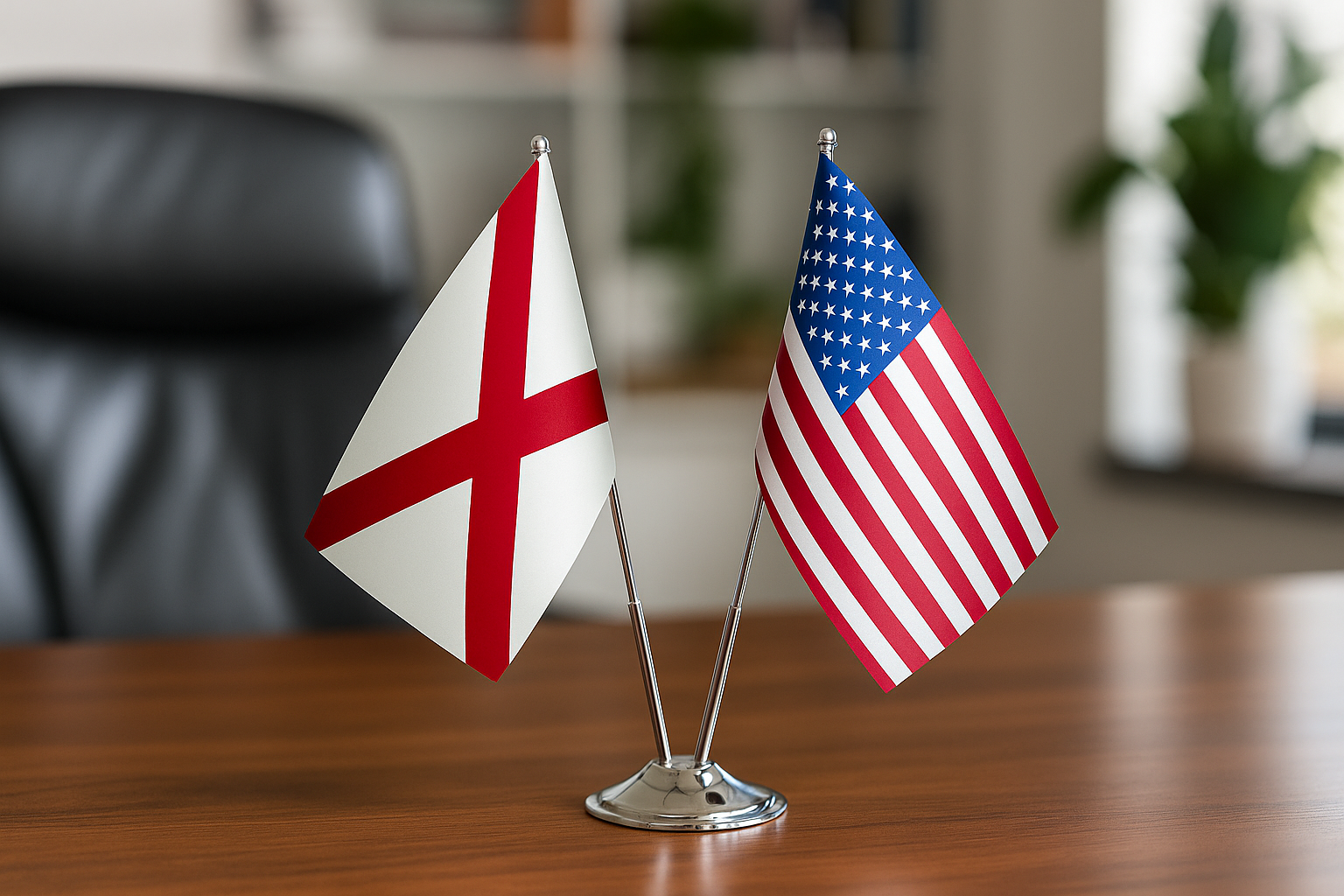
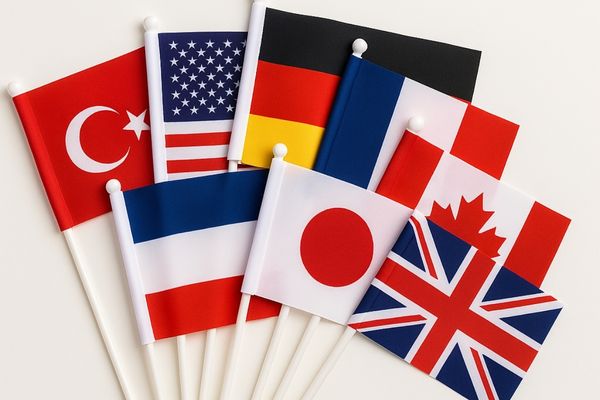

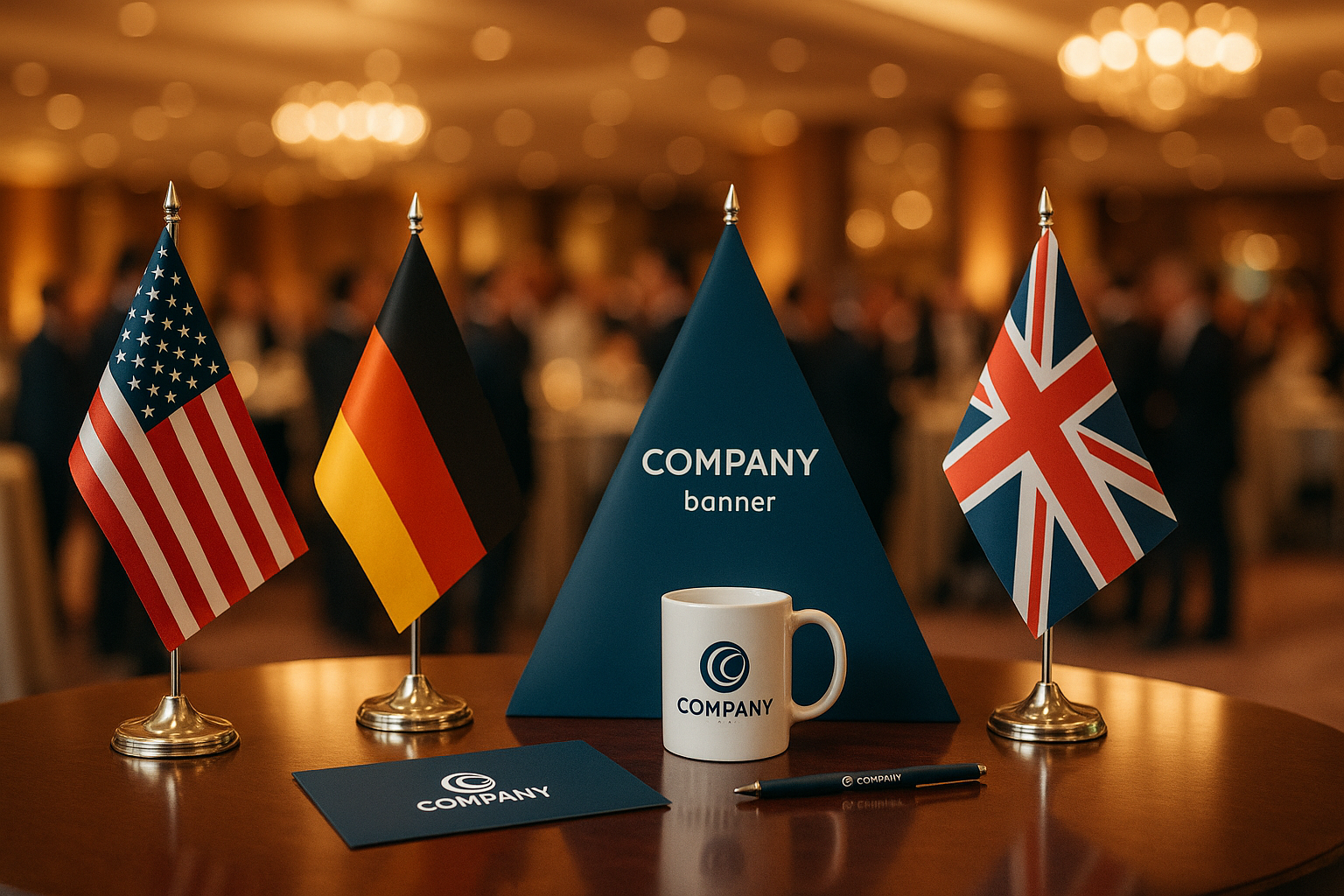

Government buildings, federal offices, and municipal facilities require outdoor flag sets that meet strict sizing standards, multi-flag display protocols, and long-term durability benchmarks — and sourcing them in bulk at the right price requires knowing exactly what to order. Whether you manage procurement for a city hall, courthouse, post office, or county administrative complex, understanding the correct flag sizes, pole heights, material specifications, and display rules under the US Flag Code (4 USC §§ 1–10) is essential before placing any municipal flagpole flags bulk order. Asya Bayrak supplies institutional-grade outdoor flag sets engineered for continuous outdoor exposure, with USA Outdoor Flags available in standard government sizes and bulk pricing for qualifying facilities.
Government Flagpole Flag Sizing Standards: What Federal and Municipal Codes Require
The correct flag size for a government flagpole is determined by the pole height, with the flag's fly length (horizontal width) typically set at 25–30% of the pole's total height. This ratio is the de facto standard used by the General Services Administration (GSA) for federal buildings and is widely adopted by state and municipal procurement offices for consistency and visual proportionality.
For a standard 20 ft (6.1 m) pole — common at smaller municipal offices and fire stations — a 3×5 ft (0.9×1.5 m) flag is appropriate. A 25 ft (7.6 m) pole typically calls for a 4×6 ft (1.2×1.8 m) flag, while 30–35 ft (9.1–10.7 m) poles, the most common height for city hall and county buildings, are best paired with a 5×8 ft (1.5×2.4 m) or 6×10 ft (1.8×3 m) flag. For taller institutional poles reaching 40–50 ft (12.2–15.2 m), such as those outside federal courthouses and major government complexes, flags of 8×12 ft (2.4×3.7 m) or even 10×15 ft (3×4.6 m) are standard. Procuring the wrong size creates both a visual imbalance and a potential violation of display expectations outlined in the Flag Code, which emphasizes dignified presentation at all times.
Material matters just as much as size for a government flagpole flag sizing guide. Two-ply polyester and heavyweight nylon (200-denier or higher) are the most specified materials for outdoor institutional use, offering 80–90% UV resistance ratings and a typical outdoor lifespan of 12–24 months under continuous display. Lightweight nylon works well in lower-wind coastal environments, while heavier woven polyester is preferred in high-wind inland and mountain regions. Government procurement officers should request reinforced canvas headers, brass grommets, and quadruple-stitched fly ends as minimum construction standards when submitting an RFQ or purchase order.
Understanding Multi-Flag Outdoor Display Protocol for Government Facilities
When multiple flags are flown at a government facility, the US Flag Code and established federal protocol strictly govern the order of precedence, height, and relative sizing of each flag. The American flag must always occupy the position of honor — which is the observer's left when flags are in a line, or the center and highest position when three or more flags are displayed on separate poles of different heights.
The most common multi-flag outdoor display protocol at government buildings involves three poles: the US flag in the center at the greatest height, a state flag to its left (observer's right), and a municipal, agency, or department flag to its right (observer's left). All three poles should ideally be the same height; if not, the US flag pole must be the tallest. Flags flown on the same halyard should never be stacked — each flag requires its own flagpole. At federal buildings, the agency or department flag may be flown below the US flag on a single pole only when pole count is restricted, though this practice is discouraged under formal protocol.
For POW/MIA flag display, Public Law 105-225 requires the POW/MIA flag to be flown on federal properties including military installations, post offices, federal cemeteries, and VA facilities on specific days including Memorial Day, Flag Day, Independence Day, and Veterans Day. Many municipalities have adopted similar requirements for city-owned buildings. Procurement teams placing a federal building outdoor flag display order should account for POW/MIA flags as a standard line item in their bulk requisition. Size matching is also critical — the POW/MIA flag and state flag should generally be the same size as the US flag when flown on equal-height poles.
Choosing the Right Outdoor Flag Materials for Continuous Government Use
 For government and municipal facilities, material selection directly impacts replacement frequency, annual maintenance costs, and the overall dignity of display. Heavyweight two-ply polyester flags rated at 200-denier or above are the standard recommendation for facilities that fly flags 24 hours a day, 7 days a week — a common requirement at federal courthouses, post offices, and city halls across the United States. These materials are engineered with 80–90% UV inhibitor content woven into the fiber itself, not applied as a surface coating, which means resistance does not degrade with washing. Reinforced canvas header panels (minimum 4-inch / 10 cm wide) and solid brass grommets (#2 or #3 gauge) prevent the header tears that account for the majority of premature flag retirements in institutional settings. The USA Outdoor Flag offered by Asya Bayrak meets these institutional construction benchmarks, making it a reliable choice for government procurement officers seeking a cost-effective, long-lasting solution. Facilities in high-wind regions such as the Great Plains, mountain states, or coastal areas should specifically request wind-resistant weave construction, which allows air to pass partially through the fabric rather than creating a solid surface that multiplies stress on the header and grommets.
Nylon flags are a valid alternative for facilities in mild-wind environments or those prioritizing vibrant color saturation — nylon takes dye more deeply and displays brighter colors, which matters for state and municipal flags with complex seal imagery. However, nylon's lighter weight (typically 100–200 denier) means it degrades faster under continuous UV and high-wind exposure, with outdoor lifespans of 6–12 months versus 12–24 months for polyester. A hybrid procurement strategy — polyester US flags for year-round continuous display, nylon state and agency flags replaced on a seasonal rotation — is used by many large municipal facilities to balance cost and appearance.
Federal Building Outdoor Flag Display: Compliance Checklist for Procurement Officers
 A compliance-ready outdoor flag procurement process for federal and municipal facilities involves more than just choosing the right size and material — it requires a systematic checklist that aligns with the US Flag Code, agency-specific directives, and state procurement regulations. First, verify the number and height of flagpoles at the facility, then confirm which flags are required by statute versus convention (US, state, POW/MIA, agency). Next, document the required flag sizes using the 25–30% of pole height rule and confirm the header and grommet specifications in writing with your supplier. Many state and local government bodies also require flags to be made from domestically manufactured materials to comply with Buy American Act provisions — a detail that should be explicitly confirmed with any wholesale outdoor flags government supplier before contracts are finalized. Asya Bayrak's procurement team is experienced in supporting institutional clients through these requirements and can provide material certifications, country-of-origin documentation, and sample review before bulk orders are placed. For facilities that also maintain indoor ceremonial displays, the indoor flags collection includes presentation-grade options suitable for hearing rooms, council chambers, and executive offices.
Lighting compliance is another frequently overlooked element of the federal building outdoor flag display checklist. Under 4 USC § 6(a), the US flag may be displayed 24 hours a day only if it is properly illuminated during darkness — a requirement that applies to most government buildings flying flags continuously. Procurement officers should coordinate with facilities management to confirm that flag lighting is operational and adequately covers the flag's full face before authorizing round-the-clock display. Additionally, worn, faded, or torn flags must be retired promptly — the Flag Code mandates dignified destruction, typically by burning in a private ceremony, and many VFW and American Legion posts provide this service free of charge for government agencies.
Flagpoles & Accessories Collection
Complete your government flag display with professional-grade poles, hardware, and mounting accessories built for institutional outdoor use.
Browse Collection →Municipal Flagpole Flags Bulk Order Guide: Quantities, Lead Times, and Specifications
For municipal and federal procurement, bulk outdoor flags for city hall and similar facilities are most cost-efficiently ordered in quantities of 12 or more units per SKU, which typically unlocks wholesale pricing tiers and enables consistent visual standardization across all facility locations in a district or county. Establishing a master vendor agreement with a reliable wholesale outdoor flags government supplier reduces administrative overhead and ensures consistent quality across annual replacement cycles.
Standard lead times for bulk institutional flag orders range from 7–14 business days for in-stock standard sizes to 3–5 weeks for custom or oversized flags requiring specific color matching against Pantone standards or state-issued seal artwork. Government procurement teams should build a buffer of 4–6 weeks into their ordering calendar, especially for orders tied to inaugurations, national holidays, or scheduled building openings. Providing your supplier with a detailed specification sheet — including pole height, required flag size, material preference, grommet gauge, header width, and any applicable Buy American Act requirements — at the time of inquiry will significantly reduce back-and-forth and accelerate order confirmation.
For municipalities managing multiple facilities such as libraries, parks, fire stations, police precincts, and administrative offices, a consolidated annual contract approach is strongly recommended. A single contract covering all locations with defined delivery schedules, replacement criteria, and pricing structures simplifies budget forecasting and ensures that all facilities receive flags that meet the same construction standard. Asya Bayrak's B2B team can structure custom agreements for city and county clients, including staggered delivery schedules, warehouse-direct shipping, and facility-labeled packaging for easy distribution across departments.
Logo-Printed and Custom Outdoor Flags for Government and Institutional Use
Beyond standard US, state, and POW/MIA flags, many government and municipal facilities require custom-printed outdoor flags displaying official agency seals, department logos, commemorative designs, or event-specific artwork — and these should meet the same construction standards as standard institutional flags. Custom outdoor pole flags for government use are most commonly produced via dye sublimation printing on polyester, which delivers photographic-quality reproduction of complex seal artwork with color fastness rated at 80%+ UV resistance over the flag's lifespan.
The logo-printed outdoor pole flags collection at Asya Bayrak is specifically designed for institutional clients who need professional-quality custom prints on durable outdoor-grade materials. These flags are available in standard government sizes and can be produced with canvas headers, brass grommets, and reinforced fly ends to match the construction specifications required by municipal and federal procurement standards. For agencies requiring FIAV-standard color accuracy — particularly relevant for state flags with officially designated color specifications — Asya Bayrak's production team works from Pantone color references to ensure accurate reproduction. Minimum order quantities for custom-printed institutional flags typically start at 10 units, with volume pricing applied at 25, 50, and 100+ unit thresholds.
Bulk Ordering Process: How to Get a Quote for Wholesale Government Flag Orders
Submitting a well-structured RFQ (Request for Quotation) is the fastest way to receive accurate wholesale pricing for outdoor flag sets for government buildings and ensures that all specifications are captured before production begins. A complete RFQ for institutional flag orders should include: facility type and quantity of locations, number and height of flagpoles per location, required flag types (US, state, POW/MIA, agency/custom), size requirements per flag type, material and construction specifications, delivery address(es) and required delivery date, and any regulatory requirements such as Buy American Act compliance or state-specific procurement rules.
Asya Bayrak's wholesale team reviews institutional RFQs within 1–2 business days and provides itemized quotes that break down unit cost by flag type and quantity tier, enabling procurement officers to make accurate budget justifications to department heads or city councils. Once a quote is approved, a formal purchase order triggers order confirmation and production scheduling. For first-time government clients, Asya Bayrak offers pre-production sample review at no additional charge for orders of 50 or more units, allowing procurement officers to physically verify construction quality, color accuracy, and material weight before the full run is produced. Bulk pricing is available for corporate and government orders, and dedicated account managers are assigned to clients managing multi-facility programs.
Frequently Asked Questions
What flag size should I order for a 30 ft government flagpole? +
What is the correct order of flags on a three-pole government display? +
Are government flag purchases subject to Buy American Act requirements? +
How often should outdoor flags at government buildings be replaced? +
What is the minimum order quantity for wholesale outdoor flags for government use? +
Can government agencies order custom-printed outdoor flags with official seals or logos? +
Is it legal to fly a US flag 24 hours a day at a government building? +
What lead time should government procurement officers plan for bulk flag orders? +
Equipping your government facility with properly sized, code-compliant, and durably constructed outdoor flag sets is both a legal obligation and a point of civic pride — and sourcing them efficiently in bulk is essential for any municipal or federal procurement program. Start by browsing the USA Outdoor Flag product page for institutional sizing and construction options, explore the full range of logo-printed outdoor pole flags for custom agency and departmental displays, and review the flagpoles and accessories collection to complete your facility's display system from pole to finial. Bulk pricing is available for corporate and government orders — contact Asya Bayrak's B2B team directly to submit your RFQ, request material samples, or establish a multi-facility annual supply agreement tailored to your department's procurement cycle and budget structure.


