






Outdoor flags for city hall, county buildings, and municipal properties require specific sizing, precise protocol compliance, and reliable bulk sourcing — and Asya Bayrak delivers all three with commercial-grade durability and wholesale pricing designed for government procurement. Whether you're outfitting a single civic center or managing flag replacements across dozens of county offices, this guide covers everything procurement officers, facilities managers, and municipal administrators need to know. From US Flag Code requirements to pole height ratios and multi-unit ordering logistics, you'll find actionable answers below. Explore the USA Outdoor Flag collection to get started with specifications that meet government display standards.
Correct Flag Sizes for Government Buildings and Municipal Poles
The correct flag size for a government building depends on the pole height: the general rule is that flag length should equal approximately 25–33% of the pole height, so a 40 ft (12.2 m) pole typically flies a 5×8 ft (1.5×2.4 m) or 6×10 ft (1.8×3.0 m) flag. Getting the proportion right is not just an aesthetic choice — it reflects the respect and dignity that municipal display demands under federal display traditions.
For most city hall flagpoles, which commonly range from 25 ft to 60 ft (7.6 m to 18.3 m), the most widely used flag sizes in government settings are as follows. A 25 ft (7.6 m) pole suits a 4×6 ft (1.2×1.8 m) flag. A 30–35 ft (9.1–10.7 m) pole pairs well with a 5×8 ft (1.5×2.4 m) flag. A 40–50 ft (12.2–15.2 m) pole is best served by a 6×10 ft (1.8×3.0 m) flag. Taller ceremonial poles of 60 ft (18.3 m) or more typically require 8×12 ft (2.4×3.7 m) or even 10×15 ft (3.0×4.6 m) flags. FIAV (Fédération Internationale des Associations Vexillologiques) proportional standards recommend a 1:1.9 width-to-length ratio for national flags, which aligns with standard US flag proportions (10:19) as codified by executive order. Undersized flags on tall poles look visually lost and can signal improper protocol, while oversized flags create excessive wind load that shortens fabric lifespan significantly.
US Flag Code Protocol Every Municipal Facility Must Follow
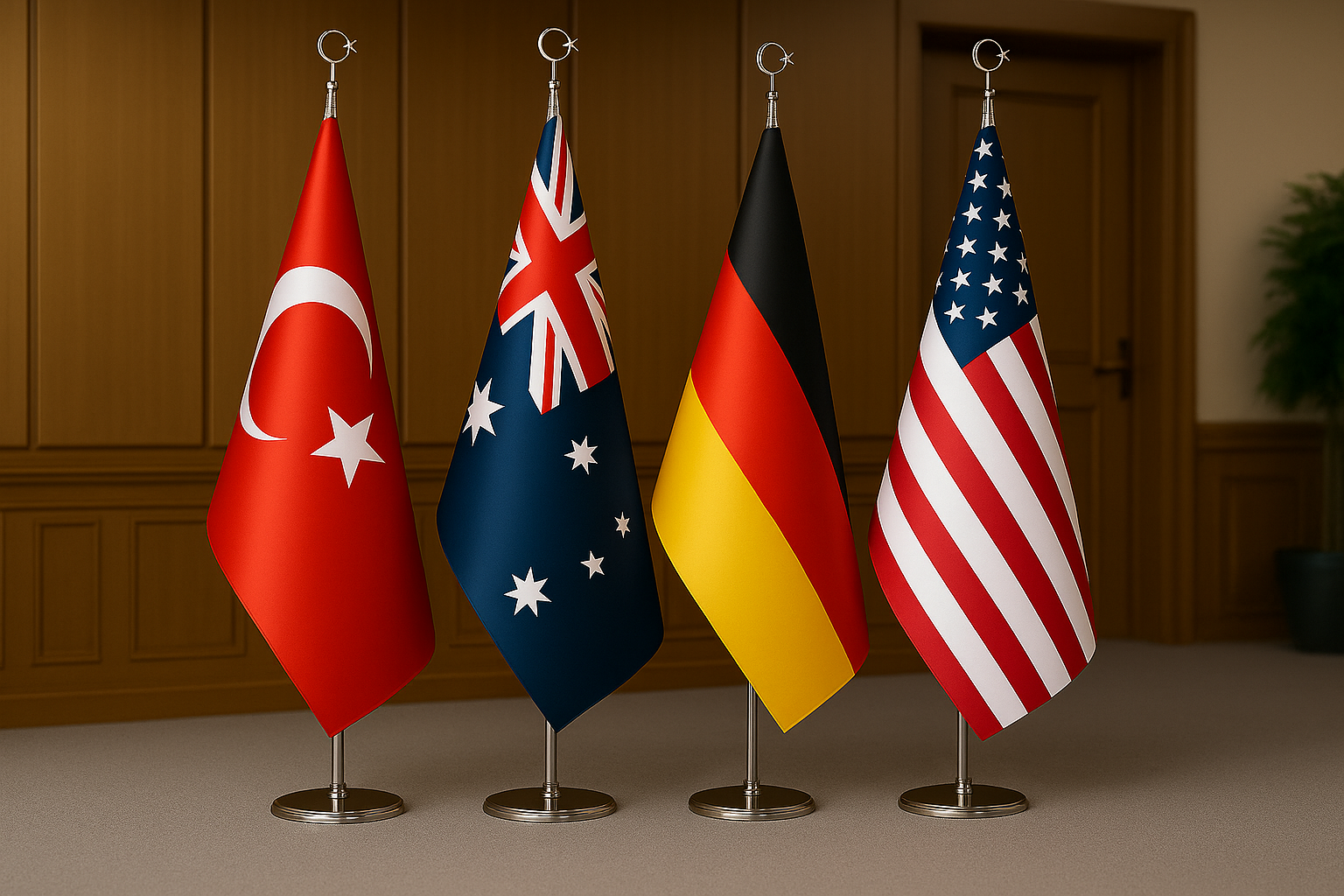
Under 4 USC §§ 1–10 (the US Flag Code), the American flag must be displayed at the peak of the staff when flown on a building or stationary flagpole, and it must hold the position of honor — highest point or, when flown alongside other flags on separate poles of equal height, farthest to the observer's left (its own right). This is non-negotiable for all government and municipal properties.
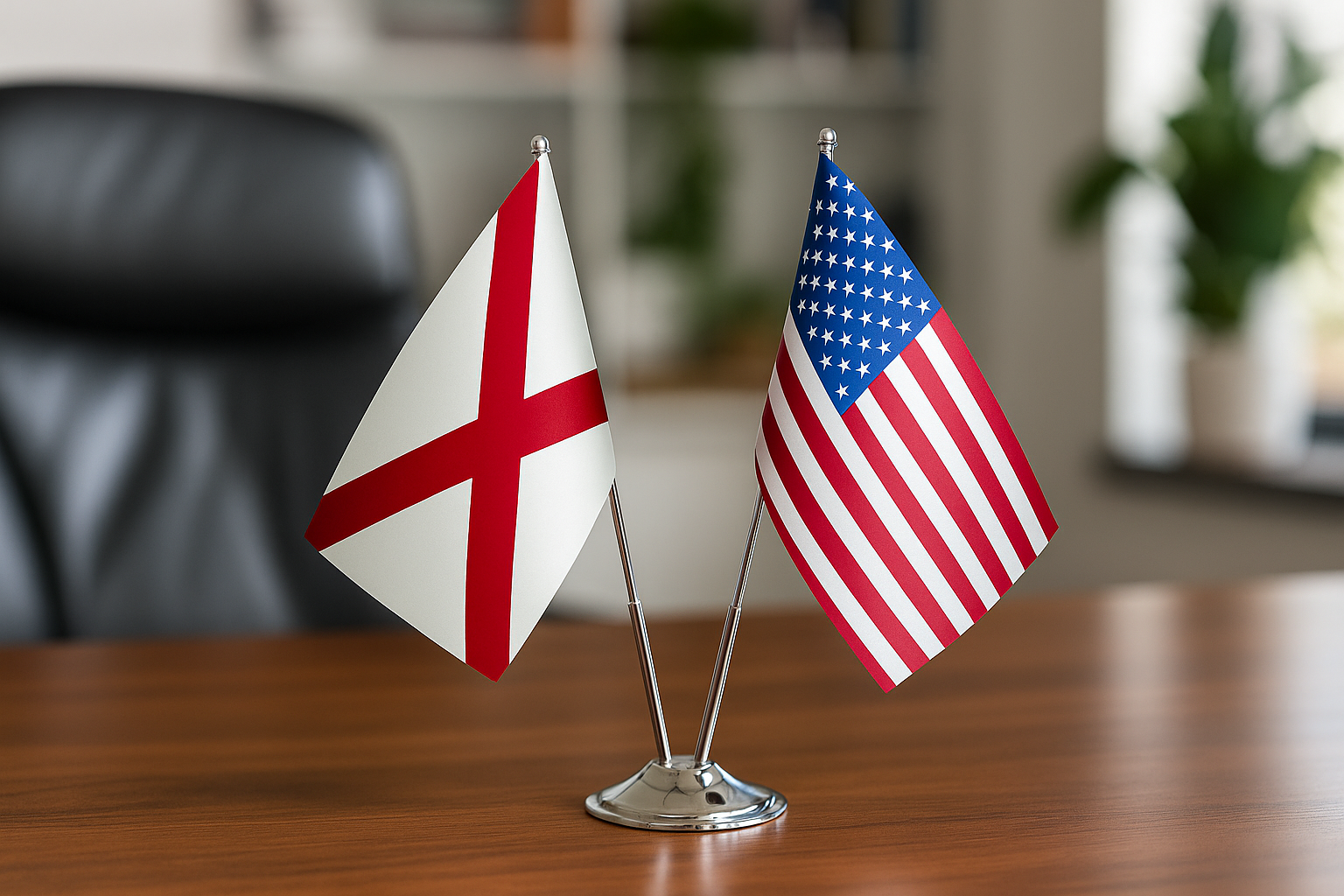
Key protocol points for city hall and county buildings include the following mandates. The US flag must always be raised briskly and lowered ceremonially. When flown at half-staff — as ordered by the President or Governor — the flag must first be raised to full peak and then lowered to the midpoint of the staff (4 USC § 7m). No flag of a state, municipality, or organization may be placed on the same halyard as the US flag, nor may any flag be displayed higher than the national flag. On days of national mourning or presidential proclamation, facilities managers must be prepared to act within hours, making pre-positioned replacement flags essential for any municipal inventory plan. State flags, when displayed alongside the US flag, should be flown on a separate pole of equal height and ideally of the same or slightly smaller size. Some states have their own display statutes — California, Texas, and New York, for example, maintain specific government building flag requirements that layer on top of federal code — so always verify local ordinances before finalizing display configurations.
Material and Construction Standards for Outdoor Government Flags
 Outdoor government flags endure punishment that residential flags never face: 24/7 display requirements, heavy wind corridors between municipal buildings, and the obligation to remain presentable as a public symbol of civic authority. The right fabric choice is therefore a procurement decision, not merely an aesthetic one. Nylon is the most popular choice for outdoor government flags due to its lightweight fly, vibrant color retention, and 80% UV resistance rating — in moderate climates, a commercial-grade nylon flag can last 6 to 12 months under continuous outdoor display. Polyester (sometimes called heavyweight or "spun polyester") is preferred in high-wind coastal or Midwestern locations because its denser weave resists tearing and fraying; lifespan in those conditions averages 6 to 18 months. For the most demanding environments — rooftop poles, coastal county buildings, high-altitude facilities — two-ply polyester flags with double-stitched fly ends and reinforced canvas headers are the professional standard. Browse the USA Outdoor Flag page to review material options, header construction details, and grommet specifications suitable for municipal poles.
Beyond fabric, construction quality markers separate commercial flags from consumer-grade products. Look for lock-stitched embroidered stars (rather than printed) on US flags, as embroidery withstands UV and abrasion far longer than screen printing. Fly ends — the edge farthest from the pole — should have at minimum a double-folded hem with reinforced stitching, as this is the first point of failure in high-wind environments. Brass grommets (size #2 or larger) are standard for outdoor pole mounting; rope-and-toggle header systems offer an alternative attachment method preferred by some municipal facilities teams for faster flag changes during high-rotation replacement schedules. Header canvas (the white reinforcement strip along the hoist edge) should be at minimum a 30/2 cotton or polyester canvas rated for the flag's weight category.
Flagpoles and Accessories: What Municipal Properties Need
 The flag itself is only part of the outdoor display system — the pole hardware, halyard type, and truck assembly all determine how long a flag lasts and how professionally it presents. For municipal properties, commercial-grade aluminum or fiberglass poles in the 30–60 ft (9.1–18.3 m) range are standard, and the truck (the cap at the top of the pole) should be a revolving pulley type to reduce tangling and wear on the flag's hoist edge. Nylon-braided or polyester-core halyards resist weather degradation significantly better than cotton rope and are the preferred choice for year-round government display. Internal halyard systems with locking access doors are increasingly specified for high-security or high-traffic municipal sites, as they prevent tampering and unauthorized flag removal. Explore the complete range of hardware at the Flagpoles and Accessories collection to match every component of your civic display system to the same commercial standard as your flags.
Municipal facilities teams managing multiple buildings often overlook the importance of standardizing accessories across sites. When all poles in a county system use the same halyard diameter and grommet size, replacement flags can be swapped by any maintenance crew member without special fittings or training — a significant operational advantage during rapid half-staff compliance events. Ground sleeves, base flanges, and anti-wrap devices are additional accessories worth specifying in government procurement packages, particularly for sites where flags must be changed frequently or where vandalism is a concern.
Custom and Logo Flags for City Seals and Municipal Branding
Municipal buildings often fly a city seal flag, department flag, or branded welcome flag alongside the national and state flags, and these require custom printing solutions that deliver photographic-quality detail at large outdoor scales. Custom outdoor pole flags with dye-sublimation printing offer the sharpest reproduction of complex government seals and multi-color emblems, with color fastness ratings that maintain vibrancy for 6 months to 2 years depending on sun exposure.
City seal flags are particularly challenging to reproduce because they typically contain fine heraldic detail, Latin text, and multi-tonal color fields that demand high-resolution print processes. Single-reverse and double-sided construction options affect how the design reads from both sides of the flag — double-sided flags with a blocking liner are the professional standard for ceremonial and permanent outdoor municipal display, ensuring the design is fully legible and non-transparent regardless of light angle. The logo-printed outdoor pole flags collection covers custom options for government seals, department logos, and municipal welcome flags built to outdoor commercial standards. For indoor ceremonial display in council chambers, courtrooms, or administrative offices, coordinating with an indoor flags collection ensures consistent branding across all civic spaces.
Logo Printed Outdoor Pole Flags
Custom-printed outdoor flags built for municipal branding, city seals, and department identifiers — produced to commercial durability standards for year-round government display.
Browse Collection →Bulk Ordering Strategy for Municipal Flag Procurement
A well-structured municipal flags bulk order reduces per-unit cost by 20–40% compared to single-unit purchasing and ensures consistent quality, sizing, and hardware compatibility across all county buildings and city properties. For procurement officers, the key is to consolidate sizing requirements, standardize materials, and schedule replacement cycles before placing a bulk outdoor flag order.
Before submitting a government building outdoor flags purchase order, facilities managers should conduct a full site inventory: record the pole height, halyard type, grommet size, and current flag dimensions at every location. This data lets procurement teams specify a single standardized flag SKU (or a small matrix of two or three sizes) that covers all properties, dramatically simplifying reorder logistics. Wholesale flags for county buildings are typically available in minimum order quantities starting at 10–25 units per size, with significant price breaks at 50, 100, and 250 unit thresholds. Lead times for standard American flags in bulk are typically 5–10 business days for in-stock sizes; custom-printed municipal seal flags require 10–20 business days depending on artwork complexity and order volume. Consider maintaining a reserve inventory of 20–30% above current deployment needs to enable rapid half-staff compliance and emergency replacement without expedite fees. Government procurement accounts may also qualify for NET-30 invoicing and formal purchase order processing — contact Asya Bayrak's B2B sales team to discuss account terms for multi-building or multi-department orders.
Replacement Schedules and Flag Retirement for Government Properties
Outdoor government flags displayed continuously should be inspected monthly and replaced when fraying exceeds 1 in (2.5 cm) on any edge, when colors fade to below 70% of original vibrancy, or when the fly end develops tears longer than 3 in (7.6 cm). Establishing a formal replacement schedule is both a practical maintenance decision and a matter of civic dignity — a tattered American flag on a city hall sends a negative message regardless of the circumstances.
Under 4 USC § 8(k), worn or soiled flags should be destroyed in a dignified manner, preferably by burning. The American Legion, VFW posts, and Boy Scout troops routinely conduct flag retirement ceremonies and accept worn government flags for proper disposal — many municipal facilities departments have formal partnerships with local posts for this purpose. For seasonal climates, a recommended replacement cycle is every 90 days for continuous outdoor display in hot, sunny, or coastal environments, and every 120–180 days in temperate inland locations with seasonal flag removal during severe winters. Tracking flag condition with a simple log per pole — noting installation date, inspection dates, and retirement date — allows facilities teams to forecast annual flag budgets accurately and justify bulk procurement requests to municipal finance departments.
What size American flag is required for a city hall flagpole? +
Does the US Flag Code apply to city halls and county buildings? +
What is the best flag material for continuous outdoor government display? +
How do I place a bulk flag order for multiple county buildings? +
Can I order a custom city seal flag for outdoor display? +
How often should outdoor government flags be replaced? +
What protocol governs flying the state flag alongside the US flag on a county building? +
Equipping city halls, county courthouses, and municipal properties with the right outdoor flags is a matter of civic pride, legal protocol compliance, and smart procurement planning. For standard American flag needs, the USA Outdoor Flag page offers commercial-grade options in every pole-appropriate size with the construction quality government display demands. For custom city seals and department branding, the logo-printed outdoor pole flags collection delivers dye-sublimation precision built for year-round outdoor exposure. To complete your display system with compatible poles, halyards, and hardware, the Flagpoles and Accessories collection has everything needed for a professional, protocol-compliant municipal installation. Bulk pricing is available for corporate and government orders — contact Asya Bayrak's procurement team to discuss volume discounts, purchase order terms, and multi-site delivery logistics tailored to your municipality's needs.


