



Several countries around the world fly a red, white, and green flag — Hungary, Lebanon, and Iran are the most recognized, but Bulgaria, Maldives, and Belarus also carry those three colors in various arrangements. If you've ever wondered which flag belongs to which country, or why so many nations share the same palette, this guide walks through each one clearly. Browse the full Country Flags collection to find any of these flags ready for outdoor or indoor display.
Which Countries Use Red, White, and Green as Their National Colors?
Hungary, Lebanon, Iran, Bulgaria, Maldives, and Belarus all feature red, white, and green in their national flags, though the arrangement, proportions, and additional symbols differ significantly between them. The color combination is far from unique to one region — it appears across Central Europe, the Middle East, and South Asia for entirely different historical reasons.
Hungary wears its tricolor in horizontal bands of red on top, white in the middle, and green at the bottom — a design dating to the 1848 revolution against Habsburg rule. Lebanon's flag places a green cedar tree at the center of a white stripe flanked by two red stripes — the cedar being one of the oldest national symbols in the world. Iran's flag runs green on top, white in the middle, and red at the bottom, with the Takbir inscription along the borders of each stripe and the Islamic emblem in the center. Bulgaria initially appears similar to Hungary's layout, but the colors run white, green, and red — no red on top — making a quick visual check essential. The Maldives features a green rectangle centered on a red field with a white crescent, and Belarus uses red and green in a distinctive vertical band pattern alongside a traditional ornamental stripe. Understanding these distinctions is especially useful for event planners, embassy staff, diplomatic coordinators, and sports fans supporting international teams.
What Hungary's Red, White, and Green Flag Represents
 Hungary's tricolor flag is one of the oldest in Europe — the red, white, and green combination was formally adopted on October 12, 1957, though the colors themselves were used as symbols of Hungarian national identity as far back as the 13th century and prominently during the 1848 revolution. Red stands for strength and valor, white for faithfulness and peace, and green for hope and the fertile land of the Carpathian Basin. The stripes run horizontally in that exact order from top to bottom, which is the detail that most quickly separates Hungary from Iran (where green appears at the top). Hungary's flag carries no emblem or crest in its standard form — the clean three-band design is intentionally simple and bold. For institutions displaying Hungary's flag outdoors, the Hungary Outdoor Flag, crafted from 110 g Raschel knitted polyester, delivers weather-resistant color that holds up through seasons of continuous outdoor display.
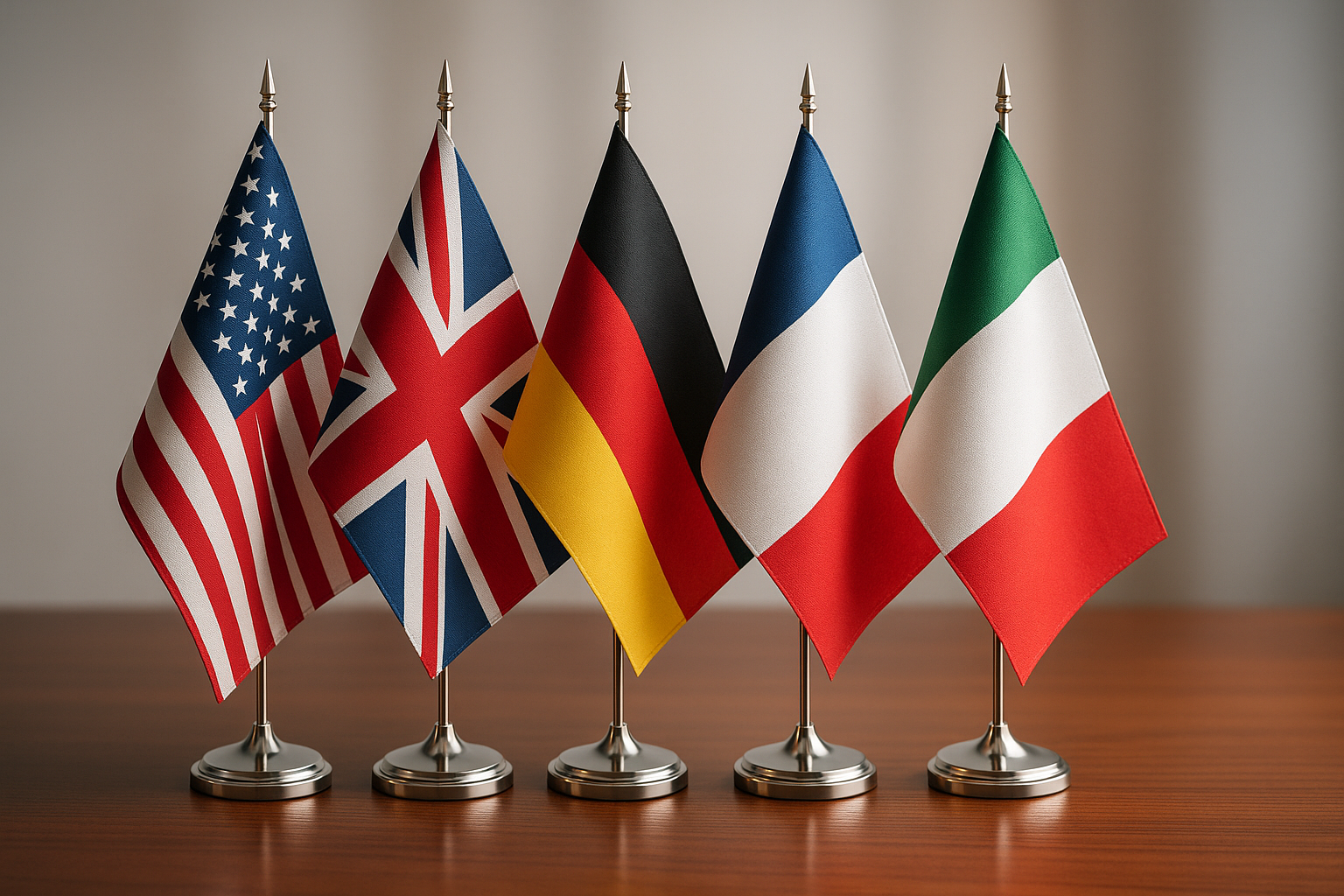
Inside formal settings — embassies, government offices, cultural centers — precision matters. The Hungary Official Indoor Flag reproduces the red, white, and green stripes via high-definition sublimation printing on double-layer satin fabric, mounted on a chrome metal pole — the kind of presentation expected in diplomatic and institutional environments. Hungary is also one of several countries whose flag is frequently confused with others; both Italy and Bulgaria use the same three colors, but Italy arranges them vertically in green-white-red order from left to right, while Bulgaria uses white-green-red in horizontal bands. A quick check of stripe orientation and color order resolves the confusion every time.
How Lebanon's Flag Uses Green Differently from Hungary and Iran
 Lebanon's flag does not use green as a stripe — instead, green appears exclusively in the cedar tree emblem at the center, making it immediately distinguishable from every other red-white-green flag in the world. The cedar tree (Cedrus libani) has represented Lebanon for millennia, referenced in ancient Phoenician trade records and in the Bible more than 70 times, and the current flag design was adopted on December 7, 1943, the year Lebanon gained independence from the French Mandate. The two red stripes at the top and bottom signify the blood shed for liberation, and the white stripe symbolizes peace and the snow of Mount Lebanon. Because the cedar is rendered in a specific shade of green, flag manufacturers must pay close attention to color accuracy — a flag where the cedar appears too dark or too light immediately looks incorrect to Lebanese communities and diplomatic audiences. The Lebanon Outdoor Flag from Asya Bayrak is made from 110 g Raschel knitted polyester, with direct printing and heat-fixing to maintain true-to-specification cedar green under prolonged sunlight exposure.
Lebanon's flag holds a unique position in vexillology because it is one of the very few national flags that features a natural, living organism — the cedar tree — as its central emblem rather than a geometric symbol, star, or heraldic device. For indoor ceremonial use, the Lebanon Official Indoor Flag reproduces the red, white, and green cedar design through high-definition sublimation printing on double-layer satin, mounted on a chrome metal pole — appropriate for consulates, Lebanese cultural associations, and university departments with Middle Eastern studies programs. If you're interested in how other countries share color schemes in surprising ways, the article on Costa Rica vs Thailand: Same Stripes Reversed explores a similarly striking case of near-identical flags from opposite sides of the world.
Iran's Green, White, and Red Flag and What Sets It Apart
Iran's flag uses all three colors — green, white, and red — in horizontal stripes from top to bottom, but it carries several additional features that make it unmistakable at any distance. The Takbir ("Allahu Akbar," meaning "God is greatest") is written in a stylized Kufic script 22 times along the borders where green meets white and white meets red, commemorating the 22nd day of the Persian month of Bahman, 1979 — the date of the Islamic Revolution. The central emblem is a highly stylized composite symbol representing the Arabic word for God (Allah) and also incorporating the shape of a sword, a crescent, and an open book. Iran's flag proportions follow a 4:7 ratio, slightly wider than Hungary's standard ratio. The Iranian Outdoor Flag must reproduce the Takbir script and central emblem with precision — Asya Bayrak produces this flag from 110 g Raschel knitted polyester using direct printing to capture the fine detail of the inscriptions accurately.
The color order is the fastest way to tell Iran apart from Hungary: Iran goes green-white-red (top to bottom), Hungary goes red-white-green. This matters enormously in ceremonial contexts — displaying the wrong flag is a serious diplomatic error. The Islamic Republic introduced the current emblem design in 1980, replacing the earlier lion-and-sun motif used under the Pahlavi dynasty, so older historical depictions of the Iranian flag look quite different from the modern version. For event coordinators managing multi-country ceremonies, keeping a printed reference of stripe order for each country prevents costly mistakes.

Country Flags Collection
Every national flag in this collection is produced to official color specifications for outdoor and indoor display — including Hungary, Lebanon, Iran, and dozens more.
Browse Collection →Other Countries Whose Flags Carry Red, White, and Green
Beyond Hungary, Lebanon, and Iran, several other nations and territories use red, white, and green in their flags — and knowing the full list prevents misidentification at international events. Bulgaria's flag uses white, green, and red in horizontal order — no red at the top, which is the single most reliable visual difference from Hungary. Italy's flag runs the same three colors vertically: green on the hoist side, white in the center, red on the fly side. Wales features a red dragon on a white and green field, making it immediately distinctive. The Maldives uses a red background with a central green rectangle and a white crescent. Tajikistan's flag runs red-white-green in horizontal bands and adds a crown and arc of stars in gold at the center. Belarus uses a broad red stripe over a narrower green stripe with a traditional red-and-white ornamental pattern on the hoist side. Collectively, these flags span four continents and represent wildly different cultural, religious, and historical traditions that all independently converged on the same three colors.
Color associations explain much of this convergence. Green appears in flags across the Islamic world as a symbol of paradise and the Prophet Muhammad's banner; it represents nature, agriculture, and hope in Central European traditions; and it signifies the cedar forest and fertile land in Lebanese symbolism. Red is nearly universal as a symbol of valor, sacrifice, and strength. White consistently represents peace, purity, or snow-capped mountains across nearly every tradition. The fact that three such foundational colors appear together across so many independent flag-design traditions is less surprising than it first appears — but the specific arrangement always tells the deeper story. For a parallel study in shared color schemes, see how yellow, blue, and red appear across Colombia to Romania.
How to Quickly Identify Any Red, White, and Green Flag at a Glance
The fastest identification method is a three-step check: stripe orientation (horizontal vs. vertical), color order (which color is on top or at the hoist), and central emblem (tree, inscription, geometric symbol, or none). Applying this system takes under five seconds and eliminates nearly all ambiguity between the countries covered here.
Start with orientation: if the stripes are vertical, it's Italy (or possibly Mexico, which adds the eagle-on-cactus coat of arms). If horizontal, move to color order: red on top means Hungary; green on top means Iran; white on top means Bulgaria. If the flag shows two red stripes with white in the middle and a green cedar tree, it's Lebanon — no other flag in the world matches that description. The Maldives and Belarus are outlier patterns that don't fit the standard stripe logic and are best memorized separately. For event professionals, sports broadcasters, journalists, and educators who regularly need to identify national flags accurately, maintaining a quick-reference card or bookmarking a detailed guide prevents the kind of flag mix-ups that have caused real diplomatic embarrassment in international broadcasting history.
Is the green, white, and red flag Hungary or Italy? +
Why does Iran's flag have writing on it when Hungary's does not? +
What is the correct color order for the Hungarian flag — does red go on top or on the bottom? +
How durable are outdoor flags in red, white, and green for year-round display? +
Can I display both a Hungarian and a Lebanese flag together at the same event? +
What size outdoor flag is standard for a residential or commercial flagpole? +
Which red, white, and green flag is the oldest in continuous use? +
Whether you need a flag for a diplomatic residence, a cultural festival, an international sporting event, or a heritage display, getting the design exactly right matters. Explore the full Country Flags collection for outdoor and indoor options for Hungary, Lebanon, Iran, and over 100 other countries. For specific needs, the Hungary Outdoor Flag and the Lebanon Outdoor Flag are both produced from 110 g Raschel knitted polyester for durable, color-accurate outdoor display. Indoor ceremonial settings are served by the satin-finish, chrome-pole mounted options for both countries. Bulk pricing is available for corporate, embassy, and institutional orders — contact Asya Bayrak directly for volume quotes and custom specifications.


