


A feather flag pole kit typically includes the flag itself, a sectional fiberglass or aluminum pole, a ground stake, a base plate or cross base for hard surfaces, and a carrying bag — everything you need to install and display a feather flag banner in one purchase. Understanding exactly what comes in each kit before you order prevents frustrating gaps on installation day, especially for high-visibility events where setup time is tight. Whether you're sourcing trade show and event flags for a single weekend activation or ordering 50 units for a grand opening, this guide breaks down every component, explains how they work together, and helps you match the right hardware configuration to your specific deployment environment.
The Core Components Found in Every Standard Feather Flag Pole Kit
Every complete feather flag pole kit contains four foundational elements: the printed flag, the sectional pole, at least one base type, and a carrying case. These four pieces form the minimum viable kit — remove any one of them and you have an unusable display system. The printed flag is the most visible element, but the hardware is what determines whether that flag stays upright safely for hours in a parking lot or falls over in the first gust of wind. The pole is typically constructed from fiberglass (more flexible, vibration-absorbing) or aluminum (stiffer, better for heavier prints), and it ships in three to six interlocking sections that assemble without tools in under two minutes. Pole heights for standard feather flag signs range from 7 ft (2.1 m) for tabletop or indoor units all the way up to 17 ft (5.2 m) for outdoor crowd-draw installations. Most kits designed for outdoor retail use ship with a 10 ft (3 m) or 14 ft (4.3 m) pole as the default, which puts the flag's highest point comfortably above pedestrian sightlines. The carrying bag is often underestimated but matters enormously for teams that transport and reuse flags across multiple events — a proper padded tube bag keeps pole sections from bending and flag fabric from snagging.
Base Options and Ground Mounting Hardware: What the Kit Should Specify
The base is the single most variable component across feather flag pole kit configurations, and choosing the wrong one is the most common installation mistake. Reputable kits distinguish clearly between three base types — ground spike, cross base (for hard surfaces), and water-bag weighted base — because each is engineered for a specific surface and wind load condition. A ground spike (also called a ground stake) is a 12–18 in (30–46 cm) steel spike that drives directly into soil, grass, or sand; it is the most stable option in outdoor environments and is the standard choice for feather flag banners placed in landscaped areas, fairgrounds, or sports fields. The cross base is a flat four-leg steel or plastic frame designed for asphalt, concrete, and indoor floors; it relies on its own weight and sometimes a water bag or sandbag anchor to resist lateral wind forces, and is the go-to for trade show floors and parking lot events. A water-bag base is a hollow weighted reservoir that attaches to the cross base ring — when filled with approximately 33 lb (15 kg) of water on-site, it provides meaningful wind resistance without the logistics of shipping heavy ballast. Some premium kits bundle all three base options; budget kits usually include only one, so always read the spec sheet carefully before ordering in quantity for outdoor feather flag signs in high-traffic or high-wind locations.
The Flag Material: Fabric Specs, Print Methods, and What "Custom" Really Means
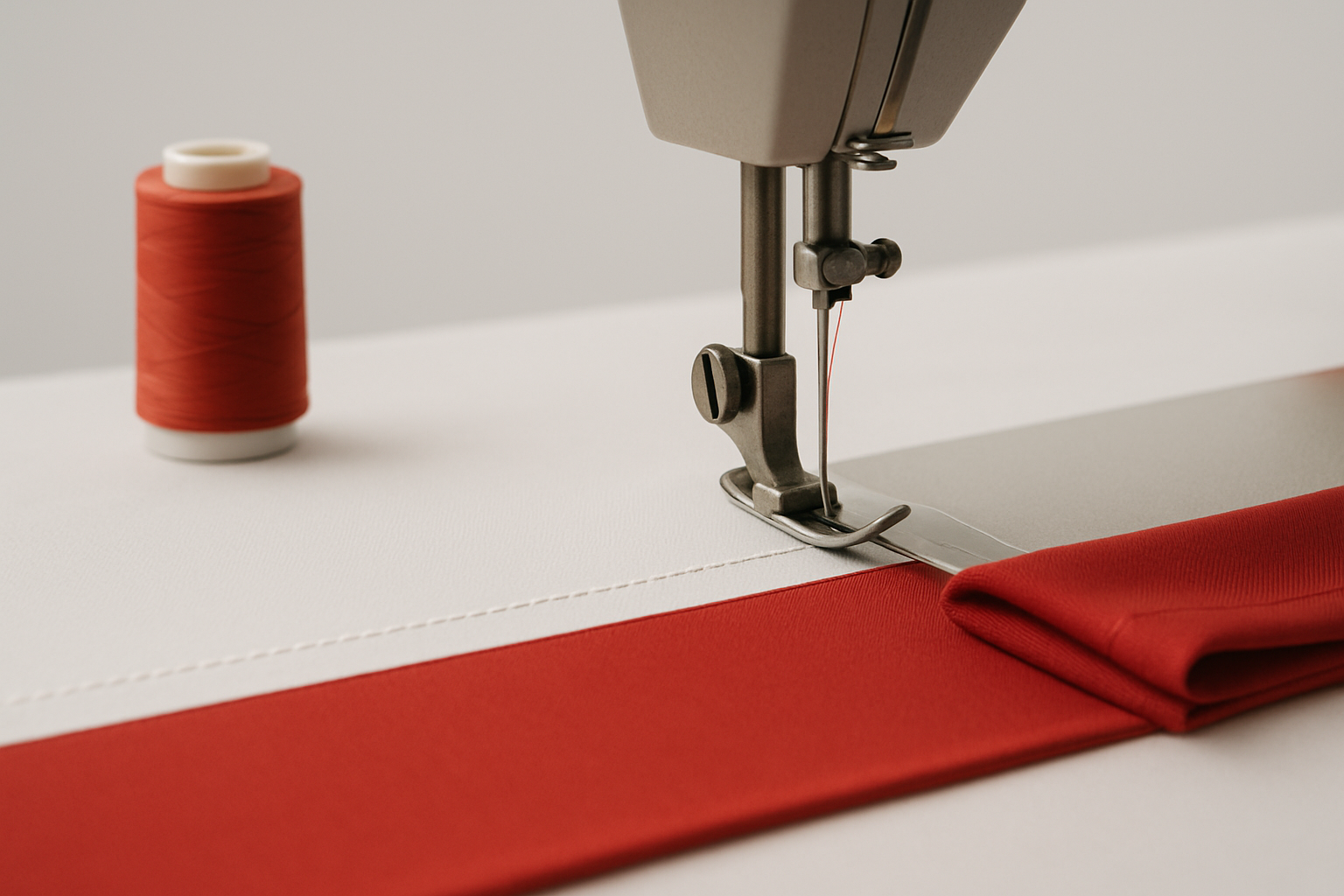
Feather flags custom printed at a manufacturer level are not simply banners on a stick — the fabric specification, print method, and finishing details directly affect how long the flag looks professional in outdoor conditions. The standard fabric for feather flag banners is 110g/m² knitted polyester (sometimes listed as "dye-sublimation polyester"), which balances print vibrancy, wind flexibility, and UV resistance. High-quality dye-sublimation printing saturates color into the fiber rather than sitting on top of it, giving the flag an 80%+ UV resistance rating and preventing the chalky fading that destroys cheaper screen-printed flags within 8–12 weeks of sun exposure. A well-made feather flag banner used outdoors in a moderate-sun environment should maintain acceptable color fidelity for 6 months to 2 years depending on daily hours of UV exposure, whether it is taken in at night, and how often it is washed. The finished edge treatment matters too: a proper feather flag has a sewn hem (not just a heat-sealed edge) along the pole sleeve, and the sleeve itself should be reinforced with a secondary stitch to prevent the fabric from tearing away from the pole under repeated flexing. When ordering feather flags custom for brand events, always request a color proof and confirm that the manufacturer is printing in full bleed — meaning the design extends to within 0.25 in (6 mm) of the trimmed edge — so the finished piece looks intentional rather than undersized. The sail flags collection offers a useful reference point for understanding standard fabric grades across different flag shapes and sizes.
Kit Configurations for Different Event Types: Trade Shows, Grand Openings, and Outdoor Markets
Not all feather flag pole kits are configured the same way, and the right kit for a trade show booth differs meaningfully from what works best for a grand opening or a weekend farmers market. Trade show environments typically require kits with cross-base hardware (no ground stakes permitted on convention center floors), compact pole sections under 15 in (38 cm) for airline-friendly transport, and flame-retardant fabric that meets NFPA 701 standards — a code requirement at most convention venues in the United States. Grand opening deployments favor maximum visual height, so kits in the 15–17 ft (4.6–5.2 m) pole range with ground stakes and optional wheel bases (a cross base on casters for repositioning during the day) are the practical choice. Outdoor market and retail parking lot use demands wind-rated hardware: look for kits that specify a minimum wind rating of 25–35 mph (40–56 km/h) at the base connection point, because feather flags at ground level experience significantly more turbulence than flags mounted at elevation. For organizations running multi-day activations, the grand opening flags collection and the organization and event flags collection both feature kits bundled with the base hardware most relevant to those deployment contexts. Teams managing recurring events should also think about per-kit replacement part availability — spikes bend, sleeves crack — and prefer suppliers who stock individual components rather than forcing full kit repurchases.

Trade Show & Event Flags
Full-kit feather flag banners and event flags and banners configured specifically for convention floors, expos, and branded activations.
Browse Collection →Pole Assembly, Height Adjustment, and Structural Integrity Checks
Assembling a feather flag pole kit correctly is straightforward, but a few structural checks at setup time prevent mid-event failures that damage the flag or create safety hazards. Most feather flag poles consist of three to six fiberglass or aluminum sections that friction-fit or twist-lock together; the assembly sequence matters because reversing two sections of unequal diameter creates a weak joint that will separate at the first gust above 15 mph (24 km/h). After assembly, apply a firm lateral push at the midpoint of the pole — if you feel more than 1–2 in (25–50 mm) of flex at each joint, the sections are not fully seated and need to be pressed together more firmly. The top section terminates in a fiberglass tip that curves forward to give the feather flag its characteristic teardrop silhouette; this tip is under the most stress during wind events and should be inspected for hairline cracks before each deployment. The flag attaches to the pole via a sleeve running the length of the leading edge — slide the pole through this sleeve from the bottom, connect sections as you go, and secure the tip through the reinforced grommet or loop at the flag's top. For buyers comparing feather flag signs to other pole-based display formats, the Telescoping Flagpoles Buyer's Guide offers helpful context on pole material tradeoffs that apply equally to feather flag hardware.
Buying in Bulk: Kit Counts, Storage, and Consistency Across Units
For organizations ordering 10 or more feather flag pole kits at once, consistency across units is the professional standard that separates a polished event presence from a mismatched one. When ordering feather flags custom in quantity, specify that all poles come from the same production batch — mixed batches occasionally use slightly different sleeve diameters, which means bases and pole sections are not interchangeable across units, a genuine logistical problem when one spike bends on day two of a five-day event. Color consistency across a large print run is equally important: dye-sublimation on polyester can shift by 3–5 ΔE color units between print runs if the manufacturer doesn't maintain proper ICC profile calibration, which means flags ordered two weeks apart may visibly mismatch in direct sunlight. Storage for bulk kit inventory requires attention to pole section length — most sectional poles pack down to 24–36 in (61–91 cm), so a set of 20 kits fits comfortably in a standard 4 ft × 3 ft (1.2 m × 0.9 m) storage cage. Request that your manufacturer provides spare parts (minimum 10% overage on ground stakes and cross-base center rings) with any order above 15 units. Teams managing large-scale multi-flag brand activations should also review the international flag display kits guide for conference centers and multi-nation venues for additional bulk ordering protocol that applies directly to feather flag deployments at scale.
What to Look for in a Quality Feather Flag Kit: Red Flags and Green Flags
Distinguishing a well-engineered feather flag pole kit from a low-quality one comes down to five specific indicators you can verify before purchasing. First, check whether the pole material is listed as fiberglass or aluminum — unlisted "composite" or "plastic" poles are almost always ABS or PVC and will crack in cold weather below 32°F (0°C) or UV-degrade within one season outdoors. Second, confirm the base hardware is steel, not zinc alloy or cast aluminum, for any kit intended for outdoor or high-wind use; zinc bases corrode within two to three seasons and the center-post sleeve weakens before visible rust appears. Third, review whether the flag fabric weight is stated in grams per square meter — a legitimate manufacturer will publish this figure (target 110–120 g/m²), while suppliers using sub-spec fabric typically omit it. Fourth, assess the carrying bag: a proper bag has a rigid or semi-rigid tube for poles and a separate zippered pocket for the base hardware — mixed packing causes pole tips to puncture flag fabric and ruins the print before the first event. Fifth, evaluate the supplier's replacement parts policy; the best feather flag banner suppliers treat hardware as a modular system where individual components are orderable, not just complete kit replacements. For event planners building a recurring activation inventory, the trade show and event flags collection provides a useful benchmark for what a properly specified commercial-grade kit looks and feels like.
What is typically included in a feather flag pole kit? +
How tall are standard feather flag banners, and which height is right for my event? +
What base type should I use for a feather flag sign on concrete or asphalt? +
How long do feather flag banners last outdoors? +
Can I order feather flags custom with a logo or full-color graphic? +
Are feather flag pole kits allowed inside trade show venues? +
What wind speed can a standard feather flag pole kit withstand? +
How do I order feather flag pole kits in bulk for multiple locations or events? +
Choosing the right feather flag pole kit means matching every component — pole height, base hardware, fabric weight, and print method — to the specific surface, wind environment, and brand standard of your event. For trade show and convention deployments, the trade show and event flags collection offers fully specified kits built around convention-floor requirements. For grand openings, retail activations, and community events, the grand opening flags collection and the organization and event flags collection provide the higher-height, weather-rated hardware configurations that outdoor deployments demand. Bulk pricing is available for corporate and multi-location orders — contact Asya Bayrak directly for volume quotes and to discuss custom artwork requirements for feather flags custom printed to your brand specifications.