






For indoor ceremonies, fringed flags signal formal protocol and rank, while plain flags serve everyday institutional display — and choosing the wrong style can undermine the very impression you're trying to make. Whether you're dressing an embassy reception room, a school auditorium stage, or a corporate boardroom, understanding this distinction before you order is essential. Our full range of presentation-ready options is in the Indoor Flags collection, where both styles are available in official specifications.
Which Style Is Right for You — a Quick Verdict
Choose a fringed flag for any ceremonial, formal, or protocol-driven setting; choose a plain flag for permanent institutional display where the flag is simply present rather than performative. The fringe is not decorative whimsy — it is a recognized signal of ceremonial intent, used in courtrooms, legislative chambers, military headquarters, and executive offices precisely because it communicates that this flag occupies a position of honor, not mere identification. Plain flags, by contrast, communicate continuity and institutional permanence, making them ideal for lobbies, classrooms, and conference rooms where the flag is part of the environment rather than the focal point of an event.
What Fringed Flags Do Well — and Where They Fall Short
The gold fringe border is the single most recognizable visual marker of a ceremonial indoor flag, and its effect in a formal room is immediate and unmistakable. Historically, military flags used fringe to define the flag's edge during indoor display so the cloth would not appear ragged or unfinished when hanging stationary — the fringe replaced the wind-driven flutter that gives an outdoor flag its crisp silhouette. Today that tradition carries forward into diplomatic, governmental, and executive settings worldwide. Our Fringed Gold Pole Office Flag with Logo is purpose-built for exactly this context: it is produced on double-layer satin fabric mounted on a gold-plated metal pole, and it is made to order with your organization's own logo — a combination that delivers executive-level identity presentation. The gold fringe on a flag adds approximately 2–3 in (5–7 cm) of visual border on all free edges, creating a contained, finished appearance that reads as intentional and prestigious at distance. Where fringed flags are less suitable is in outdoor environments — wind and moisture degrade fringe trim rapidly — and in budget-sensitive permanent installations where the ceremonial signal is unnecessary.
From a protocol standpoint, the US Flag Code (4 USC §§ 1–10) neither requires nor prohibits fringe on the American flag; the code is silent on the subject, and courts have repeatedly confirmed that gold fringe does not alter the legal status or meaning of the flag. Military regulations, State Department guidelines, and congressional practice have independently established fringe as appropriate for indoor, ceremonial, and color-guard use. That consensus — rather than statutory mandate — is what gives fringed flags their formal authority. If your setting is governed by a specific protocol document (DoD, State Department, or a national legislature), always defer to that document first.
What Plain Flags Do Well — and Where They Fall Short
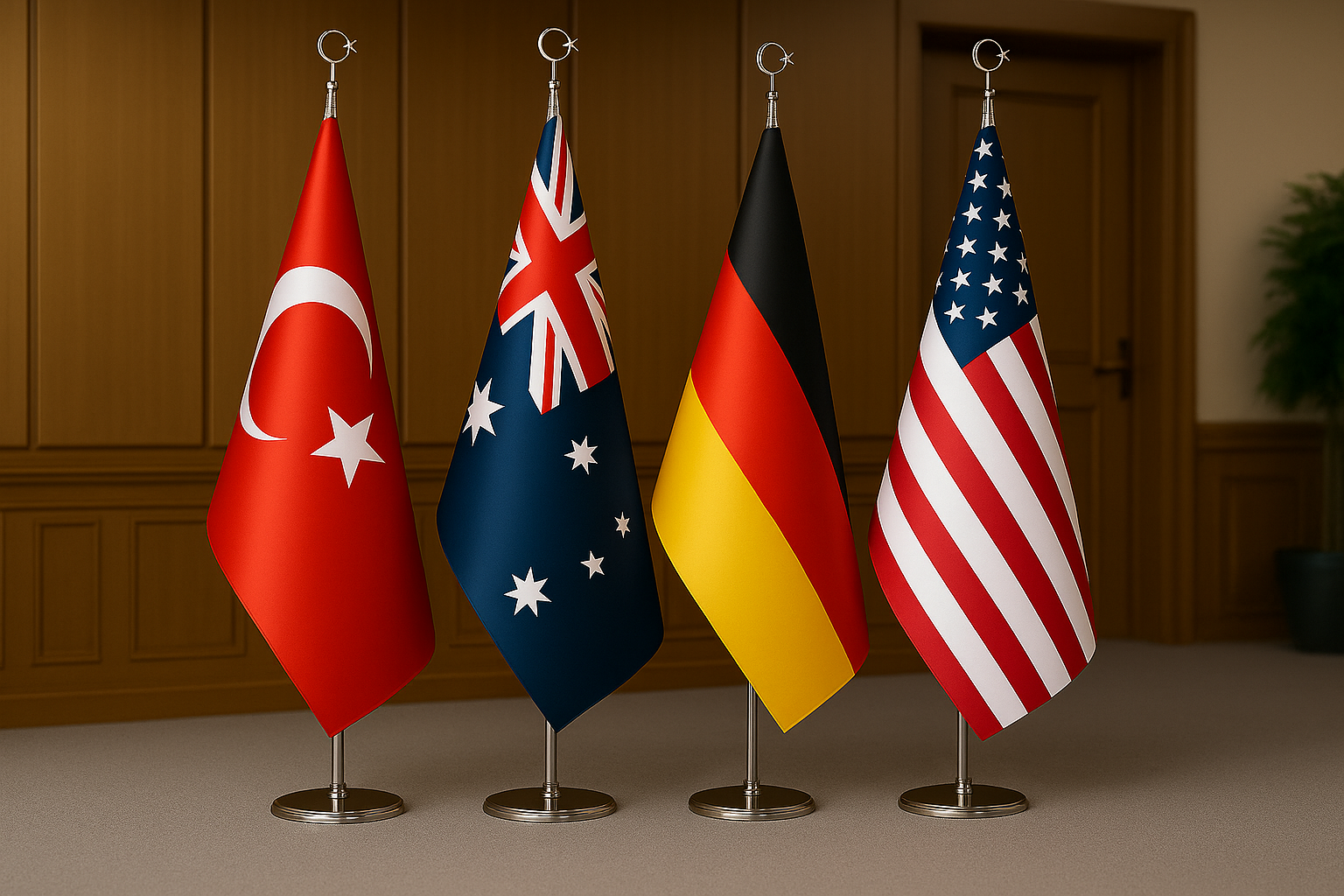
 Plain indoor flags are the workhorses of institutional display, and their strength lies in clean, uninterrupted presentation of the flag's design with no competing visual element at the border. Our USA Official Indoor Flag is a prime example: it features high-definition sublimation printing of the stars and stripes on double-layer satin fabric, mounted on a durable chrome metal pole — every specification chosen to reproduce the national design with precision rather than adornment. This makes it the right choice for embassies, diplomatic missions, government offices, and institutional settings where the flag's identity must be immediately legible without ceremonial context. Plain flags also offer a practical advantage in high-traffic installations: they are typically easier to replace when worn, and the absence of fringe trim means there is no secondary element to fray, discolor, or require separate care. The limitation of a plain flag is equally clear — in a ceremony where protocol, rank, or formal occasion is being communicated, a plain flag can read as casual, and in some institutional contexts it may not meet the visual expectations of visiting dignitaries or accrediting bodies. Before selecting a plain flag for a formal event, verify whether your protocol specifies fringe — school ceremony standards, military color-guard regulations, and some municipal codes do make this distinction explicit.
It is also worth noting that "plain" does not mean low quality. Double-layer satin fabric with sublimation printing meets FIAV-recognized standards for indoor flag presentation and holds color significantly longer than single-layer alternatives — typically 2 to 4 years under normal indoor display conditions, assuming the flag is kept away from direct sunlight and not washed more than necessary. For guidance on matching your flag to the right stand and pole diameter, our article on indoor flag stand weights and pole diameters covers the specifications you'll need before ordering.
Matching Flag Style to Your Specific Use Case
The use case — not personal preference — should drive this decision, and most settings fall cleanly into one category. For executive offices and boardrooms, a fringed flag flanking the desk or behind the speaker's position is the globally recognized standard; the fringe signals that the flag is an object of formal honor, not ambient décor. For school ceremonies, many national education ministries and school district protocols explicitly require fringe on ceremony pennants — our Fringed School Ceremony Pennant is produced to MEB protocol standards in 100×150 cm (approximately 39×59 in) double-layer satin with gold-tone fringe trim on three edges, custom-printed with your school name, the official MEB logo, and your chosen ceremony date. For lobbies and reception areas, either style can work, but plain flags tend to age more gracefully in high-visibility permanent installations because there is no fringe trim to accumulate dust or lose its luster over time. For color-guard and processional use, fringed flags are the near-universal choice across military, civic, and school ceremonies, reinforcing the distinction between a flag being carried in honor and one simply being displayed. For conference rooms and classrooms, plain institutional flags are appropriate and cost-effective for multi-year installations.

Indoor Flags Collection
Both fringed ceremonial and plain institutional indoor flags, ready for embassies, offices, schools, and government settings worldwide.
Browse Collection →How Lifespan and Total Cost Compare Between the Two Styles
Plain indoor flags consistently outlast fringed flags in terms of total service life, primarily because fringe trim is the first element to show wear. Under normal indoor conditions — climate-controlled spaces, no direct UV exposure, handled only for setup and teardown — a quality double-layer satin plain flag typically lasts 3 to 5 years before the fabric shows meaningful fading or fraying. A fringed flag on the same schedule may last 2 to 4 years before the fringe itself begins to mat, discolor, or shed, even if the flag body remains in excellent condition. In practical terms, this means that for permanent long-term installations, plain flags carry a lower total cost of ownership. For periodic ceremonial use — annual graduations, quarterly board meetings, diplomatic receptions — the slower wear rate of fringed fringe under infrequent handling makes lifespan less of a differentiating factor, and the ceremonial value justifies the replacement cycle.
When budgeting, consider that logo-printed or custom-fringed flags involve a setup and production cost that plain stock flags do not — this is appropriate for the executive and protocol market but less so for classrooms or general office use. If you're planning a multi-room or multi-location installation and need to understand standard sizing for each space, our guide to standard banner sizes for indoor events will help you specify correctly before ordering in volume. For logo-branded ceremonial flags specifically, our Logo Printed Indoor Flags collection covers the full range of customization options available.
What does gold fringe on a flag actually mean? +
Is gold fringe on the American flag allowed under the US Flag Code? +
Where exactly is gold fringe placed on a flag? +
Can I use a fringed flag outdoors? +
Do school ceremony flags need to be fringed? +
How do I care for the fringe trim on a ceremonial flag? +
How often should an indoor ceremonial flag be replaced? +
Whether your setting calls for the formal authority of a fringed flag or the clean permanence of a plain institutional flag, selecting the right style from the start protects both your presentation and your budget. For ceremonial executive or diplomatic environments, the Fringed Gold Pole Office Flag with Logo delivers protocol-grade presentation with your organization's own identity. For official national display in embassies, government offices, and institutional settings, the USA Official Indoor Flag on a chrome metal pole meets the specification without distraction. Explore the complete range — both fringed and plain — in our Indoor Flags collection, and browse custom options in our Logo Printed Indoor Flags collection. Bulk pricing is available for corporate, governmental, and institutional orders across multiple locations.


