
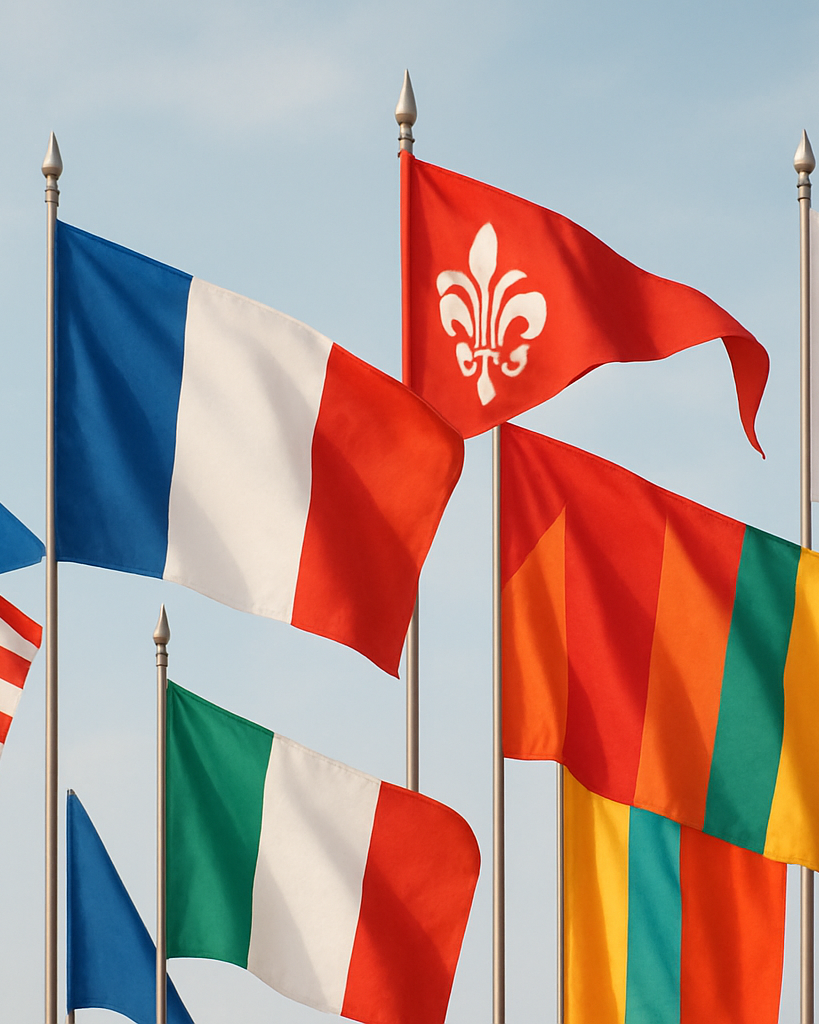

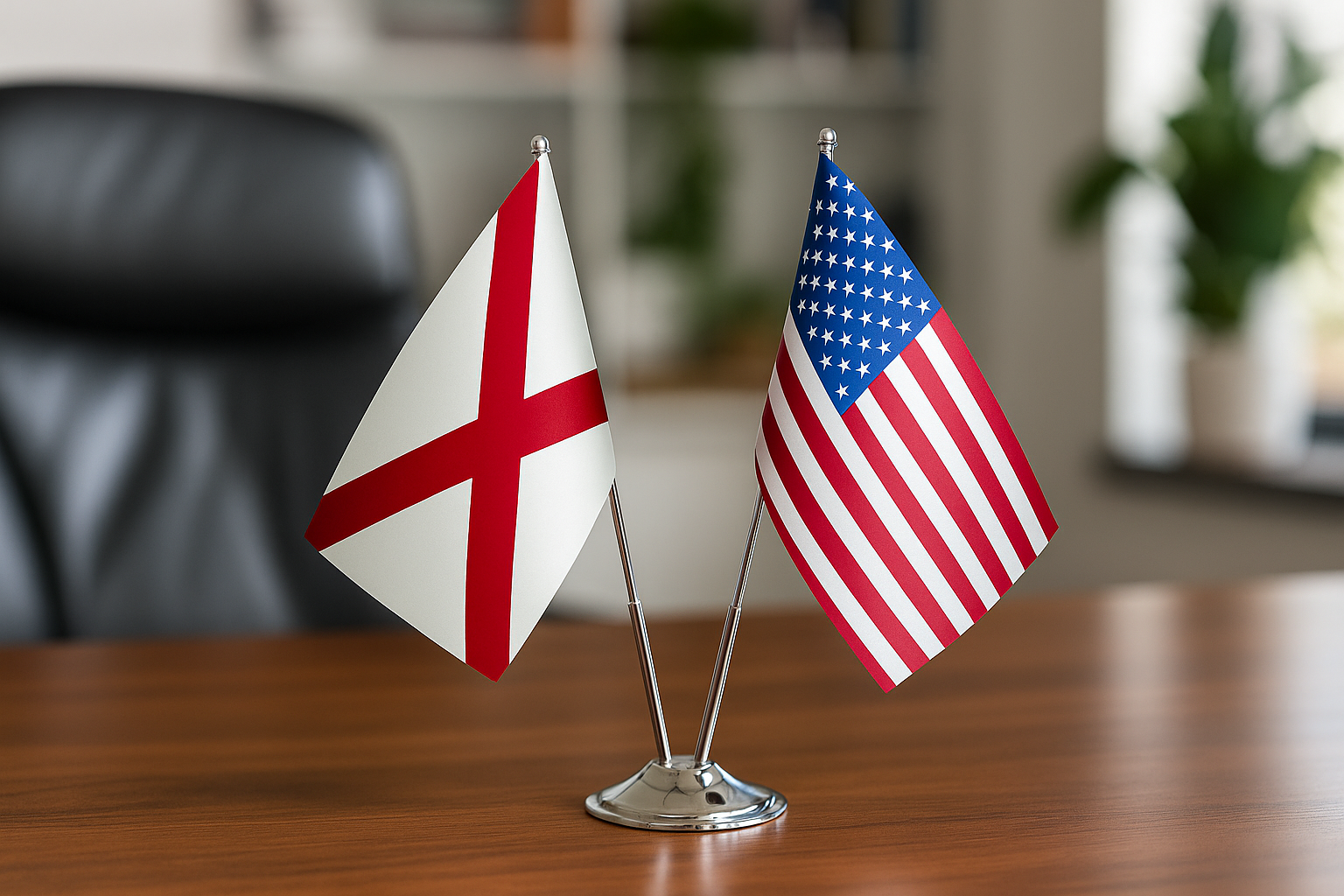


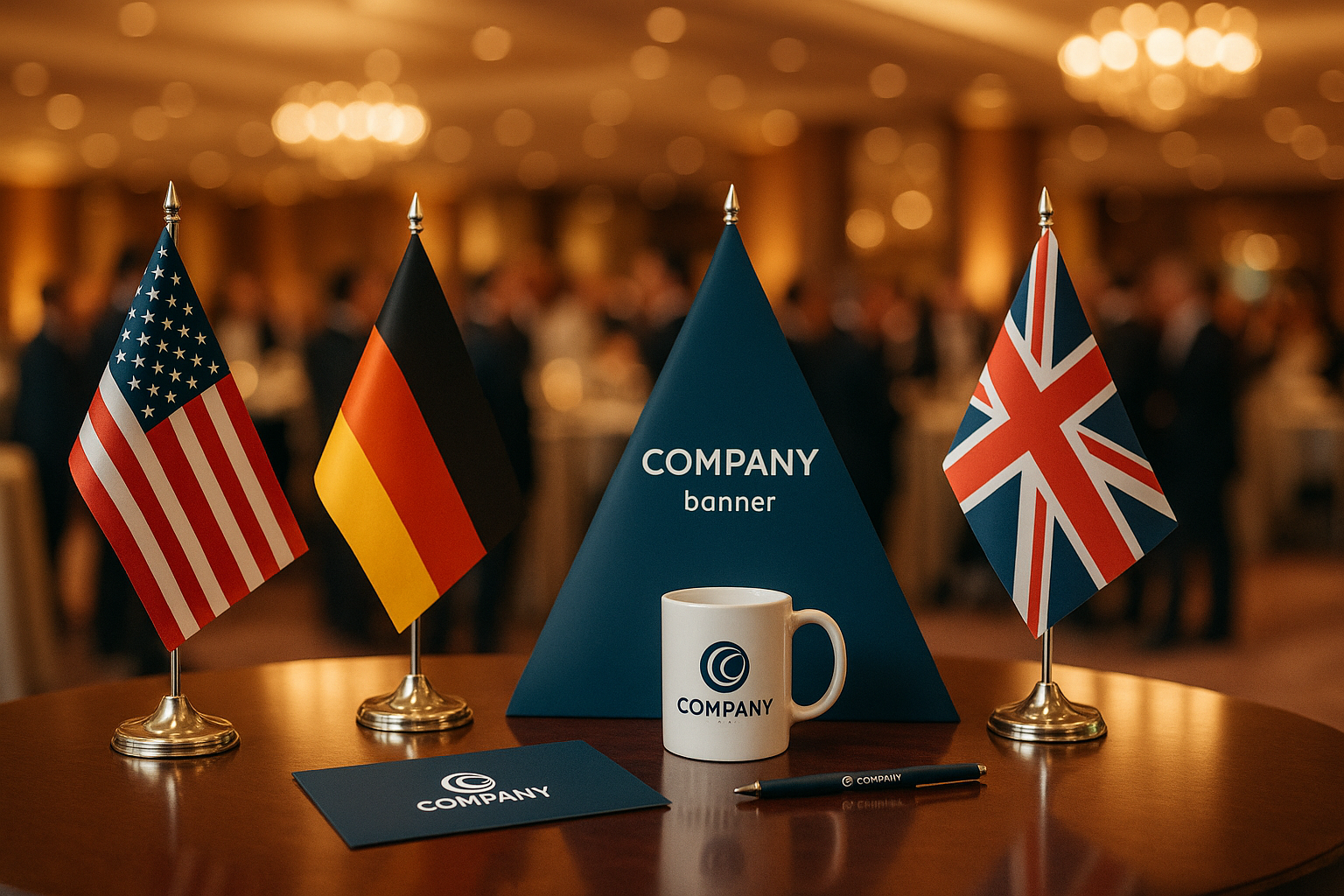

Real estate developers, property marketing teams, and event coordinators who need to make an immediate visual impact at model home communities and grand opening events should start with custom logo-printed outdoor pole flags — available in bulk quantities with consistent branding across every lot, entrance, and sales center. The right outdoor flags for real estate can increase walk-in traffic, reinforce community identity, and communicate professionalism from the curb — all at a fraction of the cost of traditional signage. This guide covers everything from sizing and materials to bulk ordering logistics, so you can deploy flags confidently across an entire development or event footprint.
Why Outdoor Flags Are a Smart Marketing Tool for Real Estate Developers
Outdoor flags for real estate are one of the highest-ROI physical marketing assets a developer can use because they are visible from distances exceeding 300 ft (91 m), require no electricity, and can be repositioned instantly as communities grow. Unlike printed banners or A-frame signs, properly manufactured pole flags and feather flags move in the wind — attracting the eye continuously rather than passively. Studies in outdoor advertising consistently show that motion-based signage captures attention up to 400% more effectively than static alternatives, which is why model home communities that line their entrance roads with branded flags routinely report measurable increases in foot traffic during open weekends.
For housing community developers, flags also serve a functional purpose beyond aesthetics. They mark entry points, model home locations, amenity centers, and sales offices without requiring permit-intensive permanent signage structures. This flexibility is especially valuable during the pre-certificate-of-occupancy phase of a development, when permanent signage may not yet be approved. Grand opening flags for developers can go up the day before an event and be safely stored or redeployed within hours — a logistical advantage that no vinyl banner or monument sign can match. When you factor in reusability across multiple community phases or grand opening events, the cost-per-impression for bulk outdoor flags for housing communities is extraordinarily low.
Choosing the Right Flag Type: Pole Flags, Feather Flags, and Vertical Banners
The best flag type for your real estate project depends on three factors: installation environment, viewing distance, and branding complexity. For high-traffic road frontage and primary entrances, traditional rectangular pole flags mounted on 20–30 ft (6–9 m) aluminum or fiberglass poles offer maximum visibility and the most printable surface area for complex logos and community names.
 Custom pole flags in standard real estate sizes — typically 3 ft × 5 ft (0.9 m × 1.5 m), 4 ft × 6 ft (1.2 m × 1.8 m), or 5 ft × 8 ft (1.5 m × 2.4 m) — are the workhorse of any model home community flag program. These sizes are large enough to display a developer logo, community name, and tagline without crowding, while remaining light enough to fly freely in winds as low as 5 mph (8 km/h). Feather flags for model homes, by contrast, are ideal for property-line placements, cul-de-sac markers, and interior wayfinding because their narrow vertical profile requires less lateral clearance and suits compact ground stakes. Vertical pole flags — sometimes called boulevard or municipal-style flags — are perfect for lamp post installations along community entrance corridors where horizontal space is limited. Choosing the right format for each zone of your development ensures that your branding is consistent without being visually chaotic, and that every flag type is performing at its structural optimum. Explore the full logo-printed outdoor pole flag collection to compare size and hardware options across all standard real estate flag formats.
Sail flags (also called teardrop or shark fin flags) offer a third format particularly well-suited to grand opening events and weekend sales activations. Their weighted base design means they can be deployed on hard surfaces — parking lots, concrete driveways, paved sales center entrances — without any ground penetration, which is a significant advantage on finished landscaping or paved areas where ground stakes would cause damage. If your development involves multiple phases or event types over several years, investing in a mixed fleet of pole flags, feather flags, and sail flags gives your marketing team maximum deployment flexibility.
Sizing Your Flags for Maximum Visibility at Different Real Estate Settings
Flag sizing for real estate developments follows a straightforward rule: flag height should equal roughly 25–33% of the total pole height for optimal visual proportion and wind performance. For a standard 20 ft (6.1 m) pole at a model home entrance, a 4 ft × 6 ft (1.2 m × 1.8 m) flag is the minimum recommended size; a 5 ft × 8 ft (1.5 m × 2.4 m) flag on the same pole will create a more commanding presence but requires wind ratings above 15 mph (24 km/h) to fly cleanly without wrap-around.
For feather flags for model homes positioned along a walkway or driveway, heights of 11–15 ft (3.4–4.6 m) are standard for residential communities, while commercial-grade feather flags reaching 19–24 ft (5.8–7.3 m) are better suited for high-visibility arterial road placements adjacent to a major development entrance. Visibility distance scales predictably: a 3 ft × 5 ft flag is readable at roughly 100–150 ft (30–46 m) with 2-inch lettering; a 5 ft × 8 ft flag extends that readable range to 200–300 ft (61–91 m). For grand opening events on busy roads with posted speed limits above 45 mph (72 km/h), always default to the largest format your pole hardware can safely support, as drivers have less than two seconds of dwell time on any individual piece of roadside signage.
Material and Print Specifications for Outdoor Durability
 The material specification of your bulk outdoor flags for housing communities determines both their lifespan and their print quality in full-sun conditions. For permanent or semi-permanent installations that will remain outdoors for 6–24 months, 200-denier nylon is the industry standard: it offers a 6-month to 2-year outdoor lifespan depending on climate, UV exposure ratings of 80% or higher when treated, and excellent color vibrancy because the weave accepts dye-sublimation printing with minimal dot gain. Polyester knit — specifically 150-denier woven polyester — is the preferred alternative for coastal or high-humidity environments because it resists mildew more aggressively than nylon and maintains structural integrity through repeated wet-dry cycles common in Florida, Gulf Coast, and Pacific Northwest markets. For grand opening flags and event-specific deployments expected to last 30–90 days, 110-denier polyester is a cost-effective choice that still delivers vivid color output and adequate tensile strength through moderate wind events. Always specify UV-resistant dye-sublimation printing rather than screen printing for outdoor real estate flags — dye-sublimation bonds pigment into the fabric fiber rather than sitting on the surface, resulting in colors that resist fading by up to 60% longer under direct sun exposure. The corporate flags collection features multiple fabric and print options suitable for professional real estate and grand opening deployments with exact material specifications available for bulk orders.
Header construction is equally important for longevity. Canvas headers with brass grommets are the minimum standard for pole flag installations — look for at least a 2-layer canvas header with double-stitched perimeter seaming, which extends flag life by preventing edge fraying that typically causes premature flag retirement. For model home community flag programs where flags will be cycled up and down repeatedly across multiple sales weekends, a reinforced nylon sleeve header with an integrated rope loop is a superior choice because it eliminates grommet fatigue entirely. All hardware that contacts the flag — snap hooks, halyards, pole finials — should be marine-grade stainless steel or UV-stabilized nylon to prevent rust staining on flag fabric, which is one of the most common complaints in coastal real estate installations.
How to Structure a Bulk Order for Model Home Communities and Grand Opening Events
Structuring a model home flags bulk order correctly from the start saves significant time, money, and revision cycles. The most efficient approach is to define your flag program in three tiers before contacting any manufacturer: Tier 1 (entrance and primary road flags — largest format, highest quantity, longest intended lifespan), Tier 2 (model home and amenity markers — medium format, moderate quantity, seasonal rotation), and Tier 3 (event and grand opening flags — any format, lower quantity, short lifespan acceptable).
For a typical master-planned community launch in the United States, a realistic Tier 1 order might consist of 20–40 identical 4 ft × 6 ft (1.2 m × 1.8 m) nylon pole flags with full-color logo printing, representing the entrance corridor and major road frontage. Tier 2 might add 60–100 feather flags or vertical pole flags for individual lot and model home identification. Tier 3 for the grand opening weekend event might include 30–50 sail flags or smaller 3 ft × 5 ft event flags in a high-contrast color scheme. When ordering real estate community flags wholesale, minimum order quantities (MOQs) typically begin at 12–25 units for custom-printed flags, with significant per-unit price breaks at 50, 100, and 250+ units. Always request a physical sample or digital proof of each unique design before approving a full production run — color-matching your community brand standards to a specific Pantone reference is critical, and digital screen previews often differ from physical dye-sublimation output by 10–15% in saturation.
Sail Flags Collection
Premium sail flags in teardrop and shark-fin profiles — ideal for grand opening events, model home sales centers, and any paved installation where ground stakes aren't an option.
Browse Collection →Compliance, Permits, and Flag Code Considerations for Real Estate Installations
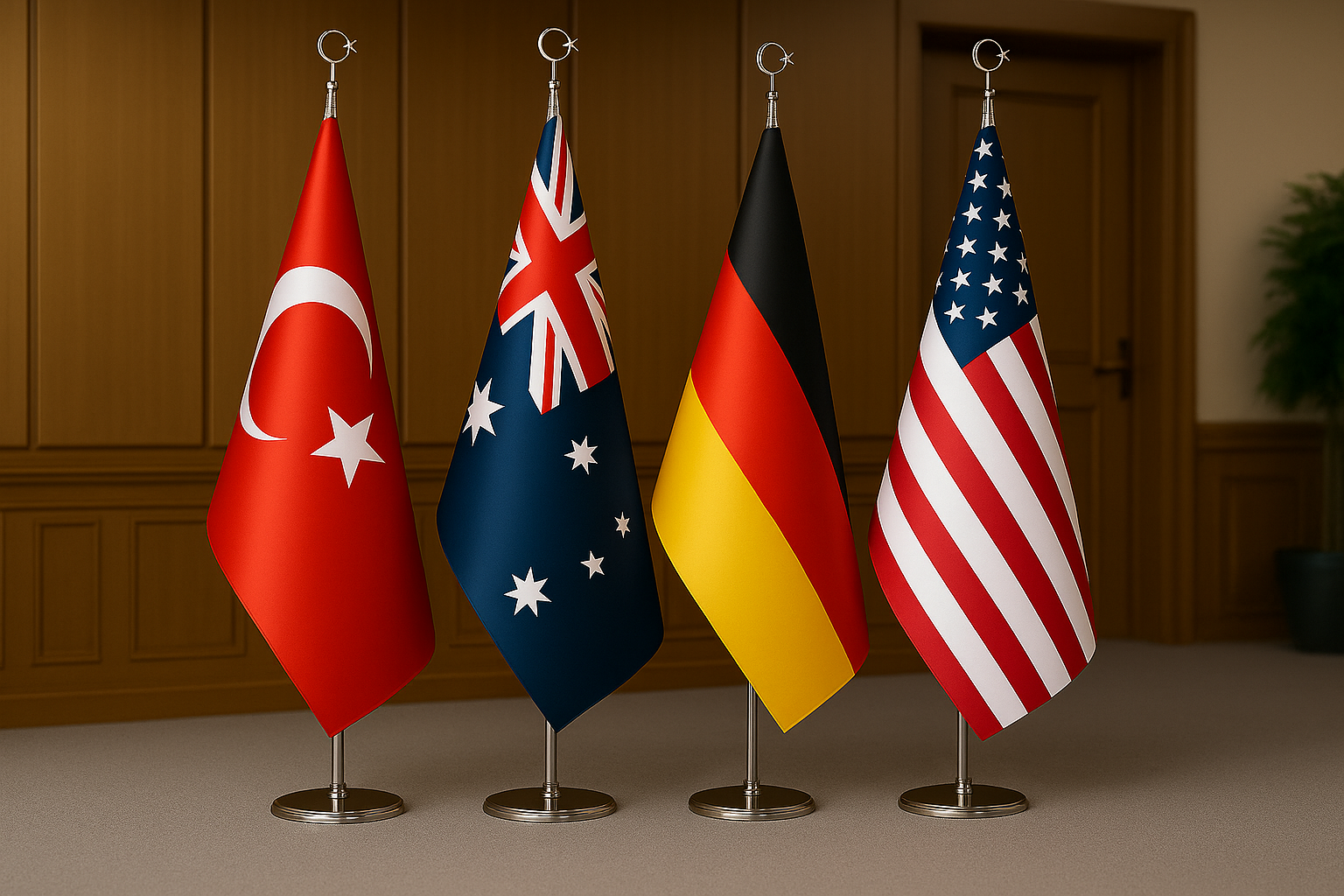
Compliance for real estate flag installations in the United States involves both federal and local regulatory layers that developers must address before any flags go up. Under 4 USC §§ 1–10 (the US Flag Code), any American flag displayed alongside custom logo or community flags must be flown at the same height or higher than all other flags on the same pole assembly — never subordinate in position to a commercial or promotional flag. This is a common error in new development installations where USA flags are added to an existing pole cluster as an afterthought.
At the local level, most municipalities in the United States regulate temporary outdoor flags and banners under their sign code ordinances. In many jurisdictions, feather flags and sail flags are classified as temporary promotional signage and subject to permit requirements, display duration limits (commonly 30–90 days per calendar year), and height restrictions (often capped at 15–20 ft / 4.6–6.1 m without a variance). Homeowners association (HOA) rules in established communities add another layer, and the Freedom to Display the American Flag Act of 2005 provides specific federal protections for residential American flag display that supersede some HOA restrictions. Always engage your local planning department and legal counsel before deploying a community-wide flag program to ensure that your installation is fully permitted, that pole heights comply with local zoning setback and height requirements, and that your flag placement does not obstruct sightlines at traffic intersections — a liability issue distinct from sign code compliance. The USA outdoor flag meets all standard display specifications for compliant co-display with custom real estate development flags.
Placing Your Order and Managing Delivery for Multi-Site Real Estate Projects
Coordinating a logo flags for real estate grand opening order across multiple delivery sites requires advance planning and clear communication with your manufacturer on lead times, packaging, and labeling. Standard production lead times for custom-printed bulk outdoor flags range from 7–14 business days for runs under 100 units, and 14–21 business days for runs above 100 units with complex full-color printing — always add 5–7 business days of buffer for international shipping or cross-country freight to construction sites where receiving logistics may be unpredictable.
For multi-community developers managing flag programs across several active projects simultaneously, request that your manufacturer pack and label each community's flags separately within the same shipment, using the community name and lot address as the label reference. This eliminates on-site sorting confusion when flags arrive during active construction, when site supervisors are managing multiple priorities. Request a packing list with SKU-level detail for every carton so you can verify receipt accurately without opening all packaging at once. If your project timeline requires flags to be ready for a specific grand opening date, confirm with your manufacturer that their production and shipping schedule accommodates that date with a minimum 3-business-day safety margin, and always get the confirmation in writing before approving final artwork. For large-scale custom pole flags for property developers managing portfolios of 10 or more active communities, establishing a standing blanket purchase order with a single flag manufacturer — combined with a stored digital asset library of all approved logo files — allows individual community managers to trigger reorders within 48 hours without re-entering design specifications from scratch.
Frequently Asked Questions
What is the minimum order quantity for custom outdoor flags for real estate developments? +
How long do outdoor flags last in a real estate installation? +
What size flags should I use for a model home community entrance? +
Do real estate developers need permits to display flags on construction sites? +
What is the best flag type for a real estate grand opening event on a paved surface? +
Can I match my community brand colors exactly when ordering custom real estate flags? +
How far in advance should I place a bulk flag order for a real estate grand opening? +
Are vertical pole flags a good option for lamp post installations in a housing community entrance corridor? +
Whether you are launching a single model home community or coordinating flag programs across a portfolio of active developments, the right combination of flag types, materials, and ordering strategy will make your properties stand out from the road and communicate the quality of your brand before a single prospective buyer walks through the door. For entrance and road-frontage installations, explore the logo-printed outdoor pole flags collection for full-color custom options in every standard real estate size. For event-day deployments and model home markers, the sail flags collection and vertical pole flags collection offer format-specific solutions that integrate seamlessly into any community flag program. Bulk pricing is available for corporate and developer orders — contact Asya Bayrak to discuss a custom wholesale program tailored to your project volume, branding specifications, and delivery schedule.


