



For most trade show exhibitors, a retractable banner stand is the better all-around choice — it sets up in seconds, travels in a slim carry bag, and presents a polished look that X-frame stands simply cannot match at eye level. That said, X-frame displays have a real place in high-volume, budget-conscious deployments where ease of graphic swapping matters more than premium aesthetics. Explore the full range of professional display options in our Banners & Accessories collection to find the right fit for your next event.
Which Banner Stand Is Right for You at a Glance
If you need one setup for corporate trade shows, product launches, or conferences, choose a retractable banner stand. If you are running a retail promotion with frequently changing graphics across multiple locations, an X-frame's quick graphic swap capability and lower per-unit cost may serve you better.
The two stand types are not really competing for the same exhibitor — they solve different problems. A retractable (also called a roll-up or pull-up) banner stand houses the printed graphic inside a spring-loaded cassette at the base, so the banner rolls up for storage and protection. An X-frame stand uses four flexible arms in an X configuration that stretch a lightweight fabric or film banner taut by hooking into grommeted corners. Both are lightweight and portable, but the experience of using them day-to-day, and the impression they create at a booth, diverge significantly. Understanding those differences before you order saves money and avoids a booth presentation you will regret.
What Makes Retractable Banner Stands Worth the Investment
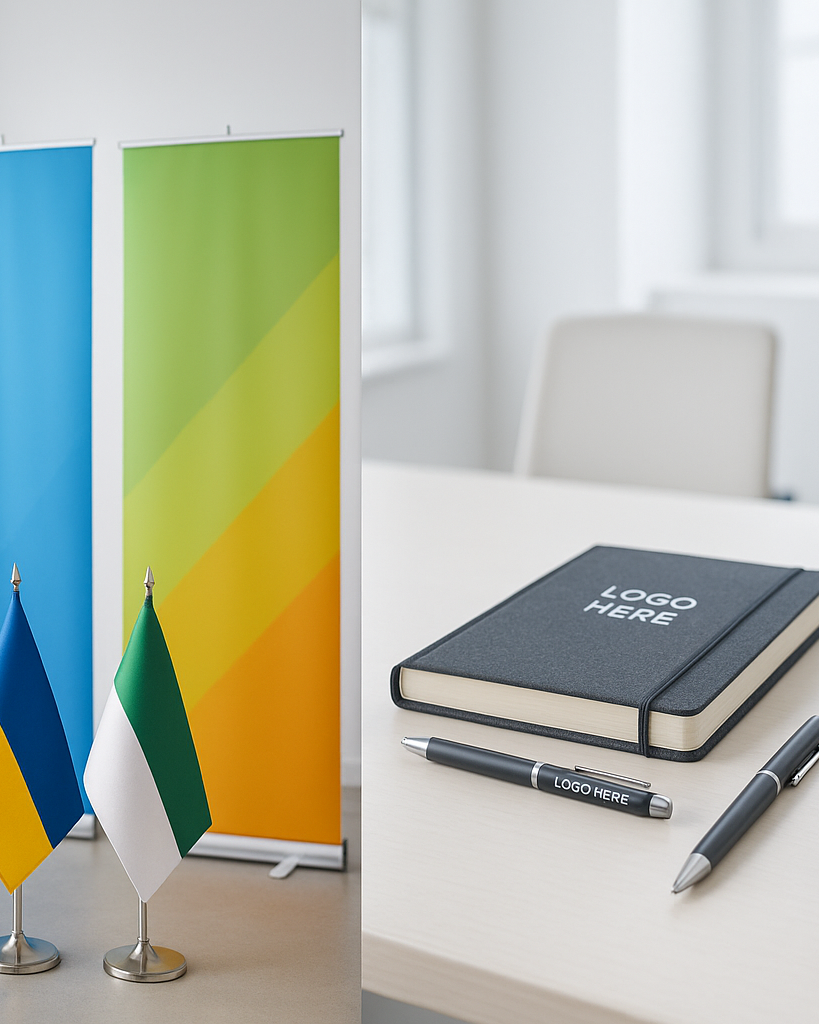
 Retractable banner stands earn their popularity because the entire setup process takes under 60 seconds — no tools, no loose parts, no fumbling with corner hooks in a crowded convention hall. The Portable Roll-up Banner Stand is engineered for exactly this scenario: the banner rolls back into its own base, travels flat in a carry bag, and extends smoothly via a top support pole whenever you need it. From a visual standpoint, the graphic hangs taut and perfectly vertical every single time, which matters enormously in a competitive show environment where first impressions happen in the first three seconds. The enclosed cassette mechanism also protects the printed surface from creasing, dust, and light scratches during transit — a significant advantage over exposed X-frame graphics that can be scuffed or bent in a carry case. For exhibitors attending multiple shows per year, that protection extends the usable life of an expensive print job by months. If you are curious about how banner dimensions affect your design choices, the guide on roll-up banner sizes and printable area breaks down the most common format options in detail.
The main trade-off is cost. A quality retractable stand costs more upfront than an X-frame, and swapping graphics generally requires ordering a new cassette-compatible print rather than simply clipping on a new banner. For exhibitors who run the same branding all year, this is a non-issue. For those who change promotions monthly, it adds up. Retractable stands also tend to be slightly heavier — typically 6 to 11 lb (2.7 to 5 kg) depending on the base material — which is worth noting if you are checking luggage for air travel.
Where X-Frame Banner Stands Genuinely Shine
 X-frame stands excel in situations where you need many display points at a low per-unit cost, or where graphics must be swapped frequently without ordering new hardware. The frame itself typically costs a fraction of a comparable retractable unit, and replacement banners clip on in under a minute by hooking grommets over the four arm tips. For retailers running weekly promotions, real estate offices rotating listing banners, or cultural organizations displaying rotating content, that economics argument is hard to ignore. The Customizable Raschel Fabric Banner — printed on durable Raschel knitted polyester designed for dignified, long-lasting institutional display — is a strong example of a fabric option suited to exactly this kind of repeated use where the banner itself is the star. The material's durability means repeated mounting and removal does not quickly degrade the print or the grommets. For events where you need coordinated signage across a large space, the lower hardware cost of X-frames means your budget stretches further across the floor.
The honest downsides of X-frame displays are presentation consistency and setup experience. The flexible arms require careful adjustment to keep the banner from sagging in the center, and in a busy show hall with limited setup time, getting the tension perfect under pressure is stressful. The open-frame design also exposes the back side of the banner, which looks unfinished if your booth is accessible from multiple directions. And because the graphic is exposed during transit, prints are more vulnerable to creasing — a crease on a vinyl banner at eye level is difficult to ignore and nearly impossible to remove on-site.
Choosing Between the Two Based on Your Show Type
Your specific event type should drive the decision more than any general preference. Retractable banner stands are the clear winner for trade shows, corporate conferences, product demonstrations, and store openings — anywhere that professional appearance directly affects how your brand is perceived. X-frame stands are better suited to community events, indoor retail environments, school fairs, or any multi-location campaign where graphic variety and hardware budget matter more than premium booth aesthetics.
- Corporate trade shows and conferences: Retractable stand — consistent tension, polished look, fast setup.
- Retail in-store promotions: X-frame — low per-unit cost, fast graphic swaps between promotions.
- Multi-day outdoor events (covered tents): Retractable with a weighted base — the enclosed cassette keeps the graphic cleaner.
- Cultural centers and institutional displays: Either type works; fabric banners on X-frames offer excellent durability for permanent or semi-permanent setups.
- Traveling sales teams: Retractable — the carry bag protects the graphic and the whole unit fits in an overhead bin.
- High-volume event marketing (10+ locations simultaneously): X-frame — the cost difference across a fleet of units is substantial.
Wind is a separate consideration that applies to both. Neither type is rated for outdoor use in open wind conditions. If your event has any outdoor exposure, weight the base or use additional securing measures. For guidance on how vertical display formats behave outdoors, the article on vertical flag sizes and pole options covers related principles around height, wind exposure, and hardware selection.
How Lifespan and Total Cost Compare Over Two Years
Over a two-year horizon, a retractable banner stand typically delivers better total value for frequent exhibitors, even though it costs more upfront. A well-made retractable unit used at 10 to 20 shows per year, with proper storage, can last 3 to 5 years before the spring mechanism or base shows meaningful wear. The graphic itself, stored inside the cassette, typically survives 6 to 18 months of regular use before UV fading or handling wear prompts a replacement print. An X-frame's aluminum or fiberglass structure is similarly durable — 3 to 5 years is reasonable — but the exposed graphics may need replacement more frequently due to transit damage, closer to every 4 to 8 months under regular use.

Banners & Accessories
Professional display solutions for trade shows, conferences, and promotions — including retractable stands, fabric banners, and everything you need to present your brand with confidence.
Browse Collection →When calculating total cost, factor in graphic reprints, not just hardware. A retractable stand at a higher upfront price paired with one or two graphic reprints over two years may cost the same or less than a fleet of X-frames with more frequent graphic replacements. For exhibitors printing custom graphics at scale, the guide on custom flag printing costs per unit offers useful context on how print volume affects per-unit pricing — the same principles apply to banner graphics. Standard sizing also affects economy: sticking to common banner dimensions rather than custom sizes keeps reprint costs predictable and lower. The article on standard banner sizes for indoor events is a practical reference before you finalize dimensions.
What is a retractable banner stand and how does it work? +
How do I keep a banner stand stable so it does not tip over? +
Can I reuse a retractable banner stand with a new graphic? +
What is the standard size for a pull-up banner at a trade show? +
Is it worth buying a banner and stand together as a set? +
How long does a printed banner typically last with regular use? +
Can banner stands be used outdoors? +
Whether you are outfitting a single trade show booth or building a fleet of displays for a nationwide campaign, the right banner stand decision comes down to your show frequency, graphic change rate, and brand presentation standards. For single-location corporate events, the Portable Roll-up Banner Stand delivers the setup speed and polished look that busy exhibitors rely on. For institutional and cultural display needs with high-quality printed fabric, the Customizable Raschel Fabric Banner is built for dignified, long-lasting presentation. Browse the complete Banners & Accessories collection and the Banners & Posters collection to find the right combination of hardware and print for your next event. Bulk pricing is available for corporate orders — contact us for a quote on multi-unit display packages.