
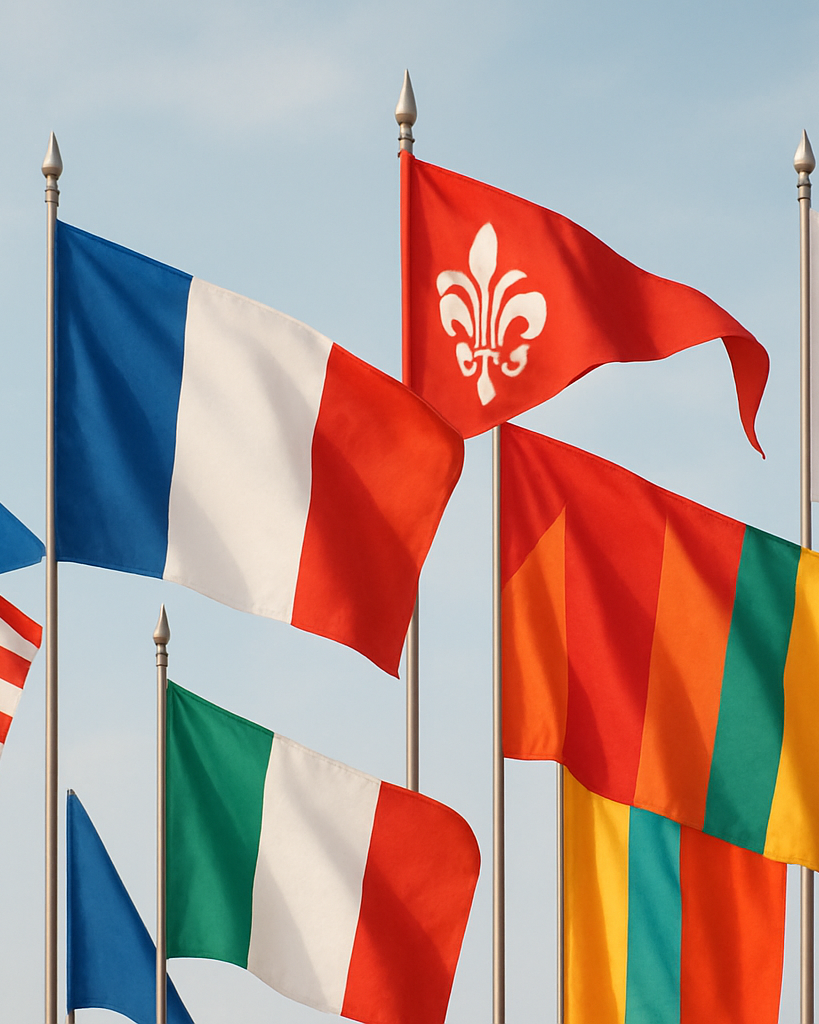
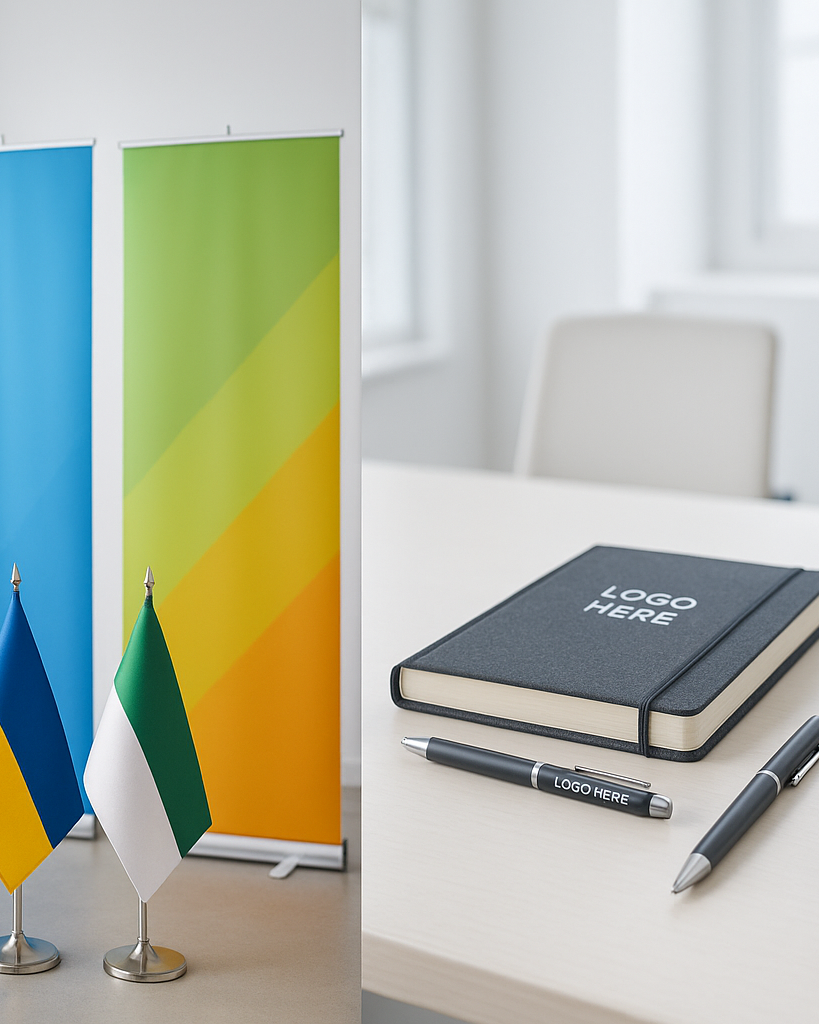
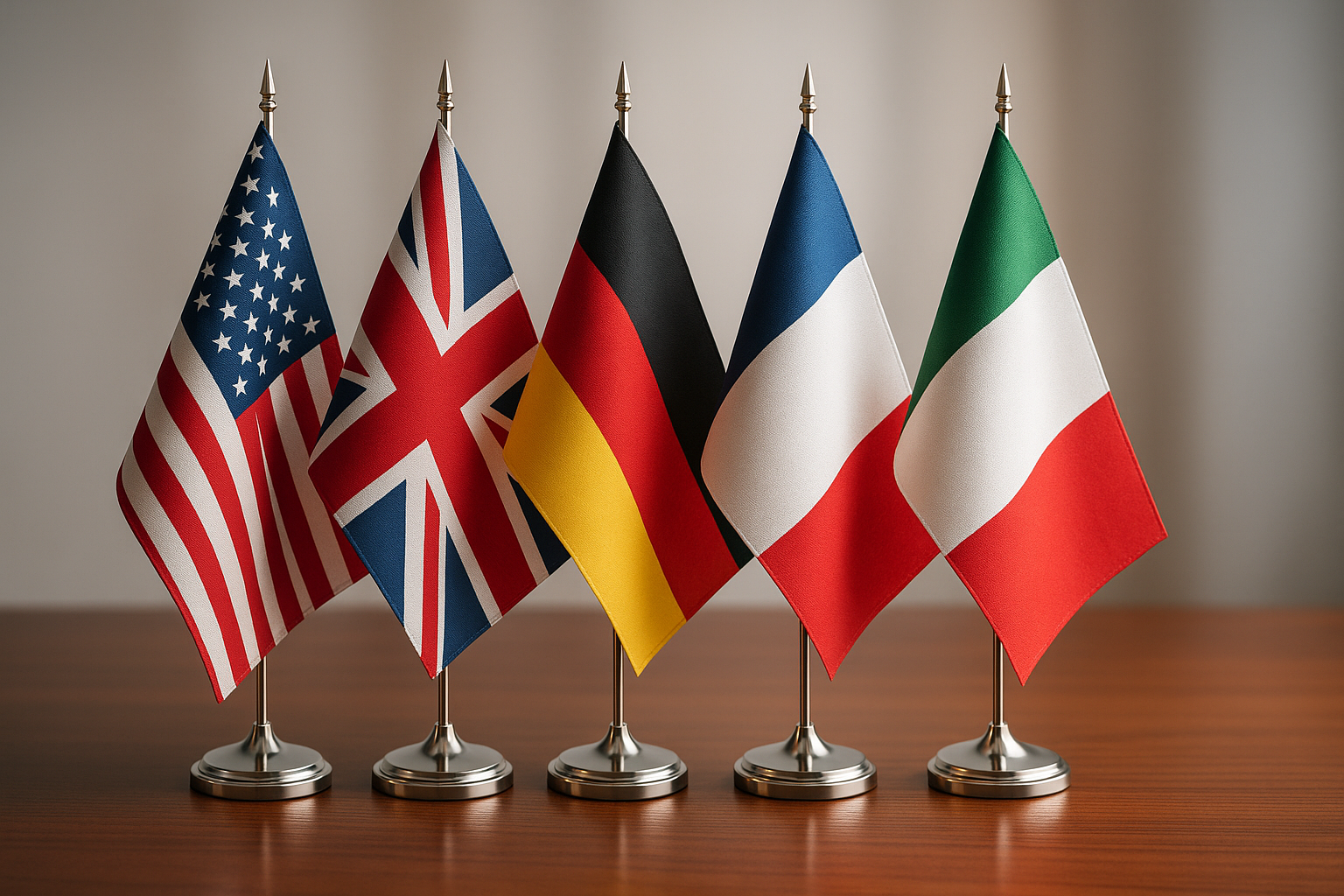
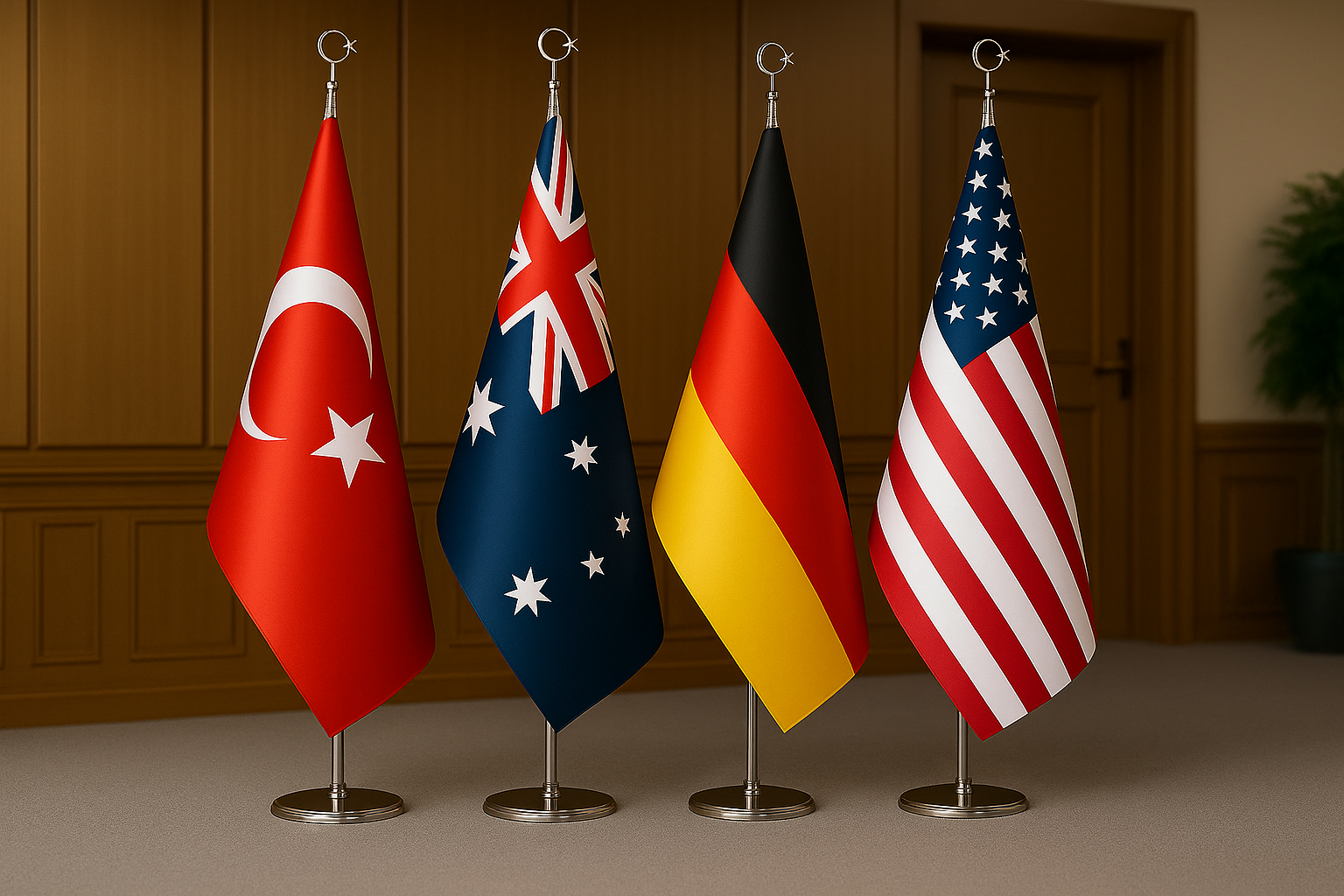
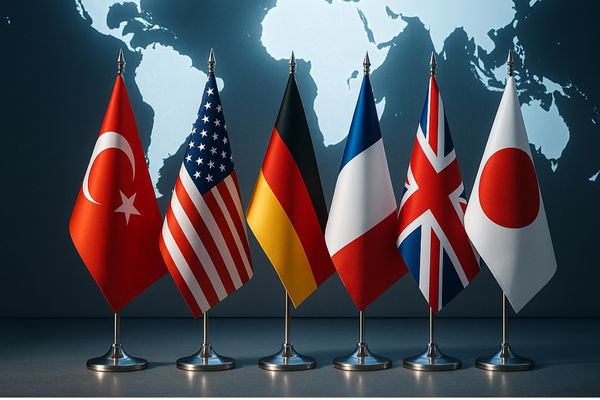

Vertical flag and banner prices range from a modest single-unit rate for small desk or indoor formats up to significantly lower per-unit costs when ordered in bulk for outdoor commercial use — and four key variables determine exactly where your order lands on that scale. Whether you are sourcing a single country flag for a lobby or outfitting a row of dealership poles, understanding those variables before you request a quote saves time and prevents costly resizing or reordering. Browse the full Vertical Country Flag collection to see the range of formats available, then use the breakdown below to understand what drives the number on your quote.
What Actually Sets the Price of a Vertical Flag or Banner
Four factors control the price of every vertical flag or banner: material, size, printing method, and order quantity. No other variable moves the needle as much as these four, and they interact — a larger size in a heavier fabric ordered in a small quantity will cost considerably more per unit than the same design in a lighter fabric at scale. Understanding each factor individually lets you make deliberate trade-offs rather than guessing at quotes.
Material is the first lever. Heavier, denser fabrics cost more per square meter to produce and to print on, but they also last longer outdoors — so the relationship between material price and total cost of ownership runs in the opposite direction from what many buyers expect. Size is straightforward: more fabric area means more material cost, more ink, and longer production time. Printing method matters because direct printing on knitted polyester and dye-sublimation on woven fabrics involve different equipment, ink volumes, and finishing steps. Quantity is the most powerful lever of all — setup costs are fixed regardless of how many flags you order, so spreading them across a larger run drops the per-unit price substantially. If you are still deciding between vertical and horizontal pole formats, the sibling article on choosing a vertical or horizontal pole flag for a store covers the practical trade-offs in detail.
How the Fabric You Choose Changes What You Pay
The fabric is the single biggest material-cost driver in a vertical flag quote, and each fabric type carries a different price point because of how it is made and what it is engineered to do. Asya Bayrak produces vertical flags and banners in three fabric families, each suited to a different environment and use case.
 Raschel knitted polyester is the workhorse fabric for outdoor vertical flags. Available in 80, 90, 110, 120, and 220 g/m² weights, it is printed by direct printing and heat-fixed for colour permanence — the heavier weights deliver greater tear resistance and a lifespan of 6 months to 2 years in continuous outdoor exposure depending on wind conditions and UV load. Lighter weights such as 80–90 g/m² are more economical per unit and suitable for shorter campaigns or events, while the 220 g/m² weight is a premium option for permanent high-traffic installations such as the Outdoor Vertical USA Flag, which is engineered specifically for demanding outdoor environments like gas stations, corporate entrances, dealerships, and embassies. Because raschel polyester moves well in light wind, it maximises visibility even when air movement is gentle — a critical consideration for roadside pole flags. The fabric's knitted structure also means it is 80% UV resistant in its standard outdoor grades, helping colours stay vibrant through seasons of sun exposure.
Satin fabric — available in 100, 150, and 165 g/m² — occupies the mid-to-upper price tier and is recommended for indoor vertical banners where visual elegance and colour depth matter more than wind resistance. Dye-sublimation printing on satin produces rich, photographic-quality results with sharp gradients, making it the right choice for trade show banners, lobby displays, and ceremonial indoor flags. Because satin is not engineered for sustained outdoor exposure, buyers who need an indoor-quality look with outdoor durability should consider the heavier raschel weights rather than satin. Alpaca fabric at 135 and 150 g/m² rounds out the range; it carries a slightly higher price point and is available on request with dye-sublimation printing for custom logo and design applications. In the broader market, nylon and 2-ply polyester are also common alternatives — but they are sold by other manufacturers, not part of Asya Bayrak's production range.
How Size Affects the Price of a Vertical Banner
Size affects price in a near-linear relationship with fabric area — double the flag dimensions and you roughly double the material and ink cost, though cutting, finishing, and header work do not scale quite as steeply. The result is that very large vertical outdoor banners cost significantly more per unit than small desk or garden-format flags, but the cost-per-visible-square-foot of signage often makes the larger format better value for commercial applications.
Standard vertical pole flag sizes run from compact 1 ft × 1.5 ft (30 cm × 45 cm) desk formats through 2 ft × 3 ft (60 cm × 90 cm) and 3 ft × 5 ft (90 cm × 150 cm) mid-range outdoor sizes up to large 4 ft × 6 ft (120 cm × 180 cm) and 5 ft × 8 ft (150 cm × 240 cm) commercial formats. For a full breakdown of which size matches which pole height and viewing distance, the sibling article on vertical flag sizes and pole options covers ratios, mounting considerations, and common sizing mistakes in depth — that article is the right reference if you are still deciding on dimensions before pricing. One practical note: ordering a size that is too small for your pole height wastes money because the flag will not read at distance; ordering correctly the first time is always cheaper than reordering.
Current Vertical Flag and Banner Price List
The table below reflects current unit pricing across the most common sizes and fabric options. Prices vary by fabric weight, size, and quantity tier — the rows below represent single-unit baseline rates; bulk pricing is covered in the next section.
Current Price List
| Product | Size | Price | |
|---|---|---|---|
| Outdoor Vertical USA Flag | 50x200 cm | $9.95 | Check the live price → |
| 75x300 cm | $17.25 | Check the live price → | |
| 100x300 cm | $21.90 | Check the live price → | |
| 100x400 cm | $29.95 | Check the live price → |
Prices as of November 07, 2026. All sizes and materials

Vertical Country Flag Collection
Ready-to-ship and custom vertical country flags in multiple sizes and fabric weights — built for outdoor visibility at embassies, hotels, event venues, and commercial entrances worldwide.
Browse Collection →How Bulk and Corporate Orders Bring the Per-Unit Price Down
Ordering in volume is the most reliable way to reduce the per-unit cost of vertical flags and banners — typically, once an order crosses 10 units, per-unit production costs drop noticeably, and at 50+ units the savings can be substantial enough to change the economics of a campaign entirely. The reason is that design setup, colour profiling, and machine calibration are fixed costs that are spread across every unit in a run; a run of 100 flags absorbs those costs across 100 units rather than 1.
Corporate buyers — dealership networks, hotel chains, government agencies, embassy supply offices, and event production companies — benefit most from bulk pricing structures because their demand is recurring and their quantity per order is high. If you are procuring flags for multiple locations, consolidating into a single order rather than purchasing location by location is always the more cost-effective approach. Logo-printed vertical pole flags follow the same pricing logic; if your order involves custom branding, the Logo Printed Vertical Pole Flags collection shows the custom options available. Bulk pricing is available for corporate orders — contact Asya Bayrak directly with your quantity, size, and fabric preference for a tailored quote. For context on complementary hardware costs that often accompany bulk flag orders, the blog post on garden flag stand and pole prices provides useful reference data for smaller-scale pole and stand sourcing.
Why Buying a Cheap Vertical Flag Often Costs More in the Long Run
The lowest-priced vertical flag on the market is rarely the lowest-cost option over a 12-month period — fabric weight, print quality, and finishing details determine how quickly a flag degrades, and replacement costs add up faster than most buyers anticipate. A 80 g/m² raschel flag flown 365 days a year in a high-wind coastal environment may need replacing every 3–4 months; a 110 or 120 g/m² flag in the same environment may last 8–12 months, delivering a significantly lower annualised cost despite a higher upfront price.
Print quality is the second hidden cost driver. Flags printed with insufficient ink penetration fade visibly within weeks of outdoor exposure, particularly in high-UV climates. Asya Bayrak's direct-printed raschel flags are heat-fixed after printing, ensuring colour is locked into the fibre rather than sitting on the surface — this is what delivers the 80% UV resistance rating that matters for colour longevity in real outdoor conditions. A faded or torn flag on a commercial entrance, embassy frontage, or dealership lot is not neutral; it actively signals neglect, which carries a reputational cost that does not appear on the original invoice. For buyers who need to maintain flags regularly, the guide on how to wash a logo-printed flag safely explains maintenance practices that extend flag lifespan regardless of which fabric weight you choose. If you are also curious about how vertical country flag designs differ across nations, which countries have a red, white, and red vertical flag is a useful reference for procurement teams managing multi-country installations.
When evaluating quotes, compare fabric weight, print method, and finishing (reinforced headers, brass grommets, double-stitched fly hem) alongside the unit price. The Vertical Country Flag collection and the Logo Printed Vertical Pole Flags collection both include specification details that allow direct comparison. For large-volume needs, bulk pricing is available for corporate and institutional orders — reach out with your requirements for a structured quote that accounts for all four pricing variables: material, size, printing, and quantity.


